
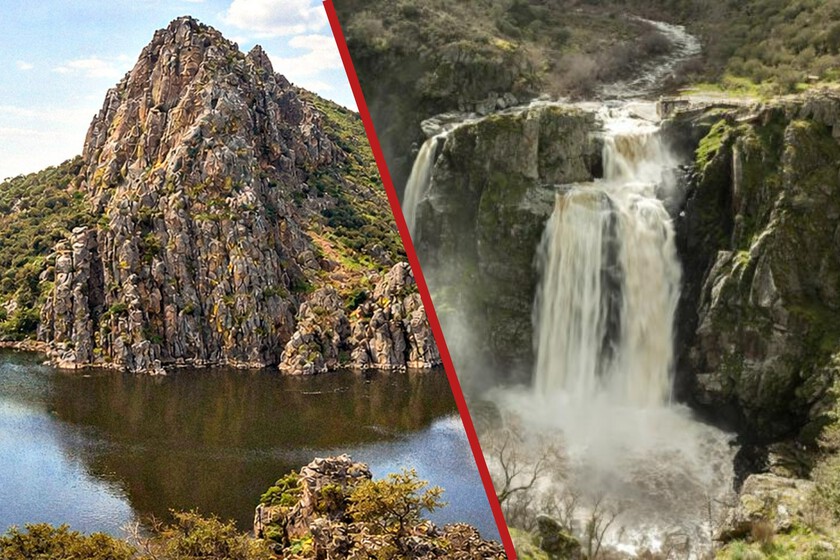
Between the jagged cradle of the vultures of Monfragüe and the immense canyons where the Duero marks the border between Spain and Portugal there is a route designed to lose ourselves in curves and pure nature. Secondary roads, spectacular panoramas and winding layouts form the menu of this road trip about 400 km long, though it can lengthen at each detour to unique corners.
This route links the Monfragüe National Park, in Extremadura, with the Arribes del Duero Natural Park (Castile and León) and takes us through one of the most unknown and spectacular areas of the peninsula’s interior. A journey among moors, rivers, forests, cliffs and small towns filled with stops that pay off: viewpoints over impossible canyons and a rustic gastronomy with artisanal cheeses, Retinto beef and acorn-fed sausages.
From Monfragüe to Arribes del Duero: a journey among canyons, dehesas and forgotten roads
Starting from the quintessential Extremaduran natural sanctuary, where there is much to visit, we begin this perfect peripete at between natural parks. We can start from Villarreal de San Carlos, a pretty cobbled town in the heart of the Monfragüe National Park beginning the route along the EX-208, or even earlier since it also traverses the park itself. This road passes through a landscape filled with holm oaks, rockrose and dehesas, with vultures soaring overhead. It is not a winding stretch, but the views already anticipate one of the most rugged zones of the interior of the peninsula.
It leads us toward Plasencia, continuing the journey along the EX-370 toward Coria. The Extremaduran plain begins to gain relief until it meets the EX-109, crossing the north of Cáceres province toward Ciudad Rodrigo. Traveling along this secondary road with hardly any traffic is possible, weaving between towns and villages, livestock farms and mountains. Then the route enters the western Salamanca region, heading to Lumbrales, combining several secondary roads, where we move from endless dehesas to rougher terrain. We begin to approach the Arribes del Duero Natural Park, nourished by the river, where ancient canyons rule.

Monfragüe National Park.
From Lumbrales we reach the most spectacular part of the road trip. The SA-324 enters the Arribes landscape, and the fun begins: tight, linked curves and narrow passages between holm oaks, stone walls and old terracing. Here we can opt for detours just to enjoy the steering wheel and the views. For example, take the DSA-575 to Vilvestre, and from there approach several viewpoints over the Duero canyon, such as the Virgen del Castillo or the Reventón de la Barca. We can also continue to Villarino de los Aires to glimpse the Mirador del Duero. These natural balconies overlook the Duero at hundreds of meters, flanked by gigantic granite walls and conifers, forming that natural border with Portugal.
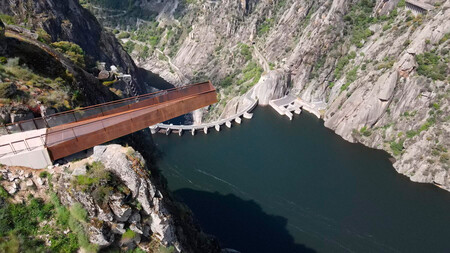
Mirador del Fraile sobre la presa de Aldeadávila
Returning to the main route, we can set the final destination at Aldeadávila de la Ribera by following the SA-314. The reason is that from this village we can access more impressive sites of the Arribes del Duero, such as the river’s most famous dam and its surroundings. For example the small settlement of Salto de Aldeadávila, simply to enjoy the road. Its final stretch is a reverse pass, full of hairpins and linked bends weaving between granite walls and pines, beside the valley of the Ropinal stream. This is how we reach the Duero-side village in a truly unique setting. And from there, in just 20 minutes, comes the highlight: to see the Aldeadávila Dam from the Mirador del Fraile, perched on an imposing balcony suspended above the gorge that frames the river.
What to see and what to eat on this wild route through nature, towns, and gastronomy
The Monfragüe National Park, north of Cáceres, is a UNESCO World Biosphere Reserve, traversed by the Tajo and Tiétar rivers. It is a key area for birds of prey, with highlights including black vultures and griffon vultures, and the Iberian imperial eagle, in addition to a superb example of a Mediterranean forest. There a must-visit is the Monfragüe Castle (9th century), the Cueva del Castillo with replicas of cave paintings, and the Salto del Gitano, its most famous viewpoint where you can watch vultures spiraling over the Tajo’s cliffs.
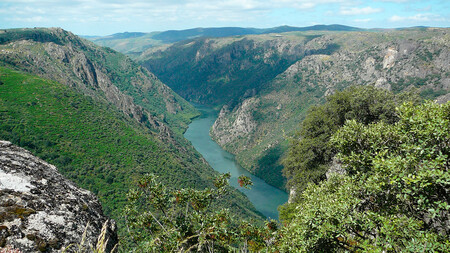
Parque Natural de Arribes del Duero.
In turn, the Arribes del Duero Natural Park, straddling Salamanca, Zamora and Portugal, is one of the peninsula’s largest protected areas, and as noted its main appeal lies in the viewpoints over the river canyon: in addition to the ones mentioned, the Fariza Ravines, the Picón de Felipe, the Code, and the Peña del Cura viewpoints stand out, among others. This park also features beautiful waterfalls, such as the Pozo de los Humos, where the Uces river plunges into the void in a 50-meter drop, generating the vapors that give it its name.
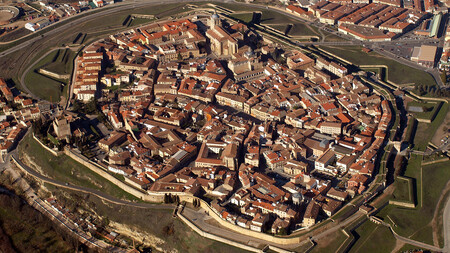
Aerial panorama of Ciudad Rodrigo
And in between them, the towns, with Ciudad Rodrigo standing out, a near-mandatory stop: the fortified old town of this Salamanca town is completely walled, adorned with Renaissance buildings and its medieval cathedral, all perched on the banks of the Águeda River.
The cherry on this trip is the gastronomy. In the Extremadura region the artisanal goat and sheep cheeses dominate, including the delicious Torta del Casar, alongside Iberian ham, acorn-fed sausages and Retinto dehesa meats. In the Salamanca area, we continue with Guijuelo Iberian products and other artisanal sausages, plus hornazo, roasted meats or stews. In Arribes del Duero we can savor a traditional meal based on meats, legumes and spoon dishes, in addition to Zamora cheeses.
Images | Monfragüe National Park, Wikimedia, Pexels, Tourism of Salamanca