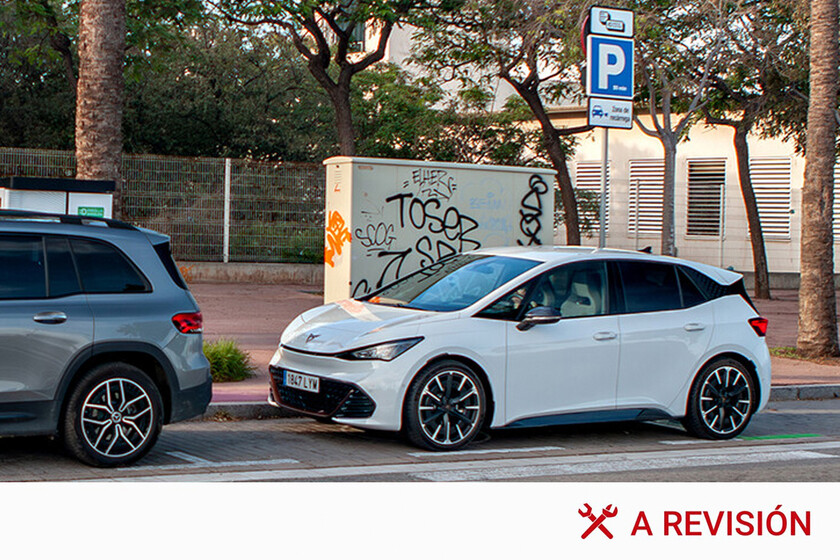
With the battery trembling or having plenty of margin to look for another charger, it remains just as irritating to arrive and find a petrol or diesel car occupying the charging spot. Or even worse, another electric car that isn’t plugged in.
Those spots are not parking spaces for electric vehicles and leaving a car there that isn’t charging exposes you to a fine and to being towed by the municipal tow truck.
No son plazas reservadas para coches enchufables
Spain’s public charging network is growing at a notable pace; we now have more than 55,000 public charging points for electric cars, but that growth clashes with a problem that isn’t dependent on infrastructure: improper occupation of the spots. The problem isn’t always that there aren’t charging points for a driver to charge; it’s enough that the point is blocked by a car that isn’t using it.
The term that popularized this practice is “ICEing“, coined from the acronym for Internal Combustion Engine in English due to anti-electric-car groups (well, anti everything, really) in the US parking their huge and spotless pickup trucks at charging points to block EV charging. Now, it’s no longer a phenomenon exclusive to some petrol or diesel drivers who define themselves politically by the car they drive.

An EV that finishes its charging session and remains parked without unplugging, or that occupies the spot without even plugging in, commits exactly the same offense as a combustion car parked there for convenience. The spot is for use, not for a type of vehicle, and that nuance is the one most overlooked.
That parking space is linked to the vehicle’s active charging, and that opens three distinct ways to violate the rule, not just one: leaving a combustion or hybrid car there without charging, parking an EV without connecting it to the post, or exceeding the maximum time allowed by the vertical signage.
The enforcement of this improper use today is not the DGT directly, but the municipalities, through their mobility by-laws. Madrid includes it in Article 81 of its Sustainable Mobility Ordinance, and classifies it as a minor infraction: €90, reduced to €45 with prompt payment, plus the risk that the car will be towed by a tow truck, which costs around €200.
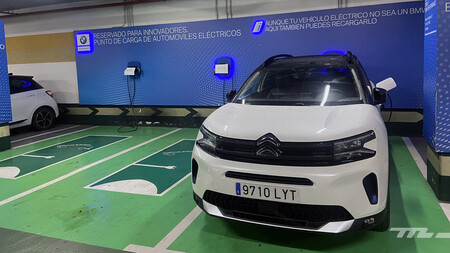
In Barcelona, the system is managed by Endolla, with equivalent conditions and maximum times that vary by vehicle: two hours for slow motorcycle charging, half an hour for fast car charging, one hour for electric taxis or PHEVs.
At the national level, the framework is more diffuse. The General Traffic Regulation does indeed contemplate in its Article 91 reserved and signposted spaces for certain users, the same basis that covers spaces for reduced mobility, with a serious offense of €200 (€100 with prompt payment). But it is a generic rule, not designed for charging points, and the Traffic Law, despite the reform that did incorporate Low Emission Zones, has not yet added this scenario as a specific offense.
This gap has practical consequences: without a clear regulatory umbrella at the Traffic level, municipal fines for this cause are easier to appeal, something that specialized consultants in fines management are already exploiting, even questioning whether the systems that measure charging time have the necessary technical verification to sustain a sanction.
The situation is even more complex in shopping center or supermarket parking lots since they are private. There, neither the DGT nor the city intervenes directly; it is the venue’s internal regulations that govern the use of charging spots. Violations are handled with center-specific measures, from warnings to, in theory, removal by private tow trucks. The absence of a traffic fine does not mean there are no consequences.
Encuentra tu coche eléctrico ideal
If you’ve been thinking about buying an electric car, this will interest you. We’ve created the Personalized Electric Car Recommender, where, in addition to seeing models that fit your needs, you’ll also get answers to the questions that tend to worry you most, such as price, range, or nearby charging points.

Looking for your next electric car and overwhelmed by so many options? It’s normal.
More than 45,000 readers have already tried it. What about you?
Consejo ofrecido por la marca