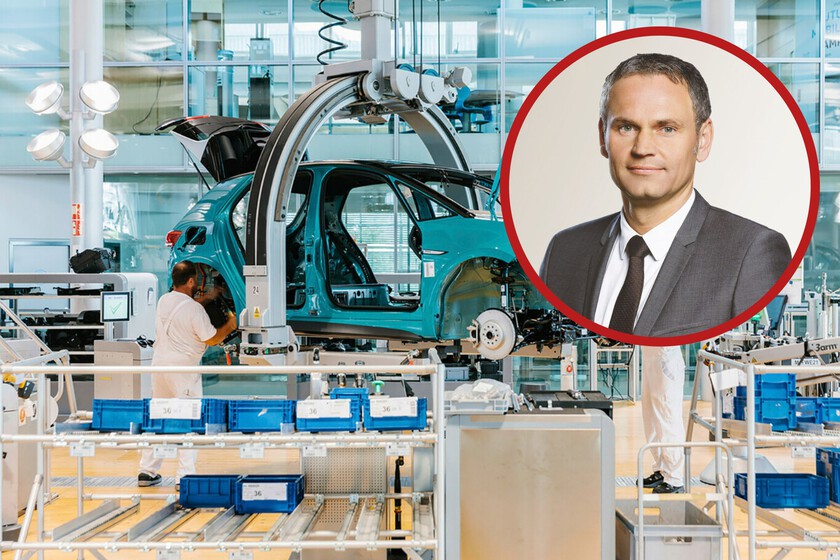
“Our situation is tense and demanding,” admitted the CEO of Volkswagen at the Annual General Meeting held last Thursday. Oliver Blume has been unequivocal: “Our business model, which has succeeded for decades, no longer works. We will take more important decisions together with our supervisory board in the summer.”
Volkswagen has long been immersed in a deep austerity plan, materializing in tens of thousands of layoffs and plant closures. The Board has spoken of existential danger and shareholders are not happy: “The problem is that an austerity program by itself is not a strategy,” criticized by one of the major participants at this assembly. There is a medicine that has been on the table for some time: that Chinese manufacturers, especially BYD, take over the plants on German soil from which the company is shedding.
Goal: to be profitable. And with the new electric cars it is not enough
Volkswagen’s profitability remains in question, even with the strategic shift toward cheaper electric cars, such as the Volkswagen ID. Polo, which starts below €25,000. “With our products, we are once again at the forefront of the competition. However, we do not make enough money from it,” Blume said.
The CEO of Volkswagen explained that in 2026, industry conditions have “tightened again.” And while Volkswagen is the company that sells the most electric vehicles in Europe, the rise of the Chinese brands, led by BYD, is meteoric. In 2025 it tripled its sales compared with the previous year, and this 2026 is on track to break records: one in ten electric cars delivered in Europe are BYD.

Job cuts and production cuts. Volkswagen’s belt-tightening policy centers on two pillars: layoffs and production adjustments. The Volkswagen Group has 20 plants in Germany and more than 100,000 people work in these factories, but the numbers don’t add up: producing on German soil is too expensive and demand for vehicles has fallen too much.
Volkswagen has already announced the elimination of 50,000 jobs across the group by 2030, of which about 35,000 will be at the VW core. By the end of this 2026, the workforce will be reduced by 19,000 employees, and Blume has just confirmed at this assembly that 28,000 voluntary severances have already been signed.
As for the plants, Blume noted that he will continue to cut production capacity at its European plants, the majority in Germany, with a cut of 500,000 vehicles per year for the near future and a million by 2028. Also in China, where it produces models that were formerly also imported to the US.
Manufacturing in the plants Volkswagen is closing, a win win for BYD
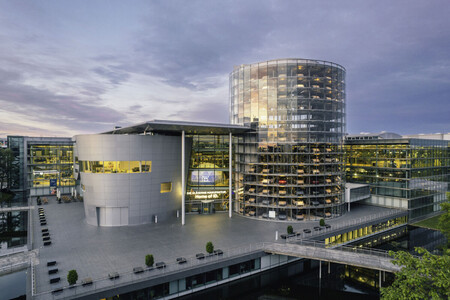
The production adjustment is also meaning the closure of factories in Germany. In December 2025, for the first time in its history, Volkswagen shut down a plant on German soil: the Dresden plant, also known as the Glass Factory. The other one under fire is Osnabrück, where the Volkswagen T-Roc Cabrio is built. Now in June it has just reduced production of this niche SUV and it is planned to end operations by 2027.
The big question now is what will happen to these factories. It has been pointed out that the Dresden plant could be leased by the Technical University to convert it into an AI and robotics research campus. And Osnabrück could move to the defense industry, in line with Germany’s strong rearmament policy. But for more than a year there have been rumors that Chinese groups would take advantage of these German plants.
Last May, it was leaked that BYD was negotiating with Volkswagen to take over part of the Dresden plant. MG and Xpeng were also reportedly interested in this facility. Although Volkswagen denied it a few days later.
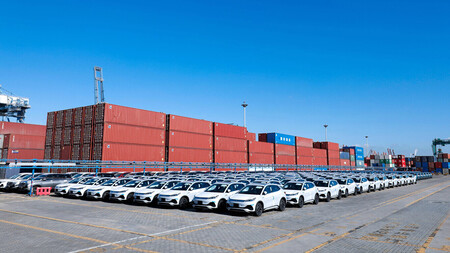
However, it would not be far-fetched: sources at Volkswagen told Reuters in January last year that the firm would be open to selling its factories to Chinese firms. Specifically Osnabrück: “We are committed to finding a continued use for the plant. The objective must be a viable solution that takes into account the interests of the company and its employees.” Then it was leaked that officials and Chinese carmakers were eyeing German plants slated for closure, especially Volkswagen’s.
For brands from the People’s Republic, manufacturing in Germany is a win-win: they would benefit from the strong German industrial network while saving substantial investment and avoiding EU import tariffs. BYD continues searching for a third site to manufacture its cars in Europe, already having plants in Hungary and Turkey, but Germany is leading the bets precisely for direct access to existing industrial capacity in Western Europe. Spain was the other possibility. BYD will decide the location during the coming year.
Find your ideal electric car
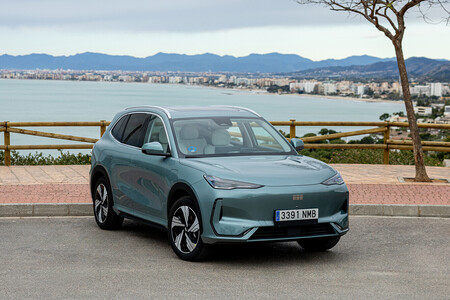
If you have been considering buying an electric car, this will interest you. We have created the Personalized Electric Car Recommender in which, in addition to viewing models that fit your needs, you will also get answers to the questions that may worry you most, such as price, range, or nearby charging points.

Are you looking for your next electric car and overwhelmed by so many options? It’s normal.
More than 45,000 readers have already tried it. And you?
Advice offered by the brand