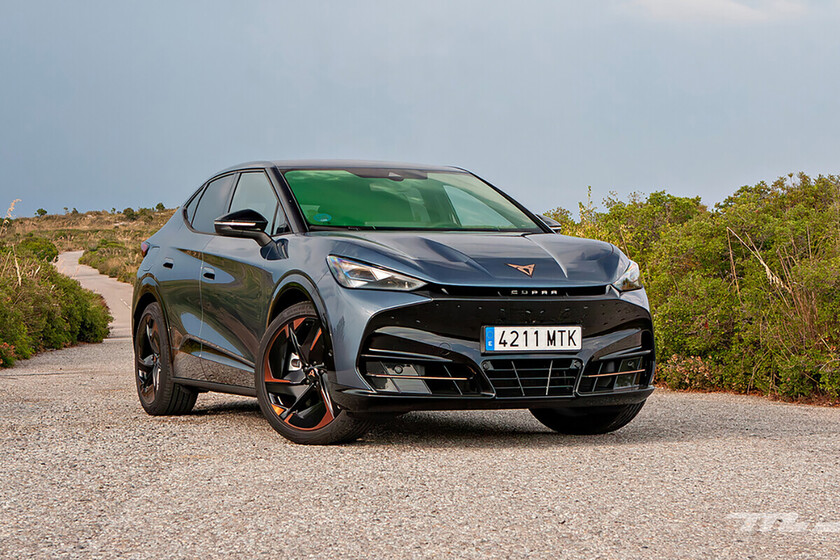
The punitive tariffs of the European Union on Chinese electric cars have not slowed the advancement of these brands; they only harm European brands that manufacture there. This has been the case with CUPRA, which warned in 2025 of possible layoffs due to the financial strain from tariffs on the CUPRA Tavascan, until the EU backed down with the Spanish brand and has again shown enviable financial health. Meanwhile, Chinese brands continue to gain ground.
CUPRA’s exemption from paying a 30% tariff has not gone down well in China and has led BMW to request the same exemption for the electric MINI, manufactured in China.
When EU tariffs hurt European brands and not Chinese ones
The then-CEO of the Spanish brand, Wayne Griffiths, warned in September 2024, just before EU tariffs were definitively imposed, that the Tavascan would be “annihilated” by these additional taxes and that this measure would “endanger the company’s entire financial future.” And his warning nearly came true.
The dilemma was clear. The first option was to raise the price of the Tavascan by more than €12,000, which would stop selling and therefore SEAT SA would not meet the EU CO2 emissions targets, where a grosso modo one electric car must be sold for every four gasoline cars. And therefore it would be exposed to a multimillion-euro fine. In that case, production and sales of gasoline models, such as the SEAT Ibiza or the León, would have to be limited to avoid European fines. And with a much lower workload, fewer jobs.

The second option was to absorb the tariffs and watch the benefits melt away like ice cream in the sun, which would impact less investment in R&D and lead to more expensive financing. It is this option that the brand has decided to follow.
The punitive EU tariffs on Chinese electric cars came into effect on October 30, 2024. The CUPRA Tavascan was hit with a total of 31.3% (in addition to the 10% applicable to any vehicle coming from China). And in 2025, SEAT SA closed the year with a negative operating result, according to national accounting, of -93.1 million euros, versus the 534.6 million euros of profits achieved in 2024.
Under IFRS standards (the international standard and mandatory in the EU for publicly listed companies), the operating profit was only one million euros, despite selling 586,300 cars, a record. It is 99.8% less than the 633 million euros of the previous year, while net profit fell 92%, to 40.9 million.
A large portion of the profits were eaten up by the tariffs imposed on the CUPRA Tavascan, as the brand chose not to pass the tariff onto customers, which would have meant increasing the car price by between 12,000 and 16,000 euros, depending on the version. Something that would have been a commercial suicide.
On February 11, 2026, the CUPRA Tavascan was exempt from the compensatory tariff of 20.7% imposed by the EU in 2024 on electric vehicles manufactured in China, keeping only the basic 10%. The agreement includes a minimum import price and an annual quota, the first of its kind for an individual model.
The consequences were already visible in the first quarter of 2026, SEAT SA recorded an operating profit of 43 million euros, 38 million more than in the same period of 2025. The company attributed this improvement to the cost-control program and, explicitly, to the tariff exemption of the Tavascan.
There is no doubt, the punitive tariffs only punished SEAT SA. Meanwhile, in 2025 the sales of Chinese electric cars in the EU approached half a million cars. The Chinese brands sold more than 480,000 hybrid and plug-in hybrid cars in Europe in 2025 out of a total of 811,000 cars with a market share of 6.1%. In other words, 41% of Chinese brand sales were with electric models subject to heavy punitive tariffs, while 59% were with cars subject to a general 10% tariff.
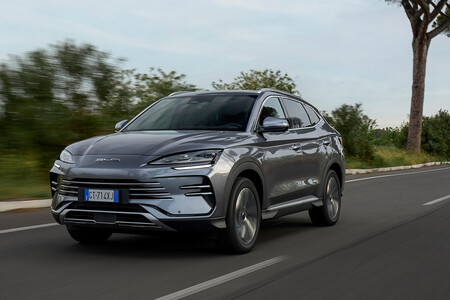
The compensatory tariffs applied since October 2024 did have a tactical impact, perhaps not foreseen by Brussels, flooding us with hybrid cars. BYD and MG redirected their European offerings toward PHEVs and hybrids. These cars are not subject to the additional tariffs and, in the case of PHEVs, count as an electric car (for CO2 emissions homologated under 50 g/km) when calculating the brand’s average emissions. BYD experienced an explosive rise in registrations of its PHEVs in the EU in 2025, accounting for 40.1% of its sales. The rest of the Chinese brands have followed suit.
In the end, the effect was a notable rise in sales of Chinese hybrid cars, while the sales of Chinese electric cars did not slow down.
Find your ideal electric car
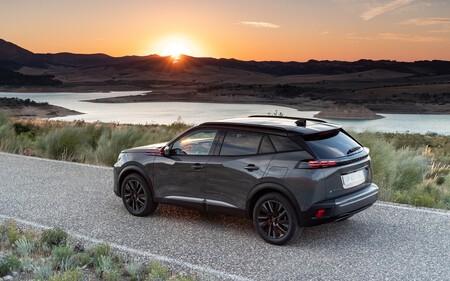
If you have considered buying an electric car, this will interest you. We have created the Personalized Electric Car Recommender in which, in addition to seeing the models that fit your needs, you will also have answers to the questions that worry you most, such as price, range, or nearby charging points.