
Buying a new car always brings with it a question: what license plate am I going to get? The answer isn’t trivial, because the letters on a plate reveal the vehicle’s age with considerable accuracy.
From June 2026, drivers who take delivery of a new car in Spain will see on the rear of their vehicle a combination that has never before appeared on the country’s roads.
In June, the new cycle license plates arrive
Remember that in Spain, license plates have the alphanumeric format of four digits and three letters (except for vowels, the Ñ, the Q and the digraphs LL and CH) since September 18, 2000, the date on which the first car with the new license plate format was registered. Since that first plate, the combinations advance in a correlational manner and can generate up to 80 million distinct plates before exhausting the possibilities.
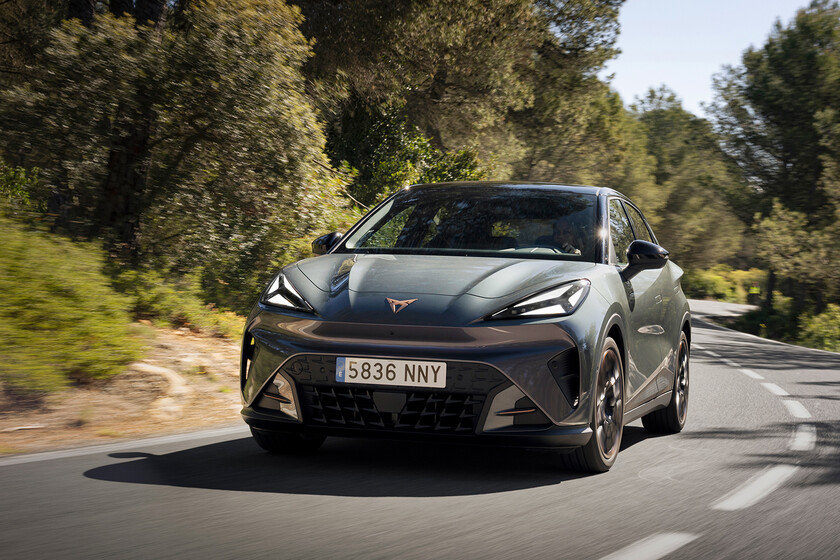
By early April 2026, the sequence was around NLZ/NMB. Taking into account that approximately 4,000 cars are registered per day, the calculations point to starting in June the first cars with the NNY combination will be circulating, and that before the end of summer the series will have progressed to around NPW.

June is not a month chosen at random as a reference: together with July, it concentrates one of the highest sales peaks of the year in the Spanish market, which causes a notable diversity of license plates circulating at the same time. Looking beyond summer, everything indicates that by the end of 2026 or the first weeks of 2027 it will be the turn of the letter P, thus closing the cycle started with N.
We are not facing any reform of the system nor an official announcement with fixed dates. The NNY or NPW combinations are projections calculated from the pace of sales, not dates that must be met strictly. A change in the market could accelerate or slightly delay these forecasts.
Useful information also when buying a used car
Why it matters. While it can be a small satisfaction for some to have the combination they like best, since personalized license plates are not legal in Spain, it is mainly useful information when buying a used car. The letters give us an indication of the date of its last registration of the car in Spain.
This can be useful, for example, when a sale has re-registered a car to make it look newer than it actually is. It also lets you quickly see that a car might have been recently imported, as in the case of a car from a few years ago with a plate from just a couple of months ago, making it harder to reconstruct its maintenance history.
In response to that, the DGT offers a free basic vehicle report that includes the exact date of its first registration, a datum that cannot be manipulated and that should be the first check for any buyer before finalizing a deal.
Images | Cupra, Dacia