
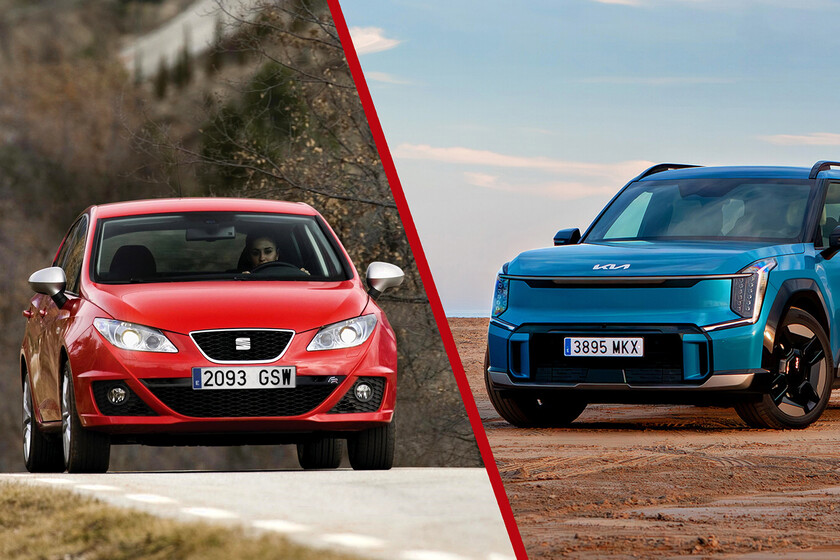
Europe aimed to make 2035 the practical end of new petrol and diesel cars. The old continent isn’t alone: Japan and California share the same ambition. But according to the results of a study, millions of people won’t notice the impact of electric cars until the mid‑century.
According to a study by S&P Global, owners of internal-combustion cars tend to hold onto their vehicles longer, unlike those who own an electric car, despite their generally higher cost.
An electric car owner changes cars every four years on average
The European Union aims to reduce 90% of tailpipe CO₂ emissions from new cars by 2035, promoting electric vehicles while leaving room for hybrids, range extenders and combustion models associated with e-fuels, biofuels or industrial offsets. The United Kingdom will follow suit in 2030, Japan in 2035, and California, the leading market within the United States. The problem is that it will take several decades to see a truly noticeable impact of this measure because on both sides of the Atlantic the average age of the vehicle fleet is around 13 years.
S&P Global, a consultancy specializing in economic analysis (they’re the ones behind the S&P 500 index, for example), studied how long vehicle owners keep their cars. The study reveals large disparities between internal-combustion engine cars and electric ones, due to a set of identifiable factors.

Realised in the United States, the study shows drivers keeping their vehicles longer than ever, a trend especially pronounced for internal-combustion models. On average, a vehicle is kept for 12.5 years, a figure that rises to 13.6 years for passenger cars.
In Spain, the average age of the vehicle fleet is 14.2 years, according to data from the Spanish Association of Automobile and Truck Manufacturers (ANFAC). Spain continues to have one of the oldest fleets in Europe, exceeding the continent’s average age of 12.3 years.
Several factors explain the greater useful life of gasoline and diesel cars. One is the perceived reliability of these models for long trips. Many households keep at least one combustion vehicle, even if driven less often, to ensure an unrestricted range, especially on long journeys.
Inflation, which logically affects both combustion and electric models, also plays a role. For example, in Spain, between 2020 and 2023, inflation stood at 15.2%. Thus, a car that cost €25,000 in 2020 rose to nearly €29,000 three years later.
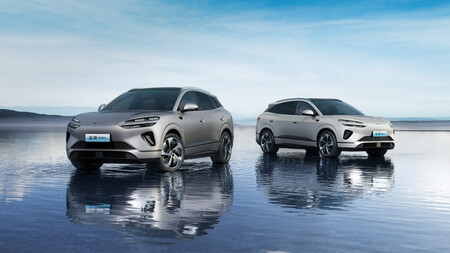
By contrast, electric cars tend to be renewed more quickly. S&P Global estimates they are refreshed every 3.6 years. This frequent renewal is largely explained by their higher upfront cost, which attracts buyers with greater purchasing power who are willing to swap models regularly, and who mainly opt for leasing or rental arrangements with an average contract duration of four years.
In 2024, almost 80% of new electric cars registered in the United States were under one of the two leasing modalities, according to Edmunds data cited by The Wall Street Journal. In Europe, the situation is similar, though it varies greatly from one EU country to another.
The 60% of new car registrations, regardless of powertrain, occur via renting or leasing operations, according to calculations by the lobbying group Transport & Environment based on Dataforce data. In the case of electric cars, the proportion is estimated at 80%.
The reason for a higher share of leasing in the electric-car market is also tied to the risk of a traction battery losing range over time or even failing. And since the cost of replacing such a battery can be exorbitant, ranging from €7,000 to €15,000 depending on the brand, customers prefer to shift that risk to the leasing company.
Of course, this has an impact on the used-car market when those rental-origin electric vehicles enter the second-hand market. The latest iSeeCars study shows that used electric-car prices fell by 15.1% in the United States last year. In Europe, the average price of used EVs dropped a notable 8.1% year-on-year, according to Autoscout24 data.
Finally, it’s worth noting that the electric-vehicle market is undergoing a real transformation. Each year brings new, more efficient and innovative models that encourage drivers to take the plunge. Brands like Tesla and BYD contribute to this shift. Once converted to electric mobility, the vast majority of drivers remain loyal to this propulsion.
Find your ideal electric car
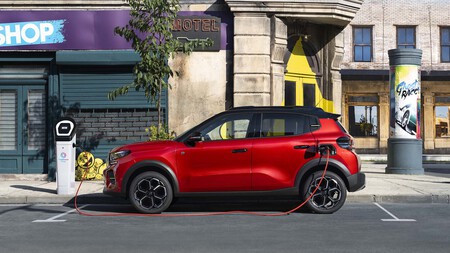
If you have considered buying an electric car, this will interest you. We have created the personalized Electric Car Recommender, which not only shows models that match your needs but also provides answers to the questions you’re most likely to have, such as price, range or nearby charging points.