
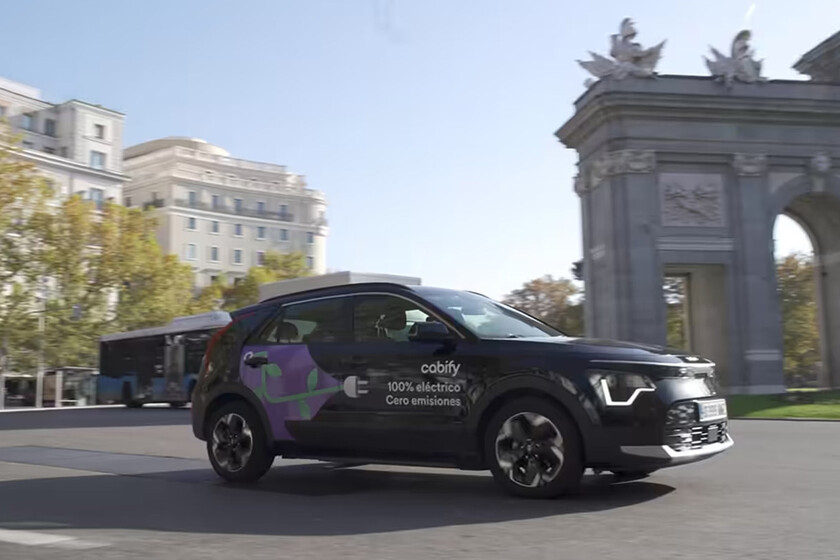
Dynamic pricing for VTCs in Madrid has ended: fare surges may only be applied in exceptional situations previously laid down by the regional government or the City Council. This limitation is included in the amended VTC Regulation, which was just given the green light by the Council of Government of the Community of Madrid.
What this means is that Uber, Cabify, or Bolt will not be able to raise prices during ordinary high demand, for example on Friday and Saturday nights. But they will be allowed to do so, for instance, during major musical and sporting events, albeit with a cap: they cannot increase them freely.
The end of abusive fare hikes, and never in emergencies
In September 2023, this reform of the VTC Regulation within Madrid’s rules was announced. It was noted then that one of the flagship measures would be to curb abusive price increases derived from what is known as dynamic pricing.
Essentially: when demand is high, prices shoot up because they are not regulated by a taxi meter, as is the case with taxis. This is common on weekends, during peak hours, or during rain events, and these VTC companies had been applying them with total freedom. Under the new regulation, they will not be able to raise prices in these everyday and routine situations.
Only in macro-events and danas. The reformulated regulation states that it must be the Administration that declares high-demand situations, which will always be extraordinary: sports events, major concerts or music festivals or exceptional weather phenomena such as the increasingly common danas. Only in these cases may a higher fare be applied.
This price increase will also have a cap: a maximum of 75% above the base price, determined by what the operator has charged in the last 10 days.

On the left, the price reported by a user on X at Mad Cool 2022; on the right, a 12:00 noon weekday simulation for the same journey
This means prices will not inflate to levels like those reported during events such as the Mad Cool 2022 festival: 138 euros for a trip from the venue (then in Valdebebas) to Tetuán. That ride, during a period of low demand, normally ranges from 12 to 25 euros depending on the vehicle. Taking that price as a reference, the fare could not exceed roughly 20 to 43 euros.
Never in emergencies. Additionally, in this modification, these scenarios are exempt in an emergency declared within PLATERCAM, such as the great snowstorm Filomena or the May 2025 blackout. In these cases, price increases cannot be applied at all.
New identifying labels. In addition, the modification includes other changes, such as a new badge system to prevent fraud. These stickers include the authorization of each car and its license plate, indicating whether it is urban-interurban or only interurban. According to the Díaz Ayuso administration, the aim is to “increase transparency and offer greater guarantees to both citizens and sector professionals.”
When will it come into force? The Madrid regional government expects the revised VTC Regulation to be applicable from July, once the legislative process is completed. But yesterday, Wednesday, it took a significant step by being approved by the Council of Government.