
In Brief
BYD says that 70°C is no longer a critical threshold for its new second‑generation Blade Battery. Thanks to a redesigned architecture and a two‑sided cooling system, the automaker promises effective thermal management during ultra‑fast charging. Intensive charging cycles and simulations under extreme conditions validate, BYD claims, the reliability of this technology even at temperatures measured up to 78°C (172°F). This advance accompanies a strategic rollout of a widespread network of ultra‑fast charging stations aimed at redefining the standards of the electric-vehicle market.
As the electric-vehicle market continues to grow rapidly, battery performance remains a central challenge for automakers. At BYD, the second generation of the Blade Battery is fueling debates, particularly around ultra-fast charging capabilities and thermal management. The Chinese manufacturer asserts it has crossed a major technological threshold, especially in controlling high temperatures, a point often regarded as critical.
Thermal Management Engineered to Exceed Old Limits
One of the main topics of discussion concerns temperature rise during rapid charging, a factor frequently seen as a limiter to battery life and safety. Some experts still argue that once temperatures climb beyond roughly 149–158°F (65–70°C), cells may experience accelerated degradation, especially at the internal interfacial layer that protects the electrodes.
BYD now rejects this view. According to the company’s battery division leaders, the 70°C threshold is largely a legacy concept from earlier battery generations. The Blade Battery rests on a redesigned architecture, paired with a two‑sided cooling system and a symmetric design intended to homogenize heat diffusion. The goal is to limit hot spots and keep a more uniform temperature across the entire pack, even during high‑power charging. The maker also says it has run numerous aggressive charging cycles and long‑range usage simulations to validate the system’s reliability under extreme conditions.
This statement comes after a Chinese internet user shared the surface temperature of his battery during a rapid charge, with a readout of 78°C. BYD seeks to reassure by noting that, in their view, this temperature is not critical.
Ultra‑Fast Charging as a Selling Point
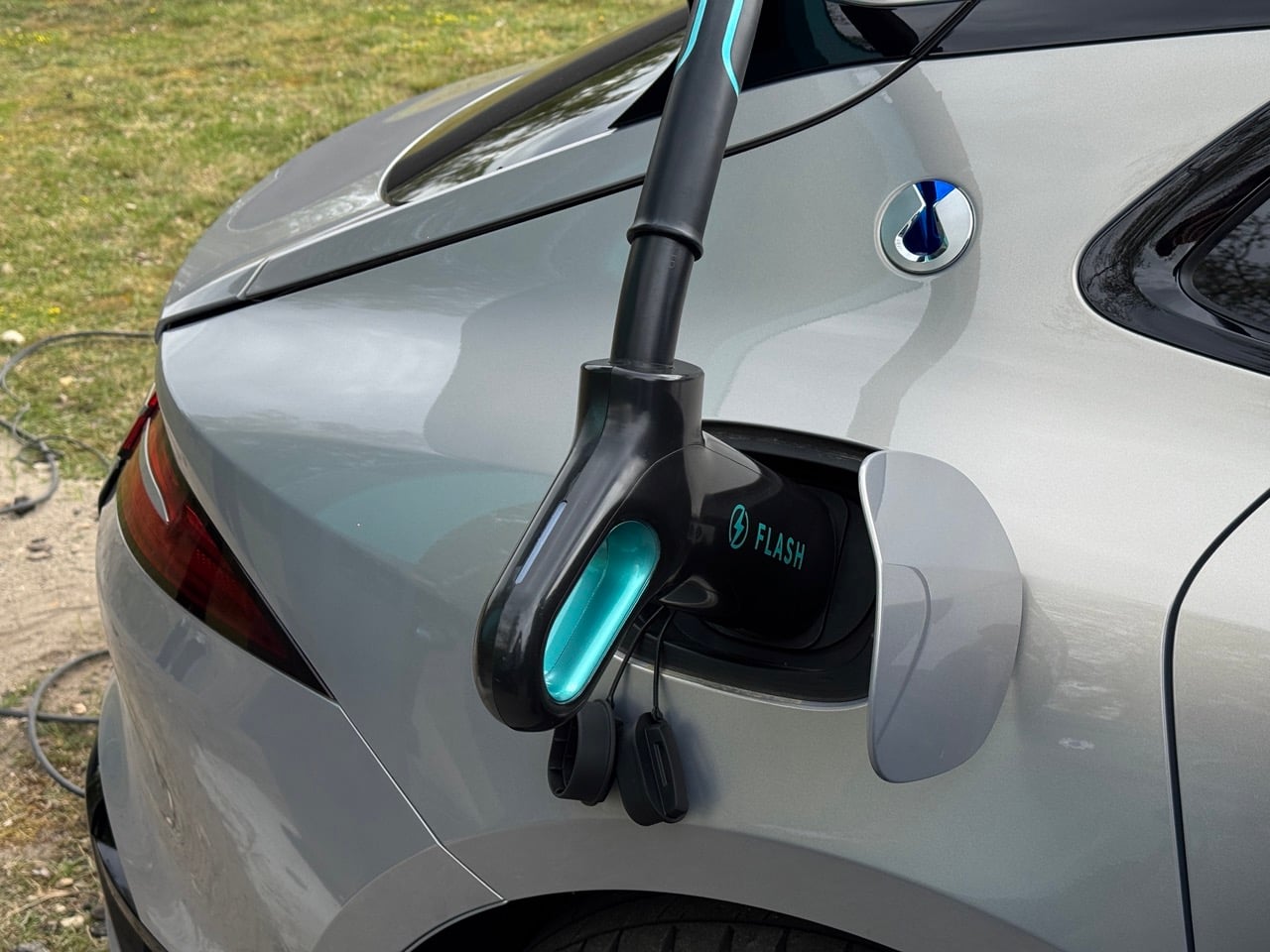
Beyond thermal management, BYD highlights the performance of its so‑called “Flash Charging” technology. With infrastructure capable of delivering very high power, the company touts particularly short charging times, progressing from 10% to 97% in about nine minutes under optimal conditions. Even at extremely low temperatures, performance gaps would remain contained, which makes this a key selling point for use in varied environments.
This approach fits into a broader strategy to mass‑deploy dedicated charging stations and accelerate the adoption of electric vehicles on a large scale. BYD believes that the rise of rapid charging will progressively redefine market standards by combining speed, safety, and chemical stability of the batteries. The company also emphasizes that LFP technologies, long considered less premium, can now meet high‑performance demands, including in very high‑end vehicles.
Comparison Table
| Maximum observed temperature | Charge time (10–97%) | Technology |
|---|---|---|
| 172°F (surface temperature during fast charging) | about 9 minutes (optimal conditions) | Blade Battery Gen 2 / Flash Charging |
Key Takeaways
- BYD’s second-generation Blade Battery is designed to operate effectively up to 70°C and beyond, according to the manufacturer.
- A real-world instance showed 78°C on the battery surface during a rapid charge, with no critical effects reported by BYD.
- A symmetric architecture with two‑sided cooling ensures better heat distribution.
- Ultra‑fast charging could move from 10 to 97% in around nine minutes under ideal conditions.
- Performance remains stable even at very low ambient temperatures.
- BYD aims to redefine market standards by combining fast charging, safety, and the stability of LFP batteries.
FAQ
Does BYD’s Blade Battery withstand high temperatures?
Yes—BYD says its Blade Battery remains reliable even at temperatures around 158°F (70°C) and higher.
What is the duration of a rapid charge?
BYD indicates a move from 10 to 97% in roughly nine minutes under optimal conditions.
How does BYD manage thermal control?
The battery relies on a symmetric architecture and a two‑sided cooling system, ensuring uniform heat diffusion.
Are charging performances stable in cold weather?
According to BYD, performance gaps stay small even at extremely low temperatures.
Are BYD’s LFP batteries suitable for high‑end vehicles?
BYD believes that LFP technologies can now meet the demands of very high‑end vehicles.