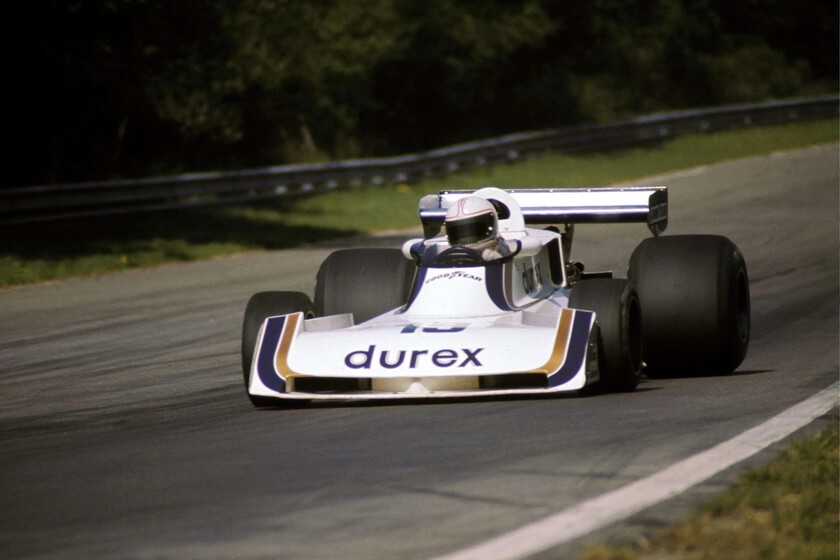
The history of Formula 1 is filled with ignominious sponsorships, but surely none caused as much uproar as the one the Surtees team chose to mount on the nose of their car during the 1976 season. It was Durex, a condom brand, which inadvertently provoked Britain to stop broadcasting Formula 1 on television.
However, the BBC did not pick the best moment to go puritan. As the season progressed, the world championship grew hotter, with Englishman James Hunt battling for the title. The pressure was such that the BBC had to backtrack and return just in time to broadcast the last race, the iconic Fuji’76.
The BBC Had to Lift Its Ban on Durex to Avoid Missing James Hunt’s Championship
Like many great stories, it all began with financial troubles. The legendary John Surtees, the only man to be a world champion in both Formula 1 and MotoGP, was short on resources to keep his team afloat. Until he found a solution: appointing the condom brand Durex as sponsor.
The problem was that in full 1976 the morality of British society was somewhat different from today. When the BBC arrived at Brands Hatch for the Race of Champions, a precursor to the start of Formula 1, and found the Durex logos, they made a decisive move: they would not broadcast that race or any other while Surtees did not drop his sponsor.
“It is completely unacceptable for a family audience,” argued the BBC while pressuring a Surtees that had no choice: if they did not keep Durex, their team could not continue to compete. So the condom advertising stayed, and British television kept its threat: not a single race of the season was broadcast. Or almost.

Because while the BBC was boycotting Formula 1, the world championship was heating up. What seemed like a triumphant march for Niki Lauda gradually became a duel with James Hunt, the British outsider who was driving the champion crazy. Until that day at Nürburgring, when the history of Formula 1 changed.
With Lauda badly injured, Hunt tied the world championship to the limit. But Lauda returned still battered to defend his crown. The circuits across Central Europe filled with enthusiastic British fans eager to see Hunt’s races, until the decisive meeting: the Japanese Grand Prix. Lauda and Hunt were to gamble the title at the other end of the world.
The pressure in the United Kingdom was such that the BBC was forced to lift the boycott and broadcast the race at Mount Fuji, despite the Durex logos still gracing Surtees. The result was one of the most memorable races in history, to the point that Hollywood immortalized it in the iconic ‘Rush’, the best Formula 1 movie that has never been made.
For anyone who wants to watch it, we won’t spoil who the champion was. Anyone who has read this far probably already knows.
Images | Fórmula 1