
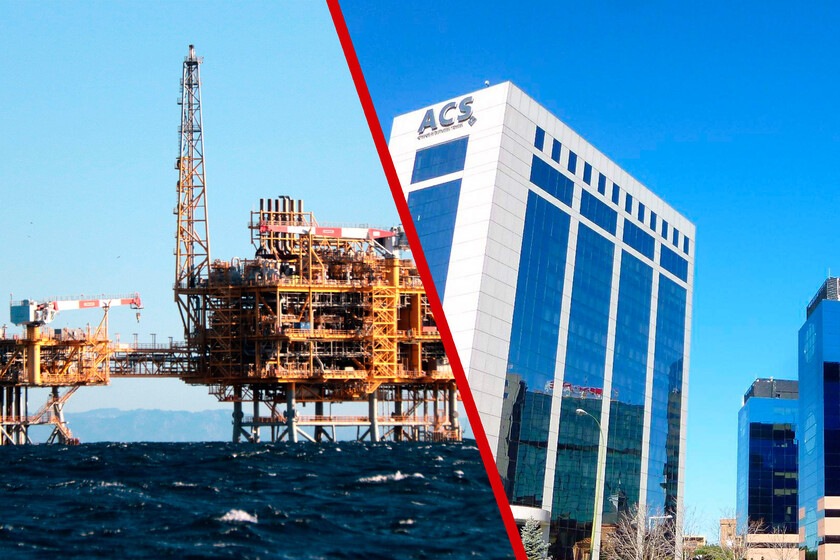
The failed Castor project has been described as “one of the most embarrassing episodes in the State.” A poorly planned energy policy that ended up costing Spaniards more than €1.6 billion.
It was conceived as a solution to reduce Spain’s dependence on natural gas: a vast submerged offshore storage facility off the coast of Castellón and Tarragona. It never entered service: it was halted after triggering more than a thousand earthquakes. Yet the bill has continued to mount, and we have been paying it for years.
The Great Undersea Gas Storage in the Mediterranean That Failed Before It Could Operate
This megaproject was formally approved in 2007 and began in 2008, under the government of José Luis Rodríguez Zapatero, continued in the next term by Mariano Rajoy’s administration. The concession company was Escal UGS, with its main shareholder ACS (66%), the construction firm of Florentino Pérez. Its initial budget was 500 million euros, but it has turned into a soap opera of lawsuits and indemnities that has dragged on for more than 12 years across several legislatures.
It was a submarine structure designed to store approximately 1.3 million cubic meters of LNG, located in an old oil field in the Mediterranean off Tarragona and Castellón, at a depth of about 1,700 m. In addition to the storage, it included a marine platform, a 30.3-kilometer gas pipeline and a land-based plant in Vinaròs (Castellón).
Earthquakes and the end of the project. After roughly four years of construction, the commissioning phase began. It did not progress beyond that. The storage needed to introduce “padding gas” to operate: base gas to maintain the pressure. In 2013, a gas injection was carried out for this purpose and it was determined that this task had triggered multiple microseisms in Castellón between June and September of that year, by moving the Amposta fault and another deeper fault. It was not a few.
While it was noted that there were about 350, and subsequently more than 500, a study published in Geophysical Journal International raised the figure to more than 1,000 ground movements. Most of them were minor: the largest recorded was 4.3 on the Richter scale (classified as light).
It was then when the then Minister of Industry, the popular José Manuel Soria, ordered the suspension of the project. Although it was not the only reason for its demise: profitability or environmental impact had been questioned for some time. Moreover, over time it turned out not to be an essential infrastructure, as the Spanish system evolved toward a more flexible model based on LNG imports and regasification plants.
A fiasco that we have all ended up paying for
With the project failed, it was necessary to compensate the winner: Escal UGS and thus ACS, which withdrew from the project. This was set out in the initial contract. In October 2014, an indemnity of €1.35 billion was approved by royal decree-law. This compensation was routed through the gas system: banks advanced the amount to Enagás, which was charged to consumers’ gas bills.

In 2017, this mechanism was partially annulled by the Constitutional Court, suspending payments to the financiers. The State had to assume the debt, including interest, transferring the cost to taxpayers. A clear example of “socialization of losses.” A long process of litigation has followed since then. For example, in the National Court, Escal UGS was ordered to return to gas customers 209.7 million of “financial remuneration” that it charged in 2014, 2016 and 2017.
€1.6 billion and rising. In the spring of last year, the Minister for the Ecological Transition and the Demographic Challenge, Sara Aagesen, announced the dismantling of the submarine gas storage. This process is ongoing, despite estimates that it would take eight months starting in May. It was awarded to Enagás in 2024, the main natural gas transporter and manager of the gas system.
The saga continues: in February 2026 the Supreme Court has recognized new compensations for dismantling work, as well as for other operation and maintenance services. In total, the amount awarded is 255 million euros, to be added to more costs for the remaining work to close it definitively.
Which brings us to a staggering total that exceeds €1.6 billion for the citizens’ wallets, even though efforts have been made to offset losses by selling part of the equipment to reduce the losses. All for a failed infrastructure created almost twenty years ago that never managed to operate.
Images | Wikimedia, ACS, Enagás