
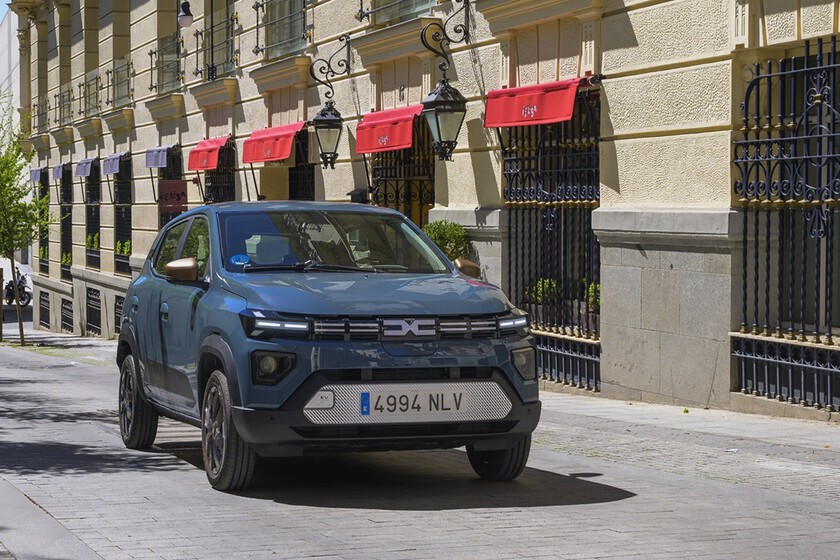
Dacia is one of the few brands that has managed to carve its product into a market where prices are running wild. And although models like the Sandero now cost twice as much as they did a decade ago, they remain the most practical and, above all, economical option. And that shows in the sales figures: the Sandero has been the best-seller in Spain for 12 years.
But there is another model from the Romanian marque that has achieved that elusive dream of “electric mobility for everyone.” It is the Dacia Spring, which receives an updated platform and two new motors (70 HP and 100 HP) and up to 225 km of range. We were able to take it for a spin through Madrid’s hectic traffic, and these are our impressions.
Since its launch in 2021 more than 200,000 Spring units have been sold across Europe, but the brand acknowledges that Spain is the only market that is growing: almost half of its units are already electrified thanks to mild-hybrid powertrains.
And the current prices for pure electric cars and plug-in hybrids, along with the charging infrastructure, remain a barrier for buyers, which is why many lean toward “low-cost” brands. Here the Dacia Spring plays a pivotal role in boosting electric mobility in Spain, because it offers a very tight price (65 euros per month) in a sought-after segment: compact cars.
The new Spring keeps the same size as the previous generation and sports no less than 308 liters of boot space, which expands to 1,004 liters with the rear seats folded. And it brings a lot of improvements.
The Spring’s Updates, At a Glance

- The central portion of the Spring’s platform has been reinforced and houses a new 24.3 kWh battery that uses, for the first time in Renault Group, lithium-iron-phosphate technology and that offers greater thermal safety, longer life, and lower cost.
- The braking has stronger assist.
- It introduces a sway bar for the first time, standard across all versions, and new adjustments for dampers and suspension springs.
- Unveils a set of underbody covers beneath the bodywork at the front, sides, and rear, designed to reduce aerodynamic turbulence under the vehicle.
- A new rear spoiler helps limit turbulence around the upper part of the tailgate. This benefits the Spring’s range, resulting in a significant improvement in the SCx: 0.660 versus 0.745 with 14″ wheels and 0.665 versus 0.743 with 15″ wheels.
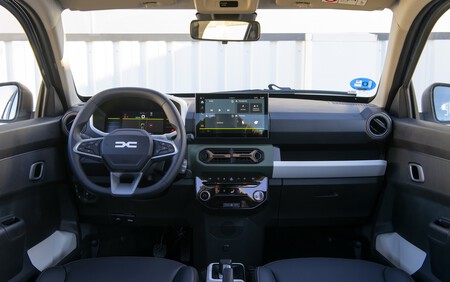
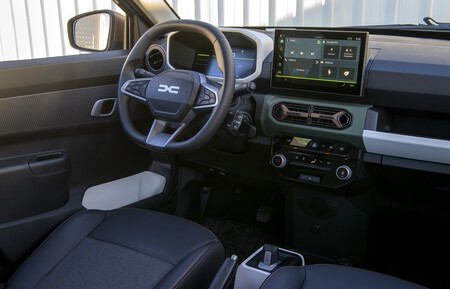
Inside the cabin, the Media Display system, which features a 10.1″ central touchscreen and wireless connectivity with Apple CarPlay and Android Auto, comes as standard on the Extreme trim and is available as an option on the Expression trim. The Spring Extreme can be optionally equipped with the Media Nav Live system, which adds eight years of connected navigation, real-time traffic information, and European maps that are always up to date.
Charging Times
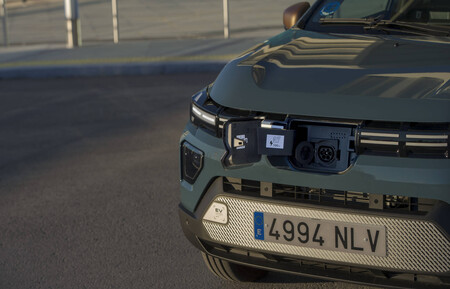
A new 40 kW DC fast charger (compared to the previous 30 kW) is available as an option on Expression and Extreme trims. It allows charging from 20% to 80% in just 29 minutes. As standard, the Spring comes with a 7 kW AC charger, which, combined with the new battery, enables a faster 20%–100% recharge: 3 hours 20 minutes instead of 4 hours on a 7 kW wallbox and 10 hours 11 minutes on a household outlet.
Behind the Wheel
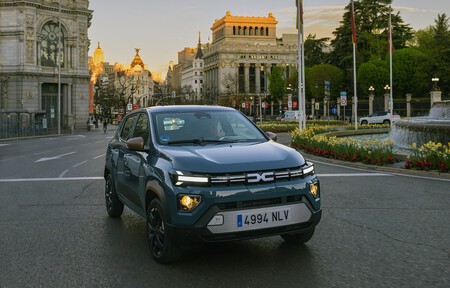
As anticipated, the new Spring introduces two new engines of 70 HP/52 kW and 100 HP/75 kW that replace the older 45 HP/33 kW and 65 HP/48 kW units. They deliver more power and peak torque between 80 and 120 km/h.
On our short and chaotic tour through central Madrid, we jumped into the top-spec variant—the 100 HP with 225 km of range—and while this generation is ‘more car’ than the previous one, we cannot ignore that it remains what it is: a basic city car with limited range, and you cannot expect more for the price.
The perceived quality inside is modest, and it’s built to be durable and to perform daily tasks without aiming for much more. The seats are adequate, though if you spend a lot of time idling in traffic, they’ll remind you that you’re not in a premium cabin.
Being a city car, it moves like a fish in water through Madrid’s narrow streets, and maneuvering it is a breeze. It feels very light—well under a ton—and its agility is its strongest asset. The cabin layout and physical buttons ensure everything is within reach and you don’t have to take your eyes off the road, which is a plus in the age of digitalization. Ultimately, it’s a solid option if you’re after a city vehicle, with no flashy tech and a very attractive price tag.
Dacia Spring Prices and Range
The Spring lineup arrives with two trim levels:
Spring Expression (70 HP)
Main standard equipment: 7-inch digital instrument cluster, 3-spoke steering wheel with tilt adjustment, power steering, Media Control with USB port, speed limiter, cruise control, steering wheel radio controls, remote central locking, electric front windows, rear parking sensors, 12V socket, manual air conditioning, and 15-inch wheels.
Spring Extreme (100 HP)
Main standard equipment: Expression plus copper interior and exterior accents, power mirrors and rear windows, Media Display with a 10-inch central screen, 2 USB ports, wireless Apple CarPlay and Android Auto.
The brand now offers it from 11,350 euros with financing, 3,325 euros down for Dacia Auto+ since Auto+ subsidies have not yet been activated and CAE. The down payment is 2,149 euros and it is also available from 65 euros per month. Thanks to an agreement with Iberdrola, all Renault Group electric vehicles benefit from 10,000 km per year free for three years.
The expenses associated with attending this presentation were borne by the brand. For more information consult our guide to corporate relations.
Find Your Ideal Electric Car
If you’ve been considering buying an electric car, you’ll be interested in this. We’ve created the Personalized Electric Car Recommender, which not only shows models that fit your needs but also answers questions that tend to worry people, such as price, range, or nearby charging points.
Images | Dacia, Peugeot