
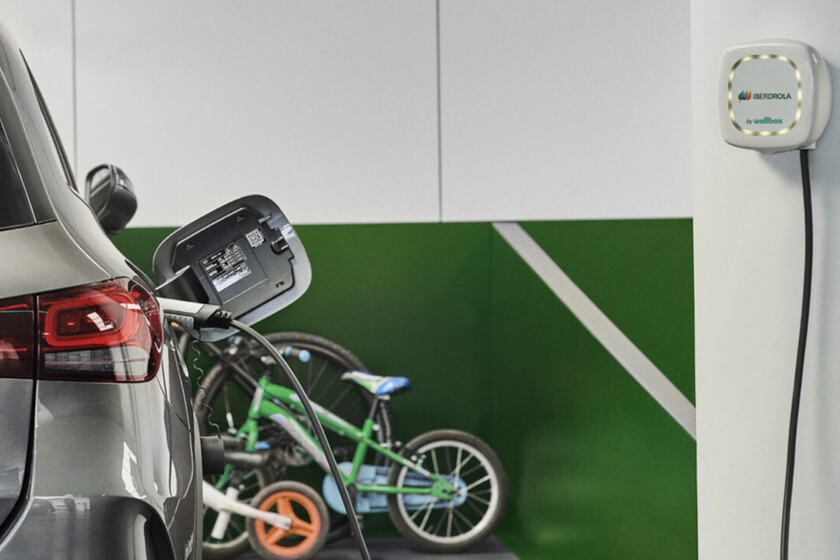
If you’re thinking about buying an electric car or a plug-in hybrid, the best plan is to have a home charger, whether in the garage or in your parking space.
Often, car brands have agreements with a manufacturer to offer a charger, but there are a multitude of chargers to choose from in the market, especially in online stores. In this guide we have gathered the best chargers for electric cars according to the different needs or priorities we may have.
Table of Contents (16)
- What to consider when buying an EV charger
- Installation cost
- The electrical installation you have
- Contracted power
- Types of electric chargers
- By connector
- By charging speed
- By the charging mode (safety and control)
- EV chargers: our selection of top brands
- Wallbox: the charger with installation included
- WallBox Policharger IN: the charger with the best price-performance ratio
- Circutor eNext, the ideal charger for a communal parking
- EVBox Elvi: the charger with the best price-performance ratio
- Simon: the charger for those who drive few kilometers or for a plug-in hybrid
- The best EV chargers in summary
- Find your ideal electric car
What to consider when buying an EV charger
Among the different charging modes that exist, the type of plug and cable supplied, the different charging powers, charging times, and how you plan to use the car, choosing the charger that best fits you isn’t easy. We explain here everything you need to know about home EV chargers (power, sockets, charging mode). Also, these are the factors you’ll have to consider to avoid blowing your budget.
Installation cost
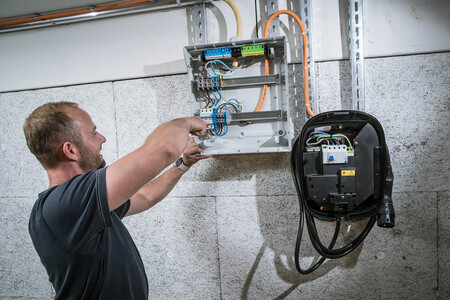
When buying an EV charger, you have to remember that you’ll need a professional to install it. Installation costs are highly variable and depend on many factors. In fact, they can sometimes be even higher than the price of the charger itself.
The charger, whether a wallbox or a reinforced domestic socket, must be connected to a panel to receive electricity and include a safety set, such as a circuit-breaker, which is not always included in the charger price. In addition, the electrical cable used for the connection must be sized up to the charging power. The higher the power, the more expensive the cable.
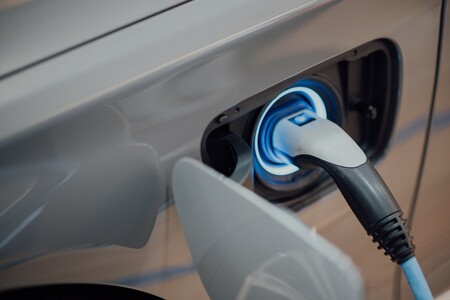
The distance between the charger and the electrical panel also influences the total installation cost. The longer the distance, the longer the supply cable, and therefore the higher the cost. It isn’t the same to install a charger in the garage of a private home as on the lower floor of a communal parking, which might also require installing a new electricity meter.
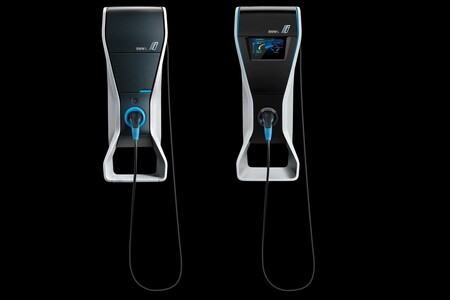
Moreover, the greater the distance between the charger and the connection point in the electrical installation, the more likely you are to need additional wall work, more or less simple. For example, it’s cheaper to mount the charger on the wall than on a pedestal on the floor, as seen in the images from some car brands.
The electrical installation you have
Another factor to consider is the existing electrical installation. Some older installations must be updated to meet regulations before they can power an EV. Carrying out the necessary improvements for safe charging can significantly raise the final price.
But to get a very broad idea of what a home EV charger installation might cost for up to 7.4 kW of power (to know what power and what type of charger you need, read our guide to home EV chargers first). A typical installation with about 20-30 meters of cable often brings the total budget to around 1,600 euros – 1,800 euros.
Sometimes, in more complex installations or with a meter box far from the charger, the bill can climb above 1,200 euros. Here it’s impossible to give a fixed price since it all depends on the house or parking where we install it.
Don’t hesitate to request several quotes and have the installer visit the garage or parking on-site before deciding. Thus, the prices of chargers indicated here, in addition to being informative, do not include installation, unless we indicate otherwise. Many companies handle the whole process, including the processing of subsidies.
Contracted power
Before getting into specifics, it’s worth recalling that the charger’s power depends on what the electric car can accept (we explain this in more detail in this guide on choosing an EV charger). Buying the most powerful charger does not automatically mean faster charging for your car. It’s advisable to have at least 3.75 kW at home, although for faster charging you may need to increase the power, which comes with additional costs on your electricity bill.
For example, a Peugeot e-208 cannot charge at more than 7 kW at home, so a charger up to 7.4 kW is enough. Another example, a Tesla Model 3 does not charge at more than 11 kW at home. Therefore, an 11 kW charger will be sufficient, but we could opt for one of 22 kW if we think we might need it in the future. Although at the moment, few cars are capable of 22 kW charging and they are usually high-end models, like the Audi e-tron GT or the Porsche Taycan.
Types of electric chargers
By connector
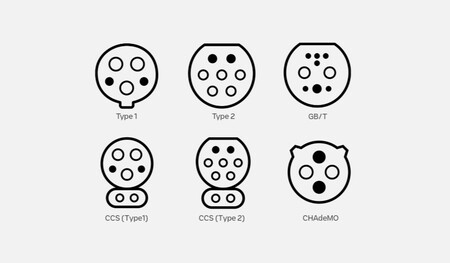
Image: Wallbox.
|
Type 2 (Mennekes) |
The European mandatory standard. It’s the one you’ll use on your home charger (Wallbox) and on most urban public posts. |
|---|---|
|
CCS Combo 2 |
It’s a Type 2 connector with two extra pins for direct current (DC). It’s used at fast- and ultra-fast charging stations on the highway. |
|
CHAdeMO |
Mostly used by Japanese brands (like the old Nissan Leaf) for fast charging. It’s losing ground to CCS in newer models. |
|
Schuko |
The conventional home plug. Only recommended for emergencies or plug-in hybrids with small batteries, as it is very slow. |
By charging speed
|
Slow charging (2.3 kW – 3.7 kW) |
Ideal for leaving the car to charge overnight at home (10-20 hours for a full charge). |
|---|---|
|
Semi-fast charging (7.4 kW – 22 kW) |
Standard for domestic Wallboxes and shopping centers. Charges the car in about 3-8 hours. |
|
Fast charging (50 kW – 150 kW) |
Common at gas stations or charging hubs. charges 80% of the battery in around 30-45 minutes. |
|
Ultra-fast charging (>150 kW) |
Capable of charging the car in less than 20 minutes. Needs compatible vehicles like the Porsche Taycan or the Tesla Model 3. |
By the charging mode (safety and control)
|
LEVEL 1: Mode 2 |
Cable with a “backpack” (control box) to connect to household sockets with basic safety. This is a standard home charger that plugs directly into the wall and typically requires more than 24 hours for a full charge. It is usually provided by the vehicle manufacturer. |
|---|---|
|
LEVEL 2: Mode 3, The standard for Wallbox |
The standard for Wallbox. The charger and car “talk” to manage the power and stop charging if there’s a fault. An hour of charging equates to roughly 40 km (7.4 kW) to 120 km (22 kW) of range. |
|
DC FAST CHARGE |
Exclusive to direct-current fast charging, where the charger is a powerful external station. They quickly increase battery duration, reaching 80% in about 30 minutes or less. |
EV chargers: our selection of best brands
Wallbox: the charger with installation included
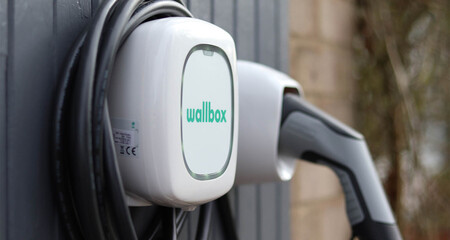

The Spanish manufacturer Wallbox is one of the few that offers a complete package with a fixed price for the charger and installation. Its domestic-use option is the Wallbox Pulsar Plus. Only available in Mode 3 charging, meaning it comes with an integrated charging cable permanently attached to the charger, and it is offered in three power levels: 7.4 kW, 11 kW and 22 kW. Its price ranges from about 600 to 800 euros including VAT.
All Pulsar Plus units include wifi and Bluetooth, giving access via the dedicated app to control charging remotely, schedule charging (time, power, etc.) and, optionally, the Power Boost, which dynamically adjusts the charger’s demand according to real-time power availability. It costs from 839 euros for the 7.4 kW version with a 5-meter charging cable to 1,009 euros for the 22 kW version with a 7-meter cable.
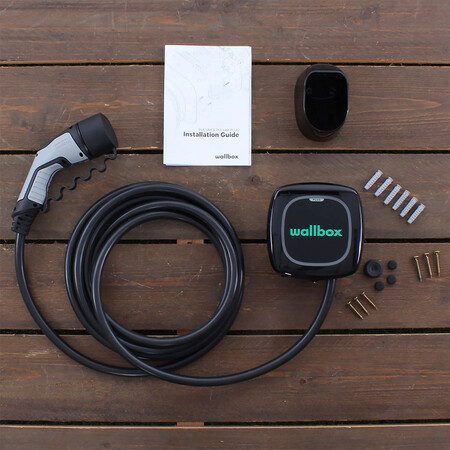
Installation packs range from 949 euros up to 2,649 euros, depending on the charger chosen and the distance from the meter in 20-meter segments. The installation includes the issuance and processing of the installation certificate (CIE), the mandatory electrical protections, and the mobile app configuration. But it does not include a new meter or the upgrade of an old installation lacking neutral or earth, etc.
It’s worth noting that in the Wallbox range there is the Pulsar, a more affordable option. With only Bluetooth connection and allowing the charger to be programmed to start and stop charging automatically, it’s available in the same power levels as the Pulsar Plus: 7.4 kW; 11 kW and 22 kW.
Also notable is the Wallbox Pulsar Max: it offers level 2 smart charging with up to 7.4 kW on single-phase installations and up to 22 kW on three-phase ones. It stands out for its durability (IK10 impact protection) and ease of installation. Its price ranges from 650 to 900 euros.
Wallbox Cooper SB: Ideal for homes that prefer a charger with an integrated plug rather than a hose cable, which allows using any charging cable (Type 1 or Type 2). It also reaches 22 kW of power.
WallBox Policharger IN: the charger with the best price-to-feature ratio
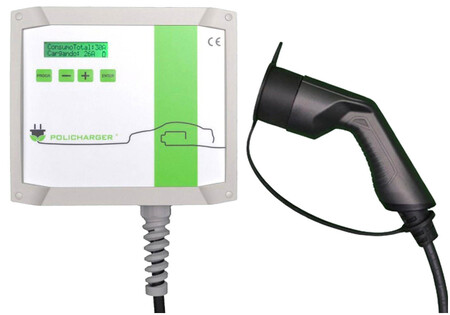
No es el cargador con el diseño más vanguardista del mercado, pero sí es uno de los más robustos con grado de protección IP65 e IK10, superior en ambos casos a los Wallbox Pulsar, por ejemplo. (Te explicamos qué son los índices de protección IP/IK en detalle aquí).
Está disponible en potencias de 7,4 kW o 22 kW y su precio oscila entre los 730 y los 837 euros sin incluir la instalación. Destaca por equipar de serie la regulación dinámica de la potencia de carga, con la que se adapta la disponibilidad de energía en cada momento, así como la programación de hora de inicio y parada de carga. Por el contrario, no disponen de conectividad ni de protección magnetotérmica, diferencial y contra sobretensiones.
Alternative: Veltium Lite Zero, from 600 euros
The Veltium Lite Zero has a charging power of 7.4 kW. It features access control (useful for a communal parking installation), recharge scheduling and Bluetooth connectivity with the Veltium app. In the higher tiers, such as Lite Kubo, wifi and optional 4G connectivity are added.
Circutor eNext, the ideal charger for a communal parking
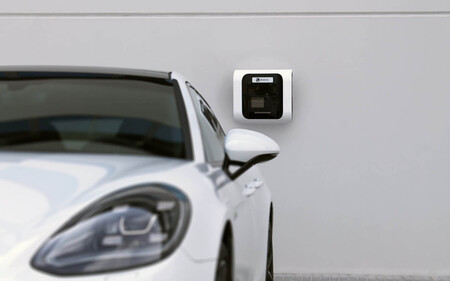
The Circutor eNEXT is ideal for a parking space in a communal garage because it includes an authentication system to enable charging. The eNext incorporates an app for user authentication and configuration of the charging device.
In addition to authentication via presence detection via Bluetooth, the app allows remote start of charging, scheduling to adapt charging to hourly energy tariffs and remote monitoring of the charging state, among other features.
It can perform charging at 7.4 kW or 22 kW and its price ranges between 600 and 900 euros for the standard versions, while the Elite line can exceed 1,500 euros. Like most manufacturers, they do not sell directly, so you’ll need to find the best price offered by a supplier.
Alternatives
Orbis Viaris Uni, from 780 euros
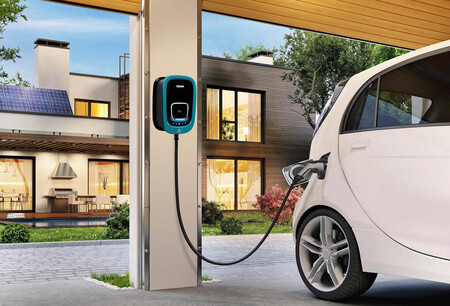
The Orbis Viaris Uni is available in 7.4 kW and 22 kW options, with 5-meter or 10-meter Type 2 cables, or 5-meter Type 1 cables. It only accepts Mode 3 charging. It has an integrated WiFi module that allows remote charging scheduling and history reading from the mobile.
It also features dynamic charging that takes advantage of the available power in real-time for the vehicle’s recharge. You can activate charging via RFID cards and a touch sensor.
Prices vary greatly from seller to seller. We’ve seen it from 645 euros for the 7.4 kW version. The 22 kW version can be found from 780 euros up to 1,250 euros.
Schneider EVlink Wallbox, from 850 euros
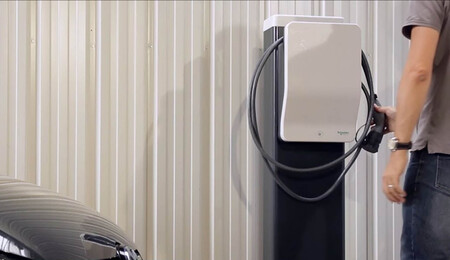
The Schneider EVlink Wallbox is available with powers of 3.7 kW and 7.4 kW, as well as 11 and 22 kW. It features scheduling for charging during off-peak hours and a security key. The price ranges between 850 and 1,200 euros including VAT.
EVBox Elvi: the charger with the best price-to-feature ratio
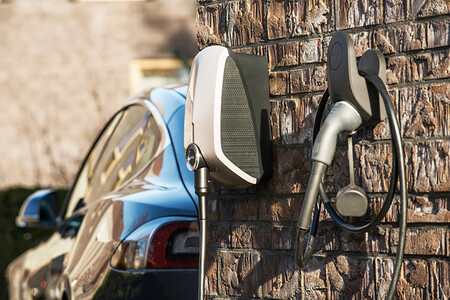
The EVBox Elvi serves both a private home and a communal parking setup. It is available in charging powers of 7.4 kW, 11 kW and 22 kW. It stands out for the ability to remotely control charging via the EVBox Connect app, and it automatically adjusts energy consumption in real time through dynamic load balancing.
It is one of the chargers with the best price-to-feature ratio. For example, it starts at around 700 euros for the Elvi at 7.4 kW with RFID activation and WiFi and Bluetooth connectivity, allowing installation in a communal parking.
Simon: the charger for those who drive few kilometers or for a plug-in hybrid
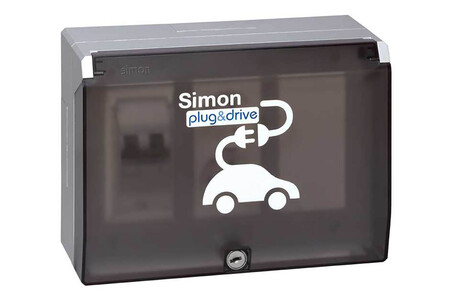
In reality, you don’t always need a charger, especially if you drive only a little and not every day. To recharge an electric car, a normal, even reinforced, outlet is sufficient. They’re also ideal for plug-in hybrids, and the vast majority does not charge above 3.2 kW.
This manufacturer offers an all-in-one system that includes two sockets and magneto-thermal-differential protection, for overvoltages and short circuits, something that even pricier chargers don’t always provide. And it even comes in a lockable box if it needs to be installed in a communal parking. It delivers 3.6 kW (16 A) in Mode 1 or Mode 2. The price ranges from 650 to 1,200 euros.
Perhaps the simplest expression of a charger, as it has no scheduling, no load management, and no emergency stop. It is basically a super outlet that guarantees 8 hours of daily charging with safety. It’s a very valid option if you don’t use the car much, for a plug-in hybrid (typical battery capacities are 12–20 kWh and they can’t charge above 3.3 kW) or for an electric motorcycle.
This outlet also requires installation by an electrician, but the installation cost will be much lower than for any other more complete charger.
Alternatives
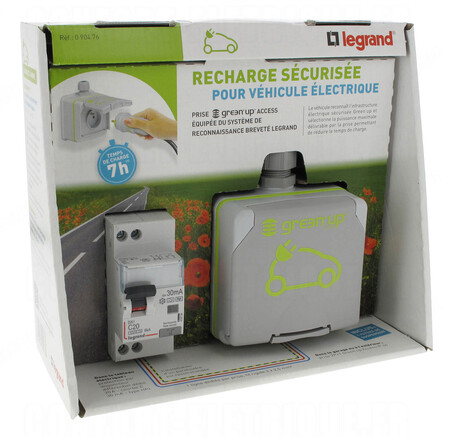
Legrand Green’Up, from 150 to 750 euros. Legrand proposes a plug adapted for electric cars, the Green’Up. It offers a charging power maximum of 3.2 kW. It is also sold in a pack with a differential circuit breaker (which protects the installation in case of voltage difference).
The basic version does not include a lock or safety that prevents its possible use by neighbors in a communal parking space. There is a variant with a key, a little more expensive.
Schneider EVlink Mode 2, from 250 euros. The Schneider EVlink is the simplest solution for charging an electric vehicle. It consists of a domestic plug and a circuit breaker. It has a power limited to 2.3 kW.
Keep in mind that in the case of these three chargers they could fall short in power in the future, since electric cars and plug-in hybrids increasingly have larger batteries. For example, the new Mercedes GLE 300 comes with a 31.2 kWh battery, similar to the early Nissan Leaf.
The best EV chargers in summary
|
price (from, excluding installation) |
suitable for parking |
ideal for plug-in hybrid |
ideal for electric car |
|
|---|---|---|---|---|
|
Wallbox Pulsar |
600 euros |
Yes |
No |
Yes |
|
Wallbox Pulsar Plus |
839 euros |
Yes |
No |
Yes |
|
Wallbox Policharger IN |
730 euros |
Yes |
No |
Yes |
|
Circutor eNext |
600 euros |
Yes |
No |
Yes |
|
Orbis Viaris Uni |
645 euros |
Yes |
No |
Yes |
|
Schneider EVlink Wallbox |
850 euros |
Yes |
No |
Yes |
|
EVBox Elvi |
700 euros |
Yes |
No |
Yes |
|
Simon |
650 euros |
Yes |
Yes |
No |
|
Legrand green’up |
150 euros |
Optional |
Yes |
No |
|
Schneider EVlink Modo 2 |
250 euros |
Optional |
Yes |
No |
Find your ideal electric car
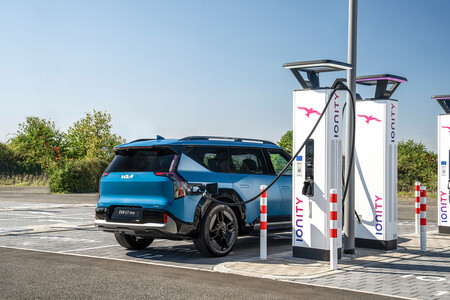
If you’ve considered buying an electric car, this will interest you. We’ve created a personalized electric car recommender that not only shows models that fit your needs but also provides answers to the questions you’re likely to have regarding price, range, or nearby charging points.