
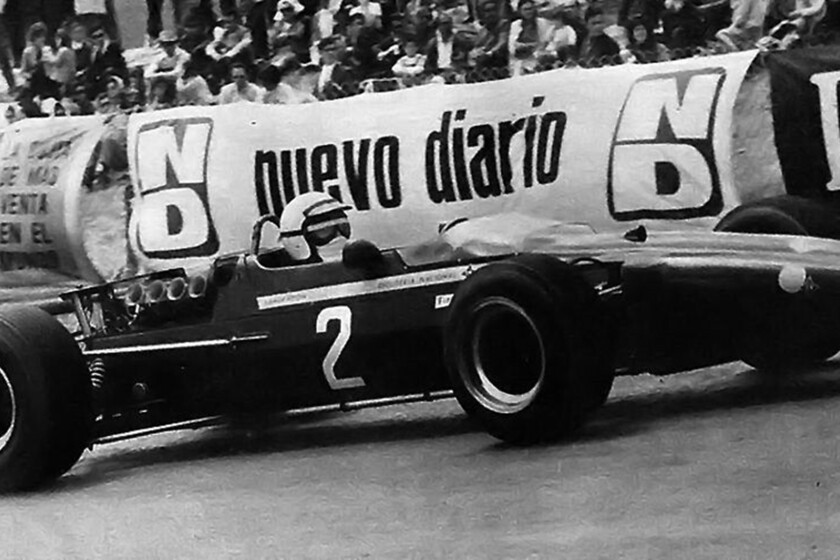
Officially there have been 13 Spanish drivers who have contested a Formula 1 race, and another seven who participated at least in some free practice sessions, though they did not race. Twenty drivers in total, however, do not tell the entire story of Spain in Formula 1, because there is a twenty-first who has a lot to say.
He was named Jorge de Bagration, a cousin of King Juan Carlos, and he positioned himself as the legitimate heir to the throne of Georgia. What does that have to do with Formula 1? Officially nothing, since his name does not appear in any registry. But in reality he came close to racing, and a surreal twist of fate stopped him.
De Bagration is the only driver “not presented” to a Formula 1 race

Jorge de Bagration was not one to back away from a challenge. An enthusiast of motorsport, he began by riding motorcycles, but quickly switched to cars. His track record is by no means negligible, as he became Spanish champion in Turismo across all its forms—Grand Tourers, Sport and Prototypes—always behind the wheel of Porsche.
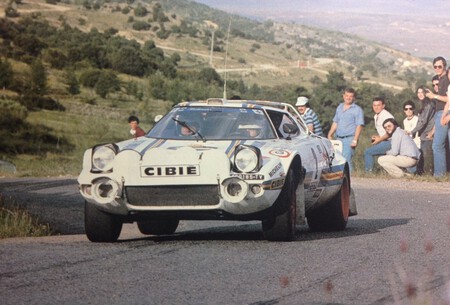
Additionally, he was two-time Spanish rally champion driving a mighty Lancia Stratos, and he even took part in the 24 Hours of Le Mans, also with Porsche. But Formula 1 proved to be his nightmare. He made two attempts to race in a Grand Prix, both at Jarama. The first time, in 1968, his entry was not even accepted. In the second, in 1974, fate dealt him a cruel hand.
With the backing of El Corte Inglés and the Calvo Sotelo team, Jorge de Bagration gathered the sponsorships necessary for Formula 1 to accept his entry. And indeed, the name Jorge de Bagration appeared on the entry list for the 1974 Spanish Grand Prix to be held in Madrid.
Jorge de Bagration had rented a Surtees TS16 convinced that he would participate in his first Formula 1 race. A few weeks before the event, El Corte Inglés decided to withdraw its support for the project. The loss amounted to 350,000 pesetas, but in any case Bagration was already registered for the Grand Prix, and that stood—almost.
Because in a dramatic turn of events, the Spanish Automobile Federation decided to call elections, to be held just a week before the Formula 1 Spanish Grand Prix. At that time, local federations still organized their own Grand Prix for their home country.
To Jorge de Bagration’s misfortune, the elections produced a change of president at RFEDA. José María Padierna lost the vote, and legend has it that the last thing he did was hurriedly take all the papers from his office, among which was the entry list for the Grand Prix.
Thus, with a week to go before the Jarama race, the new president, Fernando de Baviera, had to draft a new entry list in which, without El Corte Inglés’s support, Bagration could no longer be included. Even so, the Surtees TS16 waited for him at Jarama, making de Bagration the only driver in Formula 1 history to be listed as “not-presented” for a race. And he does not appear in any historical ranking.
The disappointment was such that de Bagration stayed away from car racing for more than a year, nursing his sorrow. But he later returned to compete and won the aforementioned Spanish Rally Championships, though that was not the most notable thing he did afterward. For Jorge de Bagration set his sights on the throne of Georgia.
The De Bagrations Continue to Aspire to the Throne of Tiflis
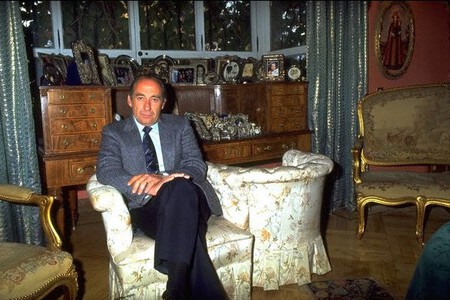
After the fall of the Berlin Wall and the breakup of the Soviet Union, Georgia, the country from which Jorge de Bagration hailed, undertook the process of shaping its own state. And the first major question was whether to adopt a parliamentary republic or a monarchy as the model for the state.
De Bagration was the son of the exiled prince Irakli de Bagration, so Georgia’s monarchist party proposed him as a candidate for the throne. However, the Georgian people decided in a referendum to opt for a parliamentary republic as the model for the country. Another disappointment for De Bagration.
In 2008, Jorge de Bagration passed away at the age of 63 due to hepatitis, but his descendants continue to fight in Georgia to reinstate the throne of Tiflis and to be its rightful heirs.