
Tech companies are not having luck breaking into the automotive industry. Apple pulled the plug on its electric car project, costing billions, and now Sony is walking the same path. Only the Chinese Xiaomi has managed to succeed in this business, with already two electric models in its lineup.
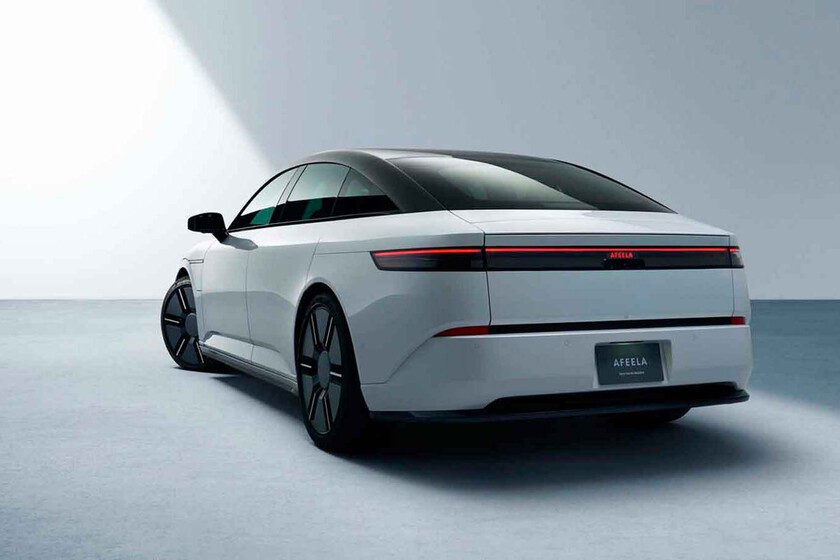
Sony’s foray into the electric car market began with its partnership with Honda, under the umbrella of a joint venture (Sony Honda Mobility) and the Afeela brand. Its first model, the Afeela 1, had open reservations for a year in the US and was due to begin deliveries by the end of 2026. That will not happen: they have just announced its cancellation, as well as their second car, a newly unveiled electric SUV. The reason for this abrupt end? Trump’s anti-electric car policies.
Honda will not launch its future electric vehicles in the US, and Sony’s has followed
Sony Honda Mobility has just announced the farewell to its electric cars while they were barely becoming a reality. They suspend “the development and launch of its first model, the Afeela 1, and of its second model Afeela that was in development,” they state in a press release.
And they add: “this decision arises after discussions between their parent companies, Sony Group Corporation and Honda Motor Co.” In other words, Sony and Honda. They also make clear the reason: “as a result of the reevaluation of Honda’s automotive electrification strategy, announced on March 12, 2026.”

Victim of anti-electric vehicle policies. Honda was a fundamental part of Sony’s electric cars, based on its technology and electric platform. And the Japanese firm has just canceled its future electric cars destined for the American market: the zero-emission range, with a SUV and the Honda Saloon, both unveiled at CES 2024 and which were due to be launched next year.
Moreover, this decision is driven by U.S. policies toward zero emissions: the end of subsidies for electric purchases has collapsed demand, drastically reducing zero-emission sales in this market. In Honda’s case, the debacle has been considerable: deliveries of its electric cars fell by more than 80% just one month after the subsidies ended. The US was the market designated for Afeela, in addition to Japan.
Additionally, the 25% tariffs on cars not manufactured in the US have been imposed. Approximately 40% of the models Honda sells in the US market are imported. This newly introduced protectionist measure by Donald Trump has dealt Honda a heavy blow, with profits falling by more than 465.0 billion yen (about €2.5 billion). Honda now only sells a single pure electric there: the Prologue, manufactured in Tennessee.
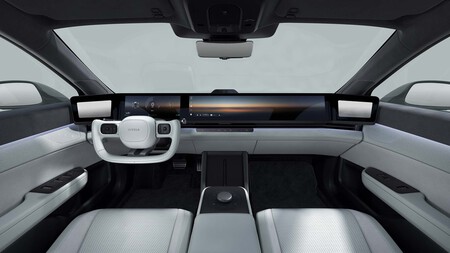
Farewell to Afeela. With this landscape, launching electric cars in the US has ceased to be profitable. But it is even more so when we talk about premium zero-emission models like the Afeela from Honda and Sony’s joint venture. The Afeela 1, a sedan of almost 5 meters to take on models such as the Mercedes EQE, with all-wheel drive, two motors per axle, and delivering 482 HP and a range of 480 km.
This ultramodern electric sedan, with a screen spanning the entire dashboard, started at $89,900 (about €87,000 at current exchange rates) and its more equipped Signature variant at $102,900 (around €99,600). Similar pricing would have surrounded the SUV freshly introduced earlier in 2026.
Reservations to secure the Afeela 1 began in January 2025, but only in California, and Sony Honda Mobility will fully refund the deposits of buyers who had already reserved it. In the meantime, millions of dollars have been lost, effectively marking the end of Afeela and Sony’s journey as a carmaker.
Find your ideal electric car
If you have been considering buying an electric car, this will interest you. We have created the Personalized Electric Car Recommender, through which, in addition to seeing models that fit your needs, you will also get answers to the questions that may worry you most, such as price, range, or nearby charging points.