Toyota has been setting its own pace in electrification for years. While others have raced toward a full transition, the Japanese brand has opted for offering different solutions depending on the customer. And it has paid off: it remains one of the best-selling and most valued brands for its reliability. Now, with the electric market starting to consolidate, it broadens its range with a key model.
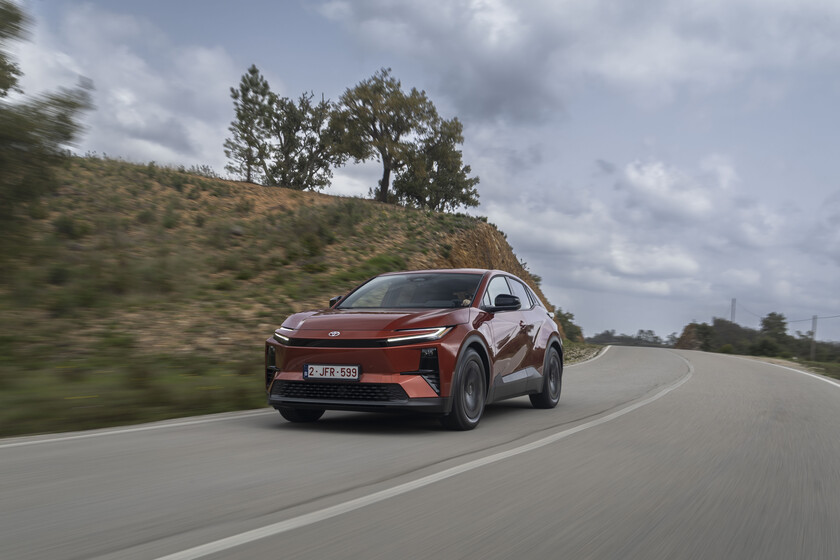
The new Toyota C-HR+ is its second 100% electric car and it targets directly the heart of the compact SUV segment. It takes the name of one of its best-sellers, but in reality it is a completely new model: larger, more advanced and developed on a dedicated platform. It arrives with two power levels, up to 607 km of range and front- and all-wheel-drive versions. We have already had the chance to test it in Faro (Portugal), and these are our impressions.
General characteristics of the Toyota C-HR+: a well-conceived electric SUV from the ground up
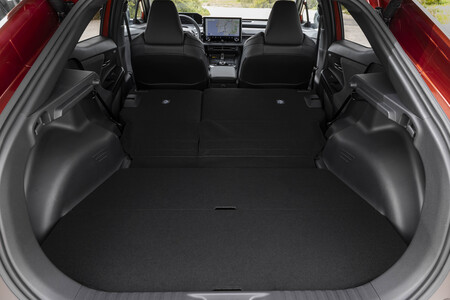
The C-HR+ lands straight into the crowded compact-SUV segment. In size, it sits between the hybrid C-HR and the bZ4X, at 4.53 m in length with a 2.75 m wheelbase. This also translates into a more usable interior, especially in the rear seats, and a 416 L boot with practical solutions such as a double floor to store charging cables.

It is built on the electric-specific e-TNGA platform, the same base used by the bZ4X, but adapted to this more compact format. The range is very simple: there is only one battery, 77 kWh, and two clearly differentiated mechanical configurations, which are also paired with two trim levels.
The entry-level version, Advance, with front-wheel drive, develops 224 hp and homologates up to 607 km of range. Above it is the Spirit, which adds a second motor on the rear axle to offer all-wheel drive and raise the power to 343 hp, with a range of up to 501 km and a more performance-oriented focus.
See this post on Instagram
As for charging, the new Toyota CH-R+ also meets current expectations. It supports up to 150 kW on DC fast charging (which allows going from 10 to 80% in about 30 minutes under optimal conditions), and up to 11 or 22 kW on AC depending on the trim. Add to this battery preconditioning, crucial to maintaining good charging times even in cold weather, and a route planner that makes long trips easier.
Exterior design of the Toyota C-HR+: a electric SUV with a lot of personality
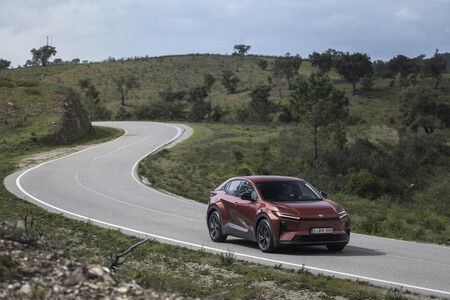
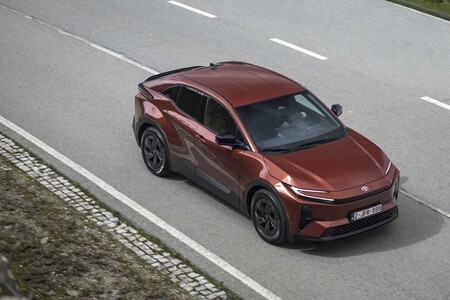
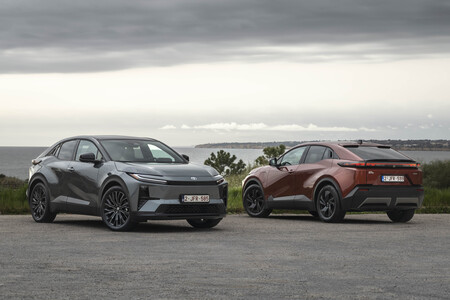
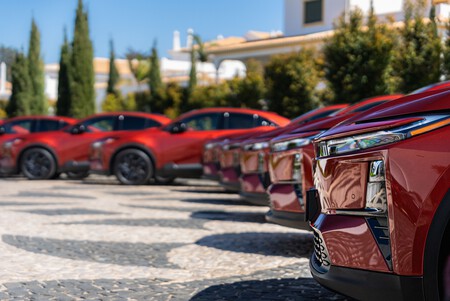
The Toyota C-HR+ carries part of the C-HR’s DNA, but takes it a step further. It preserves that SUV silhouette with a somewhat coupé-like roofline, a pronounced slope, and a very worked rear, but with a cleaner and more aerodynamic design. Yet it also clearly shows the influence of the bZ4X in the front, with a sharper language.
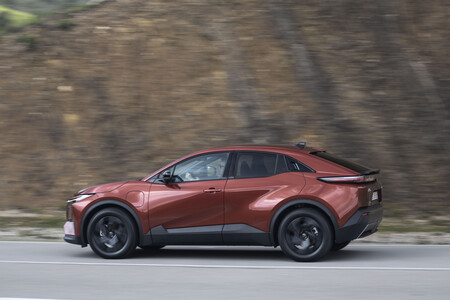
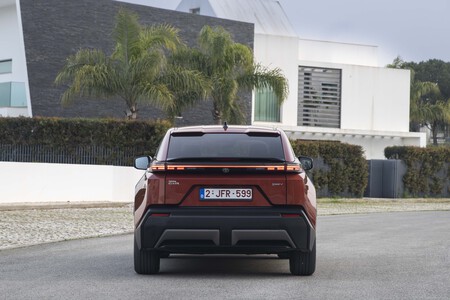
From the side, it keeps characteristic details such as the raised rear doors, while at the rear the horizontal lighting signature that connects the taillights stands out and reinforces the sense of width. But beyond aesthetics, there is substantial aerodynamic work: the new C-HR+ achieves a drag coefficient of 0.26 thanks to elements like the rear spoiler or the aero fins. Everything is designed to improve efficiency without sacrificing a strong image.
The wheels also significantly alter the car’s perception. In the Advance trim they are 18″, while the Spirit goes up to 20″ and adds details such as two-tone bodywork, which suits it especially well and reinforces that more emotional character. Overall, it’s a car that catches the eye. It has presence, is instantly recognizable, and maintains that bold edge that has always defined the C-HR, but now with a more mature, tech-forward focus.
Interior design of the Toyota C-HR+: more space, more technology and better resolved
Inside, the leap compared to the hybrid C-HR is clear, especially in space and overall feel. The increase in size is noticeable particularly in the rear seats, where there is more legroom and a sense of more openness thanks to bigger windows and a less boxed-in design.
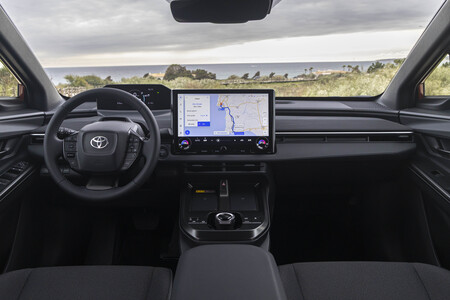
In the driver’s seat (adjustable more easily in the Spirit than in the Advance thanks to electric seat adjustment), you’ll find a compact but comfortable steering wheel, and a 7” digital instrument cluster placed high to be viewed with minimal eye shift. But the centerpiece is the 14” central screen that houses the multimedia system.
This looks good, with a clear and easy-to-use interface, and it also keeps something appreciated: physical controls for key functions like climate control or volume. In terms of build quality, it continues Toyota’s usual approach: everything is well assembled, with decent materials and no major showiness, but with a general sense of solidity.
The seats, which vary by finish (fabric in the Advance and combinations of suede and synthetic leather in the Spirit), are comfortable and offer good support. It also features well-thought-out practical details, such as numerous storage pockets or wireless chargers for two phones, though the lack of a traditional glove box is notable, replaced by a central console storage space for the heat pump.
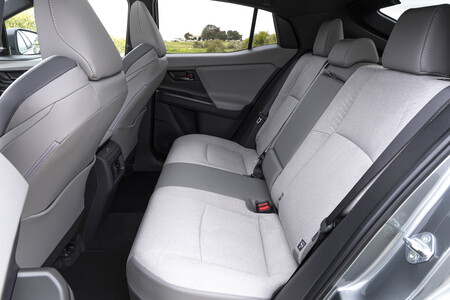
Behind, space is ample for two adults without issue, and the car also performs well in comfort with features like air vents and USB-C ports.
Behind the wheel of the Toyota C-HR+: comfortable, balanced and with two very distinct faces
This first hands-on experience with the new Toyota C-HR+ took place on the roads of the Algarve in Portugal, with constant (and abundant) rain and fairly rough pavement. A demanding scenario that served to verify how this electric SUV responds in real-world conditions. And the result has been very convincing from the first kilometers.
The first thing to highlight is the ride comfort: the suspension filters out irregularities very well and, together with solid sound insulation, the car achieves very pleasant dynamism. A steering that feels direct and precise also helps, with a touch firmer than usual (which I personally love), and a setup that communicates a well-tuned car.
On the move, the C-HR+ is a very easy car to drive that requires no adaptation. The front-wheel-drive Advance version, with 224 hp (which will make the most sense for most drivers because of its overall balance), is smooth, progressive and sufficient in any situation.
Another notable point in both versions is that the braking system is well resolved for an electric car. There’s no artificial or squishy feel typical of other models, and the transition between regenerative braking and conventional braking is well calibrated. In addition, you can adjust the brake‑retention with four levels via paddles on the steering wheel, something very welcome in daily use as it lets you tailor it to your driving style or environment.
There are also different driving modes that alter the car’s response, though the difference between them isn’t especially radical. What stands out more is how they manage power and the accelerator response.
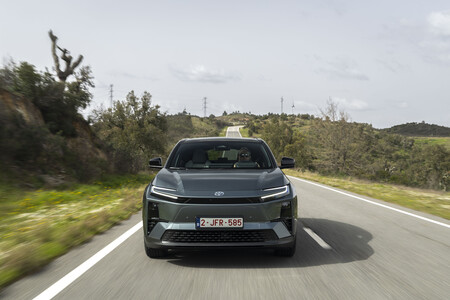
Overall, the C-HR+ is a very balanced car. It isn’t aimed at being sporty, but responds well when pushed and stands out for its comfort and smoothness. The Advance version is the most logical choice for efficiency and range, while the Spirit adds that extra level of performance for those who want more.
Regarding consumption, on our route, with two occupants and a predominantly mountainous journey of just over 100 km, it recorded 14.6 kWh/100 km, slightly above the 13.4 kWh/100 km homologated, with real-world range around 500 km when the battery was nearly full. Even as the entry version, it impresses with its solvency and dynamism.
On the other hand, the all-wheel-drive variant, the Spirit with 343 hp, changes the character and adds another level of enjoyment. There is more immediate push and a much more decisive response, especially in acceleration and overtaking. It is fast (very fast), even without a sporty vocation, and the all-wheel drive adds security and traction in tricky conditions.
In this case, consumption was higher, around 17–18 kWh/100 km, compared with the 15.7 kWh/100 km homologated. In both versions the figures are quite reasonable for a first-hand look: it remains to be seen how they evolve in a more complete test, but as an initial reference they leave very good impressions.
Price and availability of the Toyota C-HR+: a very competitive electric
As we hinted earlier, the Toyota C-HR+ is already available in Spain with a simple lineup: two closed versions that combine motorization and trim. The Advance, with front-wheel drive and 224 hp, and the Spirit, with all-wheel drive and 343 hp.
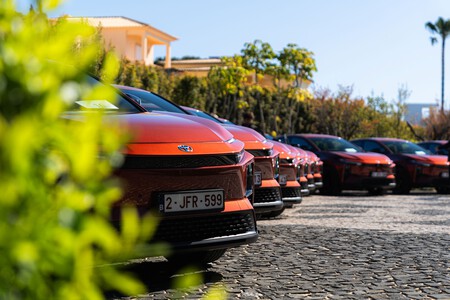
The starting price is €35,375 for the Advance and €42,425 for the Spirit, with brand discounts included. From there, applying incentives such as the Auto+ Plan (when available), tax deductions and other rebates, the price can drop notably, to around €28,000 for the Advance and about €35,500 for the Spirit.
Beyond price, one of the model’s strong points is its equipment. From the entry version it already includes 18” wheels, a heat pump-equipped climate control system, heated seats and steering wheel, a 14” display and the Toyota Safety Sense suite. The Spirit trim adds 20” wheels, two-tone bodywork, a panoramic roof, JBL sound system, and a 360° camera, among other features.
There are also financing and usage options such as Toyota Easy Plus, with monthly payments from around 250 euros, or the Kinto renting, starting from around 475 euros per month. All this adds up to an important selling point for an electric vehicle: long-term peace of mind.
Toyota offers a battery warranty of up to 10 years or 1 million kilometers, as long as maintenance is performed in the official network, something no other brand has offered so far. All in all, the C-HR+ positions itself as one of the most interesting EVs of the moment in terms of the balance between range, technology and price within its segment.
The costs associated with attending this presentation were borne by the brand. For more information see our guide to corporate relations.
Images | Toyota