In Brief
The rise of electric vehicles in the United States is dramatically lowering maintenance costs for drivers thanks to simpler mechanics and fewer recurring tasks. This simplification, however, puts pressure on auto shops, which are seeing a large portion of their traditional revenue disappear. Maintenance on electric models is typically more spaced out and less expensive, which benefits motorists but weakens the business model of auto repair shops. Shops must now adapt to new technical skills and an evolving customer base. This shift is quiet but deep, gradually redefining the balance of the automotive sector.
People talk a lot about purchase price, range, and charging networks. They talk less about another major collateral effect of the plugged-in car: what it does to the work of mechanics and to drivers’ budgets. When you look at maintenance bills, the balance subtly shifts sides.
Because an electric car, like a conventional one, has its pros and cons. But a key point that often goes under the radar is that with far fewer moving parts to monitor, it takes a portion of the revenue from repair shops off the table. For the average American driver, that’s good news. For garages, it’s less so. And that’s where the reality becomes interesting to examine a bit more closely.
Electric Car Maintenance: Fewer Parts, Fewer Trips to the Shop
An electric motor contains very few moving parts compared with a diesel or gasoline engine. There are no pistons, no valves, no turbo, nor a complex fuel-injection system. The direct result: no more engine oil changes, no spark plugs, no air or fuel filters, or timing belts. According to industry peers at AutoBild, the maintenance cost of an electric model can be up to 30% lower than that of a comparable gasoline model, and several French studies place this gain between 20% and 40%.
In electric-car maintenance, some procedures disappear, others stay, or evolve:
- No more oil changes, spark plugs, fuel filters, or timing belts.
- Brakes still exist, but wear far less thanks to regenerative braking.
- Tires wear more, due to the higher weight and immediate torque.
- Maintenance intervals are longer: often every two years or 30,000 miles.
On a gasoline model, an inspection is typically recommended annually, or about every 20,000 miles. But with the rapid evolution of on-board technologies, car maintenance no longer boils down to the same operations as a few years ago. Interventions change, the skills required shift, and shops must now contend with a mechanical system increasingly intertwined with electronics and software.
For Drivers, a Blessing for the Auto Budget
Fewer trips to the shop, fewer pricey procedures: for a driver, the logic is simple. Over several years, maintenance on an electric vehicle is noticeably cheaper than a gas or diesel model of a similar size. Some lifecycle cost analyses in the U.S. suggest that when you factor in purchase, charging, maintenance, insurance, and parking, driving electric can cost substantially less than traditional cars, with gaps of tens of dollars per month depending on driving patterns. A figure that adds up when you tally bills over 5 or 8 years.
That said, not everything disappears. Tires on a battery-powered model wear faster because of the extra weight—often near +30%—and the instant torque at startup. Brake pads and rotors last longer, often twice as long as on a gas car, thanks to regenerative braking that takes a lot of load off the mechanical system. And then there’s the battery, the heart of the electric vehicle: it degrades over time and with charging cycles, much like a smartphone battery. Automakers typically guarantee about 8 years or 100,000 miles, with a threshold of roughly 70–80% of remaining capacity. In theory, it’s designed to last the life of the car, but not necessarily with the same performance as on day one.
For Garages, a Business Model Under Pressure
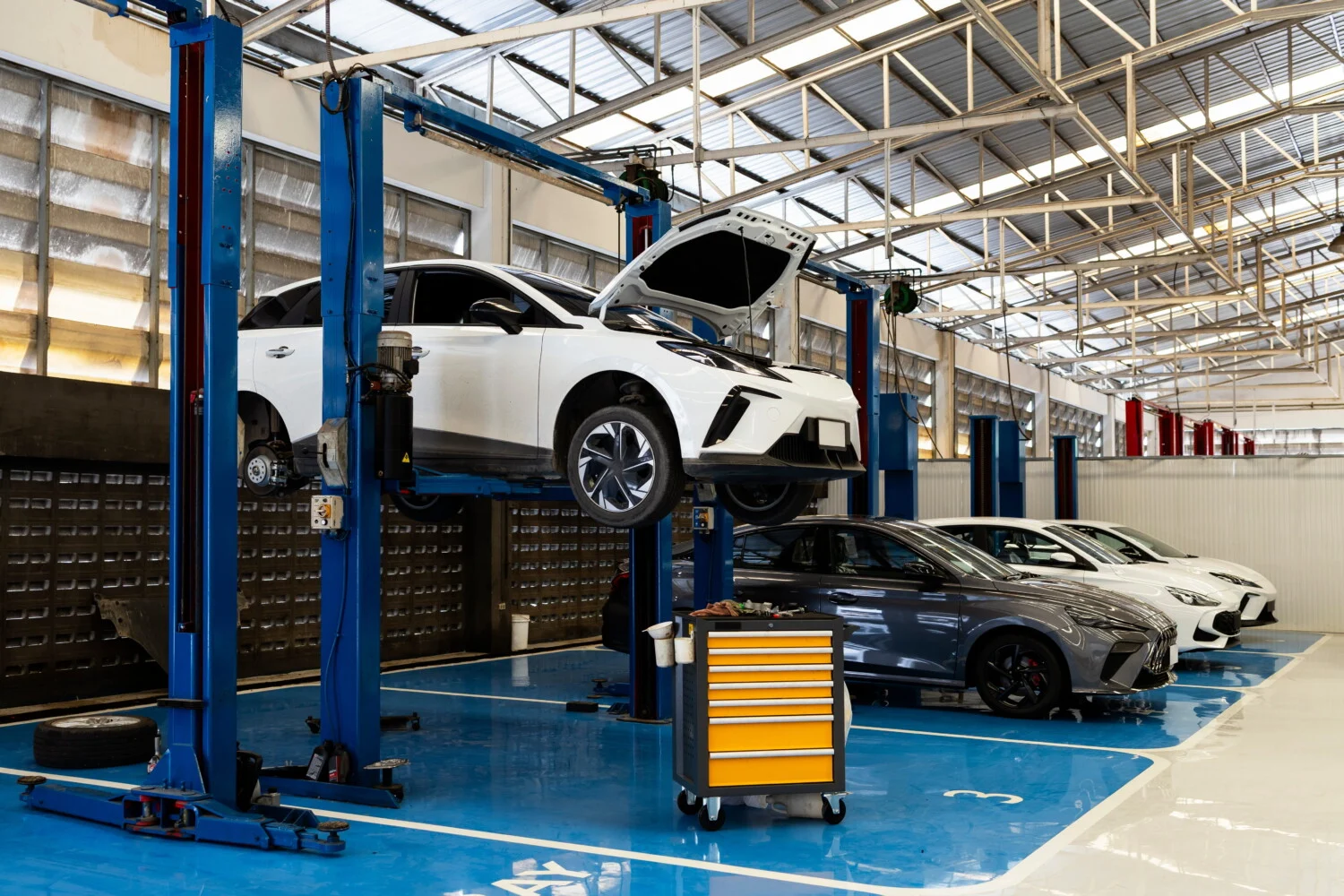
Anything that lowers your bills, conversely, reduces recurring revenue for auto shops. For decades, shops thrived on pure mechanical work: oil changes, clutches, timing belts, exhaust systems, filters, and clogged fuel injectors. All of these lines are disappearing or diminishing sharply with the arrival of a 100% electric era. Brakes are changed less often, the engine asks for almost nothing, exhaust systems vanish. All of this chips away, little by little, a sizable chunk of the revenue of so-called “old-school” shops. Sometimes people even say, “There are no more mechanics.” A phrase that nicely captures the anxiety felt by some professionals.
Shop owners have already navigated several technical revolutions, from the rise of electronics to driver-assistance systems. But many explain that this jump is of a different kind. Diagnosing a high-voltage system, managing a traction battery or a power inverter requires targeted training and expensive equipment. According to the work of the National Association for Automotive Training, electric vehicles currently generate little routine maintenance and repair activity, aside from tires, and the growing share of such vehicles could reduce labor needs in the aftermarket. A potential shock for small independent garages, especially in rural areas, that lack the means to invest heavily.
This shift isn’t yet fully visible on the ground. The U.S. fleet remains heavily gasoline-powered and aging: many cars are over 10 years old, sometimes 15 or 20. New models are getting pricier, which pushes many drivers toward used vehicles. After all, as long as these older cars keep running, they require traditional, often heavy, maintenance: clutches, shocks, exhaust corrosion, various leaks. All those man-hours keep appointment books full for traditional auto shops.
For garages, the challenge is to stay viable for years longer with this aging gasoline fleet, while preparing for a clientele of electric cars that demand something different. Some are investing in high-voltage training, advanced electronic diagnostics, or specializing in batteries and charging systems. Others struggle to keep pace, risking that dealer networks and authorized repairers capture most of the maintenance work on electric models, especially for complex interventions. A dual reality that, from behind the wheel, translates into a car that demands fewer trips to the shop but shakes up the economics of automotive workshops at a deeper level.
Tableau comparatif
| Criterion | Electric Car | Gasoline Car |
|---|---|---|
| Maintenance cost | Up to 30% lower (typically 20–40% gain) | Baseline |
| Maintenance interval | Every two years or 30,000 miles | Annually or about 20,000 miles |
| Manufacturer battery warranty | Generally 8 years or 100,000 miles (70–80% remaining capacity) | Not applicable |
| Brake life | Up to twice as long | Standard |
| Tire wear | Wear higher (weight up to +30%) | Standard wear |
Key Takeaways
- The maintenance cost of an electric car is up to 30% lower than that of a comparable gasoline model.
- Fewer maintenance tasks are required thanks to mechanical simplification and spaced-out service intervals.
- Tires wear faster due to the vehicle’s weight and instantaneous torque, while brake pads last longer.
- Maintenance and repair of these newer models require electronic and software-specific skills.
- The rise of electric cars weakens the business model of traditional garages, which see their routine activity shrink.
- Smaller shops sometimes struggle to invest in the training and equipment needed to evolve with the market.
FAQ
Why is maintenance for an electric car cheaper?
It has fewer mechanical parts and requires fewer operations, such as oil changes or belt replacements.
Which maintenance items remain on an electric car?
Brakes and tires still require attention; the battery needs long-term monitoring, and maintenance intervals are more spaced out.
Does the battery of an electric car last the life of the vehicle?
It is designed to last the life of the car, but its capacity declines over time; the manufacturer’s warranty generally covers 8 years or 100,000 miles.
Why are auto shops negatively impacted by electrification?
Many traditional interventions disappear, reducing the shops’ revenue, which must adapt by acquiring new skills.
Do tires wear faster on an electric car?
Yes, due to the higher vehicle weight (often +30%) and the immediate torque of electric motors.