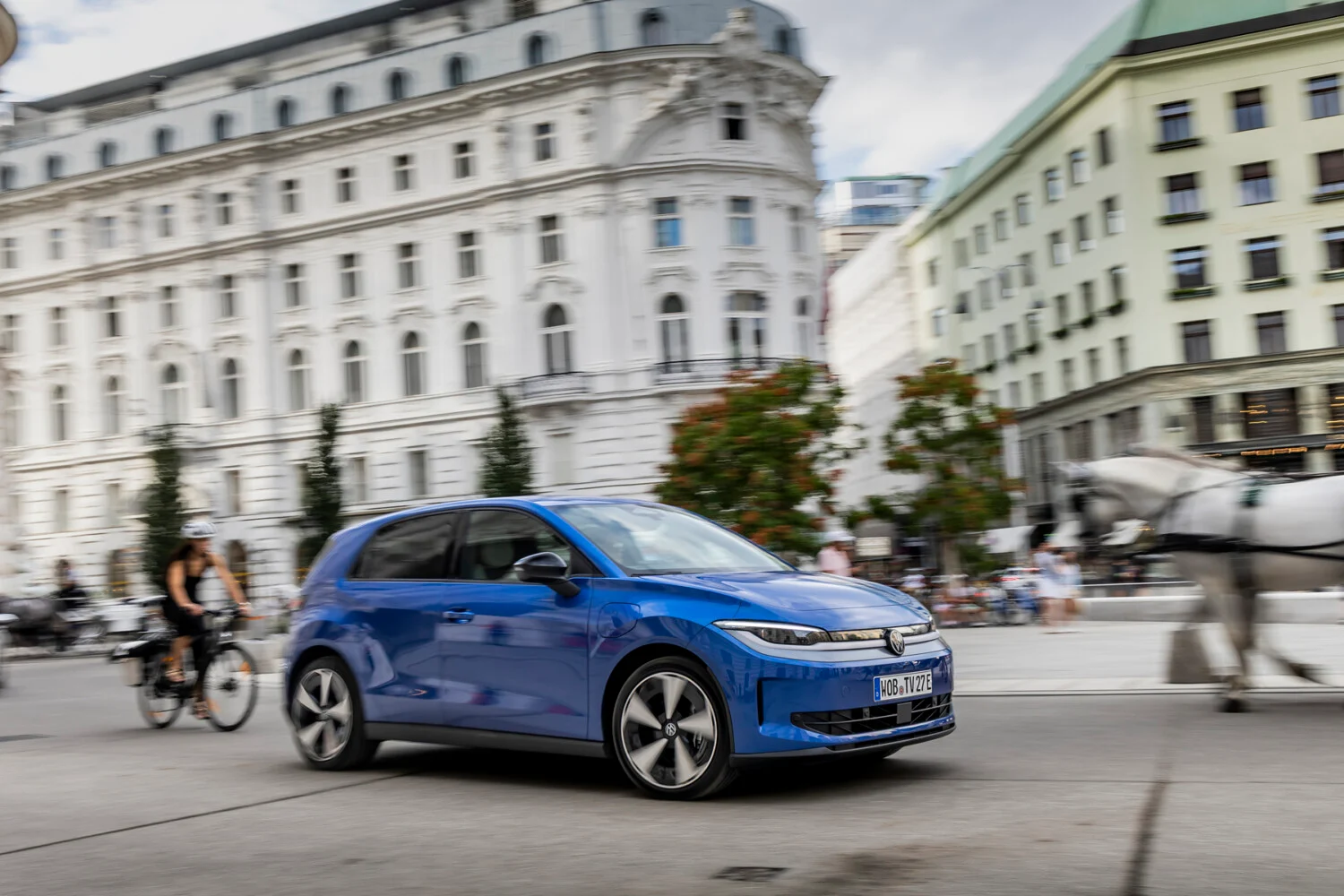
Bad news for some owners of Volkswagen’s electric vehicles. The German group has imposed a charging limit on several models due to a risk of battery overheating. This temporary measure is intended to secure the vehicles ahead of inspections.
Volkswagen: which electric cars are affected by this recall?
The group faces a battery issue that could affect several of its electric cars. According to Autocar, roughly 85,000 vehicles worldwide could be affected, including about 5,000 in the United Kingdom. The automaker is preparing a recall campaign to verify the compliance of certain components.
The affected models include the Volkswagen ID.3, ID.4, ID.7 and ID. Buzz, as well as the Cupra Born. Not all examples are involved: the campaign targets specific cars produced between 2022 and 2025. The Audi Q4 e-tron is also listed in recalls on other markets, but not on the British list.
At the root of the problem are battery components supplied by a supplier whose name has not been disclosed. Volkswagen believes they may not meet its quality standards. In certain circumstances, notably during charging beyond 80%, they could overheat and pose a fire risk.
A charge capped at 80% and reduced range
While checks are underway, Volkswagen has chosen a fairly stringent precaution. An over-the-air software update now limits charging for affected vehicles to 80% of their battery capacity. Owners can therefore no longer enjoy the full range of their car, even when they need it for longer trips.
The loss naturally depends on the model and its battery. Taking the WLTP range figures for the ID.3, Autocar estimates that the restriction could equate to roughly 65 to 113 kilometers of theoretical distance less. This is not a real-world range reduction, but an illustration of the potential impact.
Volkswagen says no injuries have been confirmed in connection with this defect, even though property damage has already been reported. The maker notes that the anomaly may not be visible to the driver. The absence of an alert light or message therefore does not allow excluding a vehicle from the campaign.
The limitation remains provisional, pending checks and, if needed, repairs.
How Volkswagen plans to fix the battery issue
Volkswagen has begun contacting affected individuals, as well as fleet managers. Some vehicles can be checked and updated remotely. Others will need to visit a workshop for a physical safety check, with an estimated duration of about an hour. Battery modules may be replaced if their condition warrants.
The group has not yet announced a precise timeline for completing the campaign. Owners will receive vehicle-specific instructions. In the meantime, the charging limit stands as the main precaution put in place by the manufacturer.
One note for American readers: the detailed figures published by Autocar focus on the United Kingdom. The exact number of cars affected in France is not specified in these details. It would be premature to claim that all Volkswagen electric models sold here are affected.
For owners of the cited models, the right course is to check for official communications from Volkswagen or Cupra and follow the instructions provided for their vehicle.