Seeing a telecoms player step into the ultra-luxury automotive arena already startles many car buyers. And when that same player begins to weigh a lineup of SUVs that are a bit more accessible, while still staying in the realm of models priced in the hundreds of thousands of yuan, interest rises even further.
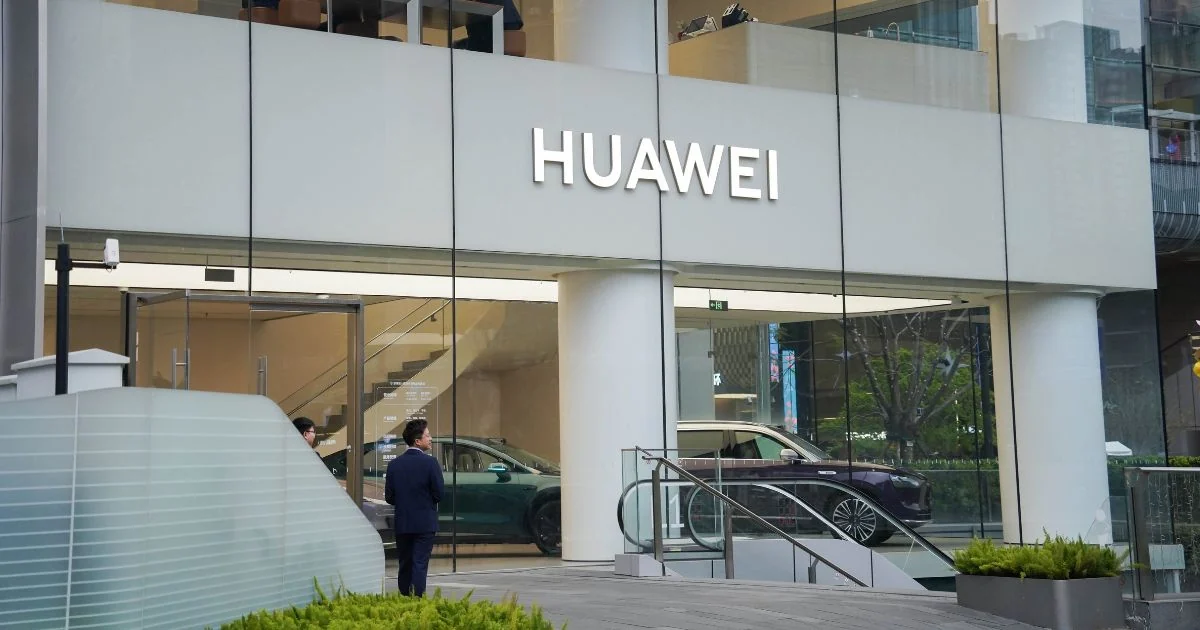
That is exactly what a report from the Chinese financial outlet Cailian suggests: according to a source described as close to the case, Huawei and its industrial partner JAC are exploring the launch of a new Maextro SUV sub-brand, positioned below the current stratospheric prices of the ultra-luxury arm of the Harmony Intelligent Mobility Alliance (HIMA). It would open a new rung of access into the Maextro universe, without cheapening the badge.
A Maextro SUV Sub-Brand Around 400,000 to 500,000 Yuan
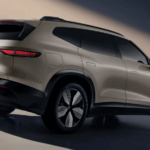
According to Cailian, and echoed by several Chinese and international outlets, Maextro is weighing an all-new line of SUVs grouped under a dedicated label, still under the Maextro banner. These models would be priced around 400,000 to 500,000 yuan (roughly $55,000 to $70,000). No details have been provided about the propulsion option, whether they would be 100% electric or offer extended-range capability.
That pricing tier remains at the high end of the Chinese market, but it would represent a real step down for Maextro. The large family-oriented V680 and V800, two range-extended MPVs, were introduced on August 5, 2026, starting at 648,000 yuan (about $90,000) for the V680 and 766,000 yuan (about $106,000) for the V800. The full-size S800, launched in May 2025, is priced between 728,000 and 1,018,000 yuan (roughly $101,000 to $141,000). Even the top end cited for the future Maextro SUV sub-brand at 500,000 yuan (around $70,000) would still sit below the V680’s starting price and well under the most expensive S800 variants, while roughly matching the sticker price of base luxury SUVs in the United States such as the BMW X5, Mercedes-Benz GLE, or Audi Q7 for American buyers.
Maextro, the Ultra-Luxury Showpiece of HIMA Between Expansion and Shadows
To properly situate this project, it’s worth recalling that Maextro is today the most upscale brand within Harmony Intelligent Mobility Alliance (HIMA), the Huawei-led alliance. The current lineup is limited to the S800 sedan and the V680 and V800 MPVs, all well north of 600,000 yuan (roughly $84,000). No SUV is yet offered under the Maextro badge, even as the Chinese market shows SUVs in the 5–5.5 meter category already accounting for 56% of new SUV launches between January and October 2026, compared with just 17% in 2024, according to data cited by trade press. And all this comes as the cumulative deliveries of HIMA brands fell to 400,766 units from January through October 2026, down about 3.9% year over year, with a more-than-50% plunge in October to 33,537 units.
Another important, often misunderstood point: this potential new Maextro SUV brand would be distinct from the Maserati-badged EV project discussed by Huawei, JAC, Stellantis, and Maserati. Chinese media outlets like Yunjian Insight reported in the spring that these players were discussing the joint development of Maserati-branded EVs, with two models in mind and a plan to start serial production in the second half of 2027 at the Maextro facility. In a stock-market filing dated September 30, JAC confirmed talks with Huawei and Stellantis, but stated that no legally binding agreement had been signed and that the scope of the cooperation remained undetermined. Separately, Maextro still must address follow-up tests conducted by the Dongchedi platform, which found that three different V800 units had a brake-pedal support failure during emergency braking, triggering a joint inquiry by multiple Chinese authorities and raising many questions about the timetable of any potential Maextro SUV sub-brand, which, for now, remains restricted to leaks with no date or market outside China; no further specifics were provided.