In Brief
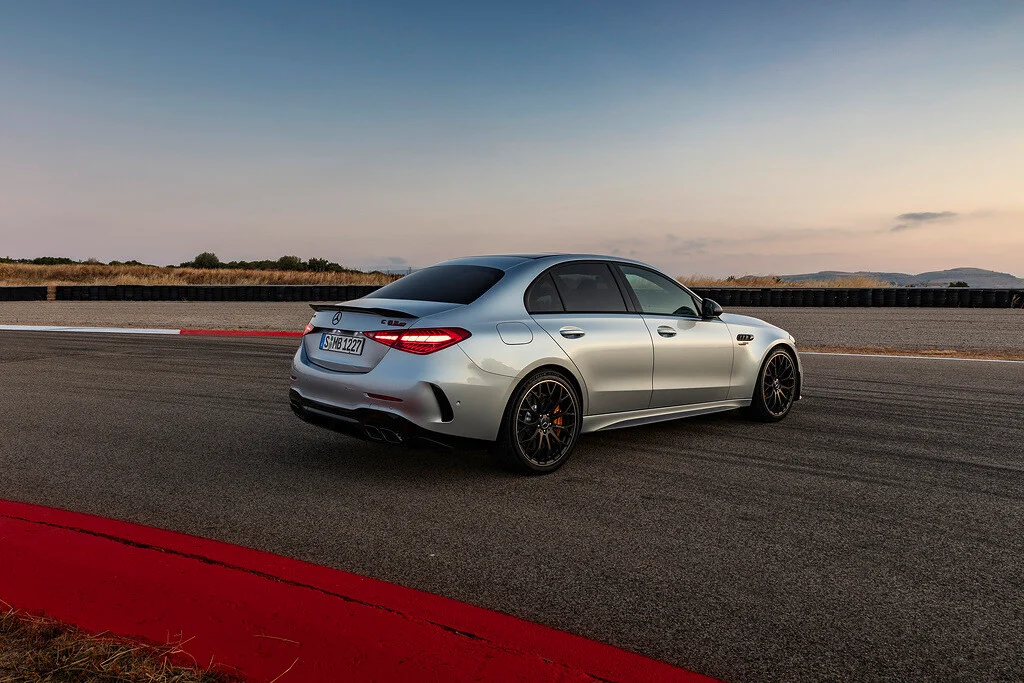
Mercedes-AMG is lining up the return of the C 63 in response to the misstep of the four‑cylinder plug‑in hybrid. Internally, two paths are being debated: a traditional model powered by a six‑cylinder engine, and a 100% electric variant based on the upcoming battery‑powered C‑Class. The exit of the four‑cylinder C 63 makes way for the C 53, which will feature a inline‑six. The next Mercedes‑AMG C 63, in its gasoline form, isn’t expected before 2030 at the earliest, while an electric C 63 could arrive sooner, with Mercedes‑AMG actively pursuing both directions to stay competitive in the face of the competition.
For many fans, the current C 63 has already spoken its piece. Ultra‑powerful on paper and loaded with plug‑in technology, yet driven by a “mere” four‑cylinder engine, it never truly won over the purists. And it’s already under scrutiny as Mercedes‑AMG quietly plots the next chapter of its beloved sports sedan.
Because the C 63 badge clearly hasn’t said its last word. At Mercedes‑AMG, two camps are forming around the new Mercedes‑AMG C 63: on one side, those dreaming of a return to a nobler internal combustion engine, most likely a six‑cylinder; on the other, those pushing for a Mercedes‑AMG C 63 electric, derived from the forthcoming battery‑powered Classe C. Between these two visions, the internal battle is just beginning.
Leaving the Four Cylinders Behind: The C 53 Steps In and a Comeback for ICE Power Later
The break with the old layout is already a done deal: Mercedes‑AMG has confirmed that the C 63 S E Performance with a four‑cylinder setup will exit the lineup. In its place, the brand is preparing a Mercedes‑AMG C 53, powered by a 3.0‑liter inline‑six turbo, with no heavy rechargeable battery to weigh things down. The logic is likely to borrow the heart from the GLC 53, delivering about 443 hp and 600 Nm of torque, with a ten‑second overboost that can push torque to 640 Nm. It’s a choice that carries real significance for those who missed the more nuanced, less clinical character of the hybrid C 63.
That said, it doesn’t imply that the C 63 name will vanish forever. Mercedes executives have hinted that a future generation could return to an internal combustion engine, but without a V8. The automaker has committed to maintaining V8 blocks through the 2030s, but not in the current Classe C—the platform was engineered for smaller, more compact engines and has just received a mid‑cycle refresh. In this context, a potential Mercedes‑AMG C 63 gas version would not appear before 2030 at the earliest, if it arrives at all on a next‑generation Classe C, which leaves plenty of uncertainty still hanging in the air.
What If the Next Mercedes‑AMG C 63 Becomes Electric?
The alternative scenario is gaining traction: a Mercedes‑AMG C 63 electric built on the new battery‑powered Classe C. Mercedes has already shown an electric variant of its sedan, paving the way for a more aggressive AMG derivative. The challenge will be to deliver more than impressive horsepower figures; the current generation has shown that a cockpit full of kilowatts won’t sway enthusiasts if the character isn’t compelling. The real work will revolve around driving pleasure, chassis tuning, power delivery control, and even the artificial engine note to recreate genuine emotion.
In this context, Mercedes‑Benz’s chief technical officer, Jörg Burzer, dropped a line that speaks volumes. When asked about the future of the 63‑badge models, and the possibility of offering both a gasoline and an electric version, he answered: “we are working on both,” Burzer explained. It’s a refrain he repeated, without formally committing to a dual‑offering C 63. It signals that Affalterbach is seriously exploring both tracks: a return of a six‑cylinder C 63 by 2030, and a battery‑electric C 63 potentially sooner, so as not to cede ground to the upcoming BMW M3 electric or the Audi RS 5 plug‑in hybrid V6. Between combustion, electrons, or both, Mercedes‑AMG is shaping more than just the fate of a badge: they’re laying out a broader approach to high‑performance for the coming decade.
Comparison Table
| Model | Engine | Power | Torque | Other notes |
|---|---|---|---|---|
| C 53 | Inline‑six turbo, 3.0 L | About 443 hp | 600 Nm (640 Nm overboost for 10 s) | Non‑hybrid, no rechargeable battery |
Key Takeaways
- Mercedes‑AMG is developing a new generation of the C 63 with two directions: a six‑cylinder gasoline engine or electric.
- The plug‑in hybrid four‑cylinder C 63 is leaving the lineup in favor of a new C 53 with a turbo inline‑six.
- A gasoline C 63 isn’t expected before 2030 at the earliest.
- An electric C 63, based on a future battery‑powered Classe C, could arrive sooner.
- The manufacturer is pursuing both scenarios in parallel to stay competitive with BMW and Audi.
FAQ
The C 63 hybrid, though powerful, used a four‑cylinder engine that didn’t win over the brand’s purists.
Will the C 63 ever wear a V8 again?
The article indicates that Mercedes will keep V8s, but not in the current Classe C due to the platform’s constraints.
What will the next Mercedes‑AMG C 63 look like?
Two paths are under consideration: a gasoline six‑cylinder version due around 2030, and a fully electric variant available earlier.
What powertrain is planned for the Mercedes‑AMG C 53?
The C 53 will use a turbo inline‑six 3.0 liters, similar to the GLC 53, with no rechargeable battery.
Why is Mercedes‑AMG considering a C 63 electric?
To avoid ceding ground to electric rivals like the upcoming BMW M3 and the Audi RS 5 with a plug‑in hybrid V6.