
906 km on a single charge, up to 400 kW on a fast charger, and a battery pack exceeding 100 kWh. These numbers, which looked theoretical not long ago, are entering industrial production at BMW. The automaker has just kicked off serial manufacturing of its BMW Gen6 batteries at a new dedicated plant in Lower Bavaria, in Irlbach‑Straßkirchen, two and a half years after construction began in April 2024.
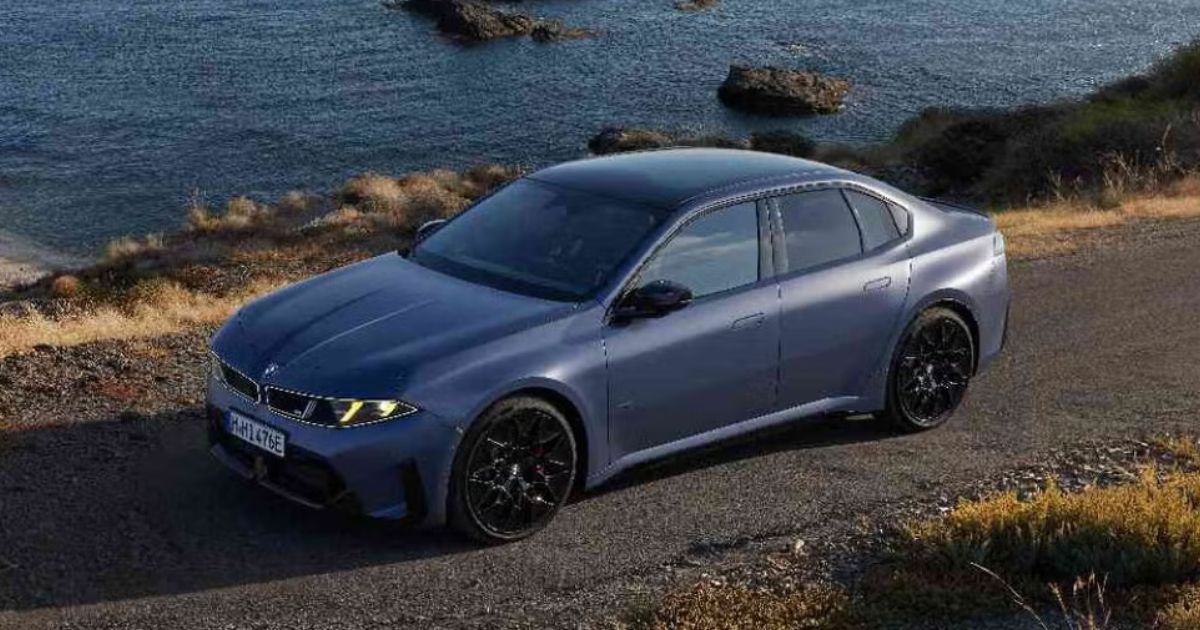
It is this factory that now supplies the high‑voltage packs for the new BMW i3, the first model on the Neue Klasse platform to benefit from Gen6 technology. The electric sedan uses a 108.7 kWh battery from this site, with an announced range of up to 906 km (about 563 miles) in the WLTP cycle, and can recover roughly 423 km (about 263 miles) in ten minutes thanks to an 800‑volt architecture and DC charging power up to 400 kW. Behind these numbers lies an industrial facility sized like a true gigafactory and a technical breakthrough that BMW aims to deploy across its Neue Klasse.
This BMW Irlbach‑Straßkirchen plant was built around an extremely automated line. On roughly 538,000 square feet of production space, about 500 robots handle the various assembly steps. More than 3,500 data points are recorded for each battery and tracked in real time, with AI‑assisted systems monitoring process quality. The cells, supplied by external manufacturers, are first tested, then grouped into clusters, connected to the cooling elements, welded, before a foaming process mechanically fuses the whole into a rigid block, which is then sealed, waterproofed and subjected to a full end‑of‑line check. Another link in BMW’s Bavarian battery network, which ties together development centers, pilot sites and the Salching recycling center.
What the Gen6 BMW batteries bring to the new i3
The Gen6 BMW batteries mark a clear break with the previous generation. For the first time, BMW adopts an 800‑volt electrical architecture and large 46 mm diameter cylindrical cells, whereas Gen5 used prismatic cells. These new cells deliver about 20% higher energy density than the old ones, allowing either more range at the same capacity or a smaller pack for the same range. The cells are integrated directly into the pack using the “cell‑to‑pack” approach, with no intermediate modules, and the battery housing becomes part of the car’s structure under the “pack‑to‑open‑body” concept. BMW claims, for this Gen6 technology, faster charging, longer ranges, and roughly 33% lower CO₂ emissions per kilowatt‑hour, thanks to the use of recycled materials for cobalt, lithium, and nickel, and to renewable energy used in the production of electrode materials and cells.
On the new BMW i3 50 xDrive, this translates into a high‑voltage pack of 108.7 kWh sourced from Irlbach‑Straßkirchen, for an autonomy that can reach up to 906 km (about 563 miles) in WLTP. With 800‑volt hardware and DC charging up to 400 kW, the car can recover about 423 km (about 263 miles) in just ten minutes at a fast charger, while also offering bidirectional charging. That combination enables long‑distance trips with shorter charging stops and more flexible use of stored energy. This same Gen6 battery baseline is slated to power other models in the Neue Klasse, with the Bavarian plant becoming a nerve center for BMW’s electric future as the global race to scale battery production intensifies.