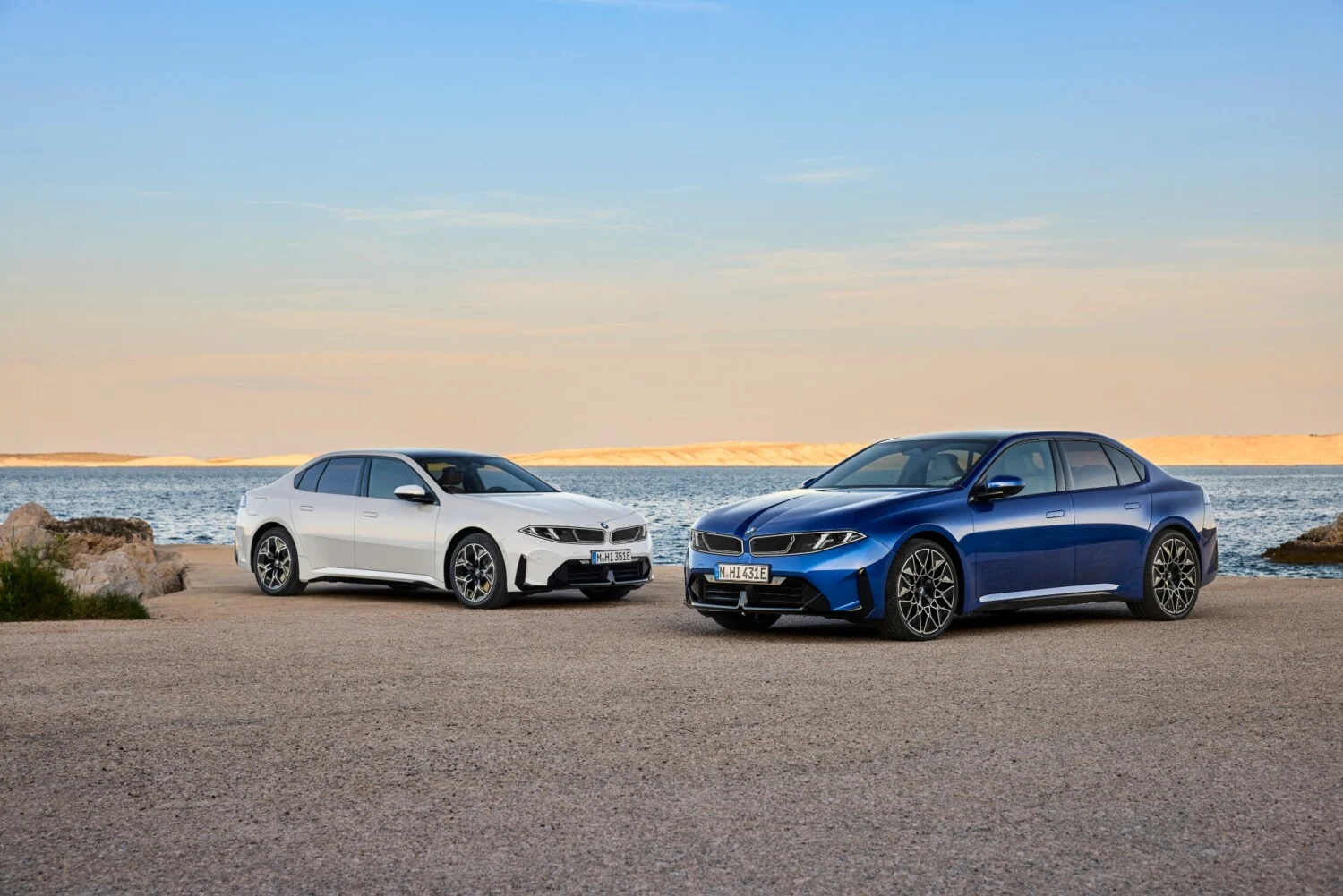
On the BMW side, the shift to electric power is being carried out with the new Neue Klasse platform. After the BMW iX3, here comes the BMW i3, which will evolve in parallel with the all‑new 3 Series that shares the same cabin and body. BMW has just unveiled the technical specifications and the prices for the two models, a chance to compare the new 3 Series with the new i3.
An i3 with an impressive range
BMW is going electric and doing so without compromise. The new BMW i3, the electric variant of the iconic 3 Series, offers a significant range and fast charging. Specifically, there is an entry-level version called 40 xDrive that features two motors, all‑wheel drive, and a combined output of 374 horsepower. On the range front, it can reach up to 710 km WLTP using an 82.6 kWh battery.
If more range is desired, the 50 xDrive powertrain uses a 108.7 kWh battery to deliver up to 912 km WLTP on a single charge. The power of this version reaches 469 horsepower.
Electric is now cheaper than gasoline
That’s a strong signal for BMW: electric is becoming cheaper than internal combustion. Yet, we’re not dealing with EVs whose primary goal is affordability. We’ve already seen electric cars cheaper than their gasoline counterparts, but those were often city cars aided by incentives, with small batteries and sometimes no fast charging.
But here, the BMW i3 is cheaper than the new 3 Series. So, if we base the catalog prices on the BMW i3 40 xDrive and the BMW 3 Series 320, the gasoline model is indeed cheaper at €55,450 for the 320 vs €59,900 for the i3 40 xDrive. However, add to the 320’s price the eco tax between €5,344 and €7,275 at the point of sale. Registered in France, it ends up costing more than the electric model.
And the 3 Series’ base engine cannot quite keep up with the i3 40 xDrive. The entry‑level 3 Series uses a 2.0‑liter turbo four with 211 horsepower and 48‑volt mild hybridization. In addition, it’s only rear‑wheel drive, whereas the electric version is all‑wheel drive as standard. It feels like you get more for your money with the BMW i3 40 xDrive.
The same conclusion holds when comparing the most powerful gasoline and electric variants. The peak of the gasoline lineup is the M350 xDrive, which uses a turbo inline‑six of 443 horsepower with mild hybridization. Unfortunately, this model, priced from €78,250, carries a penalty between €28,511 and €37,155. The price of a France‑registered vehicle thus rises to well over €106,000 for the buyer.
By contrast, the BMW i3 50 xDrive is priced at €65,400 with no additional penalties. The price gap between the two cars when registered in France exceeds €40,000.
A market turned hostile to gasoline cars
The electric versions of BMW’s 3 Series lineup are now more advantageous for French buyers, especially since range and charging times are no longer a drawback. It takes about 21 minutes to charge from 10 to 80%, regardless of which i3 variant you choose.
But while they appear more favorable than their gasoline counterparts, it isn’t BMW’s fault—it’s European and French environmental policies. BMW must sell a sizable volume of electric vehicles to keep its European average CO2 emissions below 95 g/km to avoid a penalty of €95 per gram per vehicle sold, which leaves little room for high‑performance gasoline cars that struggle to stay under the 95 g/km CO2 target.
Moreover, in France the eco‑bonus/malus regime has become very stringent, with a trigger threshold starting at 108 g/km of CO2 and escalating amounts that can dramatically affect vehicles with internal combustion engines, even when aided by mild hybridization.
Under these circumstances, European buyers benefit from choosing electric vehicles to dodge taxes, and manufacturers benefit from selling electric cars to avoid fines in Europe. The push by BMW and other European automakers toward electrification is understandable, which sustains electric versions that are cheaper than the corresponding gas versions.