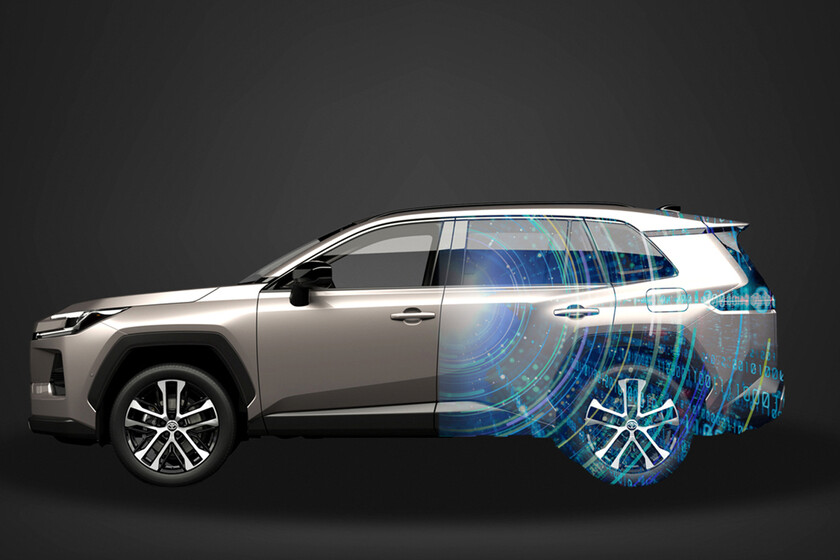
Until recently, cars were considered mere mechanical machines. Modern automobiles, by contrast, are becoming true computers on wheels. Software is increasingly important, even essential. In a market dominated by standardization, software can be a differentiating value. Although this evolution may seem intangible to customers, especially in Europe, this transformation is far deeper than it appears for manufacturers.
Vehicles are no longer manufactured simply in factories; now they are defined by software. And that is turning into a real headache, much bigger than the electric car, which swallows billions of euros every year without brands and customers seeing significant progress.
A computer to control the whole car… and your wallet
Popularized by Tesla, the move to a software-defined vehicle represents a revolution more significant than that of the electric car. In general terms, it involves replacing the dozens of chips scattered throughout the car with a single central computer that is more powerful and controls all of the car’s functions.
The main advantage is the possibility of periodic remote updates (known as OTA, the English acronym for “over the air”), which allows keeping the car at the forefront of technology, but also selling new options to the customer several years after purchase, deactivating them to re-sell to the new buyer on the used-car market, offering subscription options and a myriad of other revenue-generation methods. At least, that is the theory because, for the moment, practice is very different.

“Times have changed; software and data are now essential components of Toyota’s future mobility strategy,” said Gill Pratt, CEO of the Toyota Research Institute, in 2016 at the Las Vegas CES, the world’s most important consumer electronics fair. In the following years, Toyota tried to create that central computer that would control everything—from music or climate control to brakes including driving aids.
Ten years later, its software, known as Arene, would only power the infotainment system and the advanced safety technologies of the new RAV4. In any case, Toyota’s flagship SUV would not be a software-defined car.
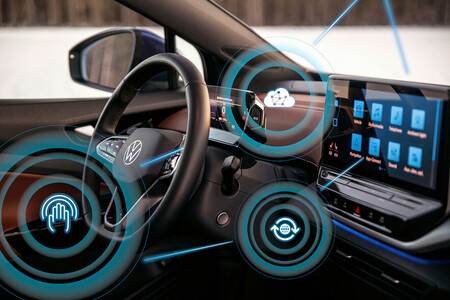
Volkswagen has tried it with the Cariad division. In three years, it accumulated operating losses of more than $7.5 billion. All this to end up joining Rivian and XPeng to push through its own software and leave Cariad’s system behind, a system full of faults and not convincing.
In 2025 Cariad increased its revenue to 1.8 billion (33.8% more) while reducing its losses to ‘only’ 2.2 billion, in addition to undergoing a severe restructuring. Next year the ID.EVERY1 will be its first car with this platform, in theory.

The German group is not the only one to have lost billions in the attempt. At the end of March, Volvo announced that its former CEO, Håkan Samuelsson, would officially return to lead the company to weather the uncertainty created by the U.S. tariffs and the costly transition to electric cars.
After the EX90 delay, the Swedish firm decided to replace the central computer in the 2025 version. A software change that is more about the fact that swapping out the entire processor for a new one is easier than getting software to work properly. In January 2026 Samuelsson said it’s “a hard process,” referring to having to redo it all from scratch.
Stick to Your Trade
Many other brands face the same problems as Toyota, Volkswagen or Volvo. Some of them have turned to partners in the tech sector to accelerate the digitization of their models. But those collaborations have also created new tensions with Apple, Google and others, as automakers struggle with the tech giants for control of vehicle data, on-board entertainment, and other aspects of the driving experience.
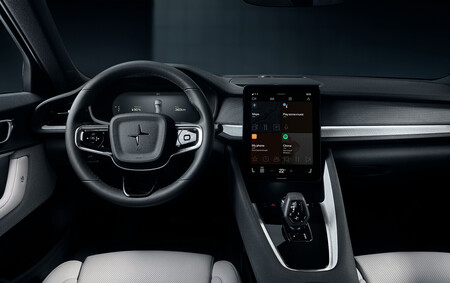
Renault and Polestar were among the first to embrace the idea of entrusting those who know how to write software best with the task of creating their operating systems. In this case, they have trusted Google and its Android Automotive OS. And the result is a resounding success. In broad terms, we are looking at an Android system but in which manufacturers can add their layers and customize it. Thus, although the operating system is the same, visually the Renault Scénic or Austral does not resemble that of a Polestar 2.
However, relying on a third party has its limits and drawbacks, beyond the investment savings and ensuring the system works. And to go beyond the usual multimedia system functions, including climate control and driver assists, it is necessary for the car to share the data collected with the operating system. And that is something many manufacturers are not willing to do.
For example, Mercedes-Benz refuses to let Apple CarPlay Ultra, a rival of Android Automotive OS, collect essential car data, such as temperature, speed or fuel consumption, and, moreover, overlay its interface and the information it shows on top of Mercedes’. This led the star brand to develop its own operating system (MB.OS) that already powers the new CLA and GLB.
The CarPlay Ultra veto remains for brands such as Audi, Volvo, Polestar, Renault, BMW, Ford or Rivian.
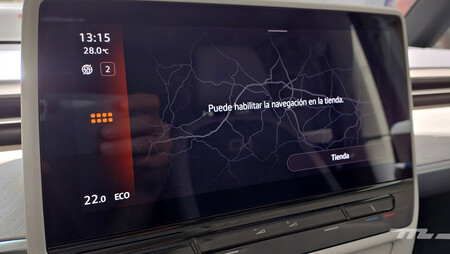
So far, the efforts of the historic brands to create a software-defined car and monetize it have ended in failure. BMW had to back away, for example, from its subscription for heated seats. General Motors confirmed it would retire CarPlay and Android Auto from its offering to replace it with a new platform based on Android Automotive and Gemini.
Among the incumbents, there is a heavy-weight exception: Ford Pro. Ford is the only long-standing manufacturer that has known how to make software work for its Ford Pro division (as we discovered with the E-Transit), because it knew how to offer something useful for the customer.
Software contributed with 50% more up to 1.6 million in Ford Pro’s operating profits during the second quarter of 2026, rising from 649,000 Ford Pro Intelligence in 2024 to more than 900,000.
The American brand has leveraged the data collected by its commercial vehicles to improve productivity, maintenance and repair services for its users, who pay a subscription to access the information generated in their fleets.
“Having the data itself is not the key to success. What matters is how it is turned into useful information,” says Hans Schep, CEO of Ford Pro in Europe, to the Financial Times. In other words, before successfully defining the car by software, perhaps manufacturers should first determine whether what they propose will be well received by customers.
Find Your Ideal Electric Car
If you have considered buying an electric car, this will interest you. We have created the Personalized Electric Car Recommender where, in addition to seeing models that fit your needs, you will also get answers to the questions you are most likely to worry about, such as price, range, or nearby charging points.
Images | Volkswagen, Motorpasion, XPeng, Toyota, Peugeot

Looking for your next electric car and overwhelmed by so many options? It’s normal.
More than 45,000 readers have already tried it. And you?
Advice offered by the brand