You may have noticed that Renault has made neo-retro styling its specialty since the launch of the Renault 5. Since then, several production models followed, such as the Renault 4 and the Twingo, each drawing heavy inspiration from their predecessors. And while Renault draws on its history to shape its new models, it does so partly to stand out from the competition.
Neo-retro vs. uniformity
If you think electric cars largely look the same, that’s because EV design is shaped by a number of constraints, notably efficiency, which demands clean, streamlined, and smooth silhouettes to maximize performance. The latest models follow these constraints in broad strokes, with the primary differentiators being lighting signatures, which aren’t as distinctive anymore, since light strips have become a staple across most of the lineup.
Yet Renault chose neo-retro and to mine inspiration from its icons. With 128 years of history, Renault has nearly as many sources of inspiration as there are potential future models. Renault wants to use its past as a shield against homogenization, as Renault’s design chief Alexandre Malval explained during a roundtable after the unveiling of the Renault 8 Gordini concept, as reported by Numérama: “Electric power gives us a great freedom of silhouette. But vintage is an opportunity to have a strong resonance in a time when uniformity dominates.”
A style that can’t be copied
Alexandre Malval goes on to explain that neo-retro is also protection for Renault. “The retro approach is simply an opportunity to keep the brand alive. And above all, it cannot be copied. (…) If a competitor tried to copy one of our icons, it would be ridiculous. It’s an immense strength in the face of the competition.”
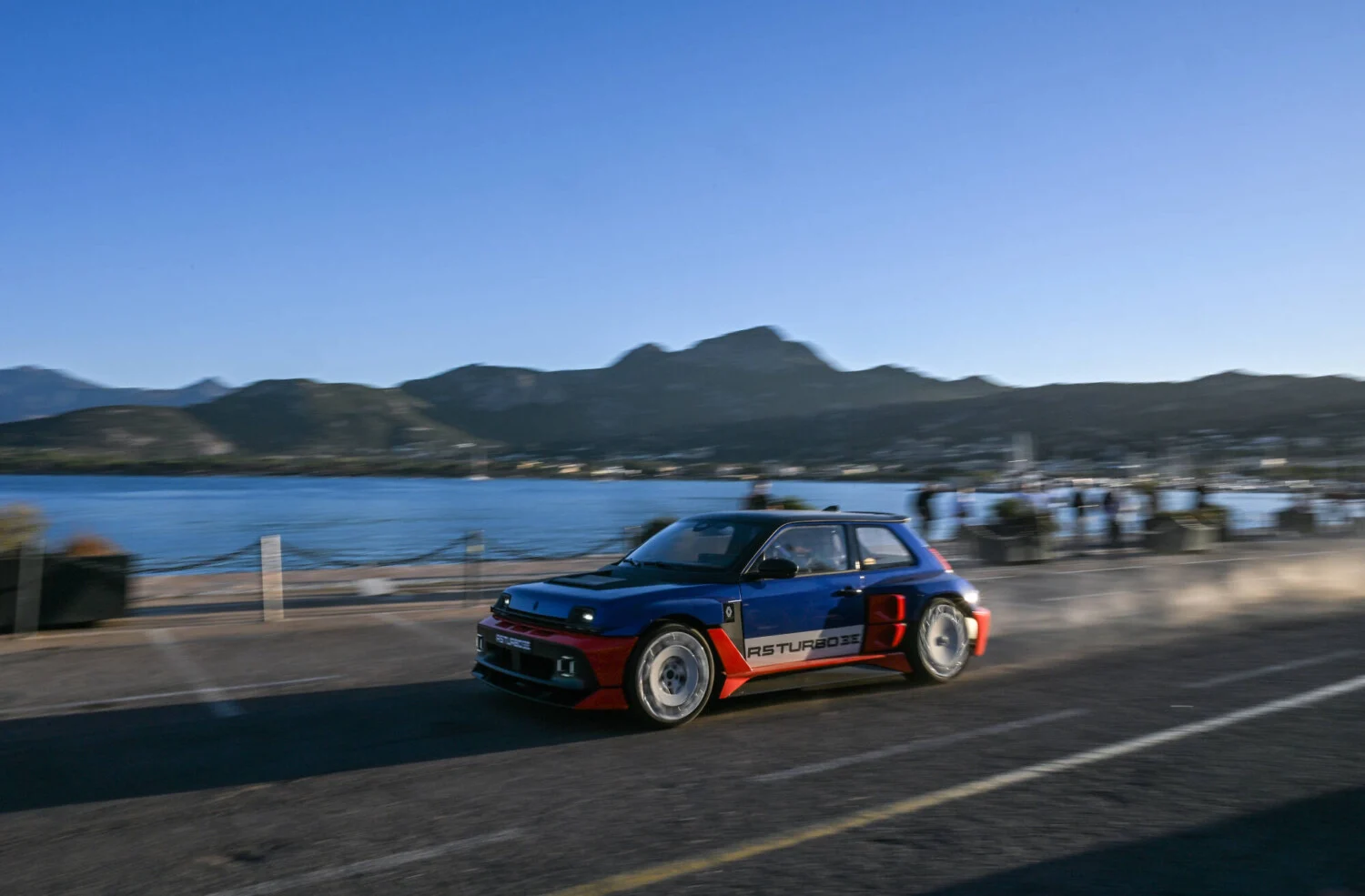
And it’s true that who better than Renault to revive a Renault? The Paris-based automaker has realized that drawing on its iconic, historical models can drive sales. The success of the Renault 5 E-Tech is partly due to its very faithful reinterpretation of the Renault 5, Super 5, and Renault 5 Turbo. The same goes for the Twingo E-Tech, which closely resembles the first generation and has become part of French popular culture today.
So it’s little surprise to see Renault resurrect concepts like the R17 electric restomod or, more recently, the R8 Gordini, which will be shown at the Paris Motor Show. The latter is expected to be one of the most photographed models by the general public at the upcoming show, as it echoes automotive heritage, racing heritage, and strong memories for the French. Emotions that legacy automakers like Renault can trigger, but which are much harder to evoke for new Asian brands entering Europe.