It already seems to be a recurring pattern: whenever a large infrastructure project begins and earth is moved in Andalusia, there is a high likelihood of stumbling upon something unexpected. Beneath roads, cultivated fields, and housing developments, much of the peninsula’s history still waits.
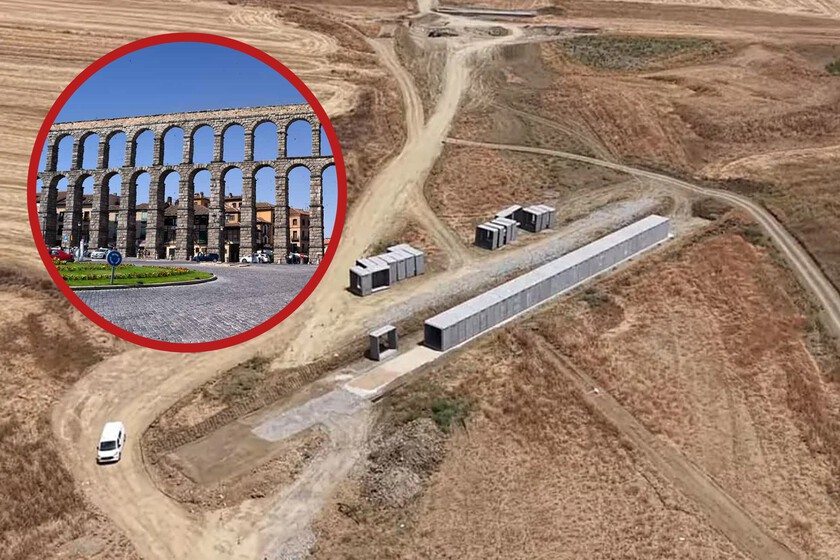
What has just happened in the works on the SE-40 motorway is exactly that: dozens of meters of an ancient hydraulic conduit have come to light, possibly part of the historic aqueduct of Itálica.
The system that provided water to one of Rome’s great cities in Hispania
The discovery occurred between Valencina de la Concepción and Salteras, an area of great archaeological importance. Work on the SE-40 began in August 2025, and initially uncovered an archaeological settlement that had not been documented until then. Excavations carried out in different sectors of the affected terrain have allowed the identification of a Roman-era hydraulic conduit.
The identification is not yet definitive, although early hypotheses by archaeologists and researchers suggest that the remains form part of the Itálica aqueduct. The infrastructure is in a poor state of preservation and lies at a very shallow depth, so the works have been halted so that specialists can study in detail a structure that has been underground for more than 2,000 years.
Itálica is historically known for its amphitheater, and for being the city associated with Trajan and Hadrian. But one might wonder: why was it so famous? Largely due to its complex network of infrastructures that enabled it to grow. Among them was this aqueduct, which carried water from the Fuente de Tejada, in the present-day municipality of Escacena del Campo, in Huelva, to the city along a route of about 36.5 km.
View this post on Instagram
Nolan Kessler
I focus on performance-driven cars, emerging technologies, and the business forces shaping the automotive industry. My work aims to deliver clear, relevant insights without unnecessary noise, with a strong attention to detail and accuracy. I follow the evolution of mobility daily, with a particular interest in what defines the next generation of driving.