In Brief
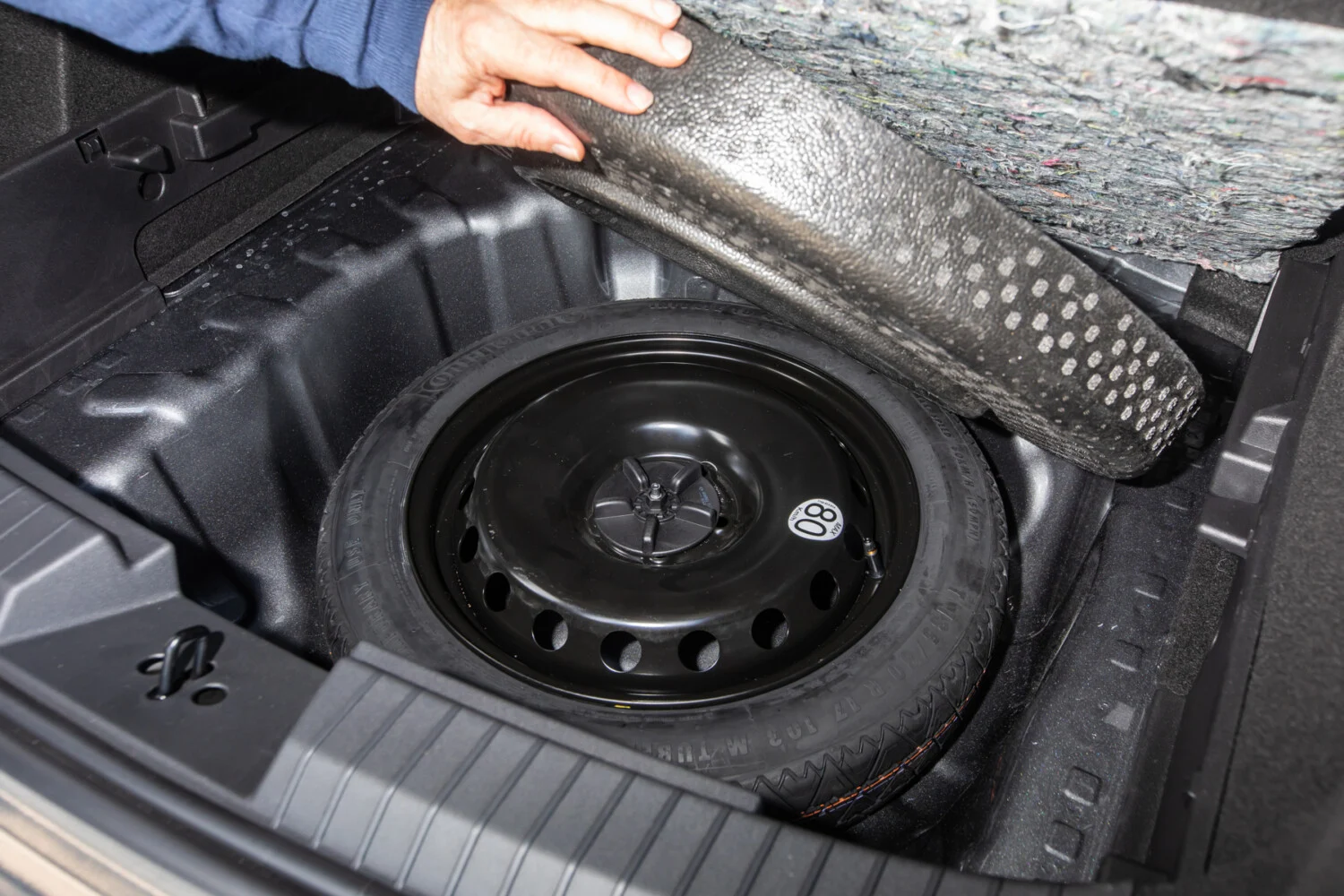
The spare wheel is gradually disappearing from new cars, replaced by more compact and lighter tire repair kits. This shift is driven by the goal of reducing vehicle weight to improve fuel efficiency and lower CO2 emissions. Modern tires, tougher and paired with pressure sensors, make flats less frequent and easier to anticipate. The space freed up also helps optimize trunk layouts, especially in electric vehicles. However, the spare wheel remains available as an option on certain models and for specific uses.
In place of spare tires, today you’ll find tire repair kits, lighter, less bulky, and especially more aligned with the current priorities of the auto industry. But why this radical change?
A Weight Reduction for Better Efficiency
One of the main arguments manufacturers cite is the quest for energy efficiency. In a context where reducing CO2 emissions has become a priority, every pound counts.
A full spare tire, along with its jack and tools, can weigh more than 33 pounds. Cutting this assembly helps shed weight, translating to lower fuel consumption and thus lower emissions.
Today, flats are much less frequent than a few decades ago. The modern tires, tubeless and built from tougher materials, provide greater durability.
Additionally, nearly all new cars are now equipped with tire pressure sensors, which warn the driver if air pressure drops. Result: tire-related incidents are often detected before they become critical.
Space Optimization Inside the Cabin
The space once set aside for the spare tire is increasingly being put to other uses. Whether it’s enlarging the cargo area, integrating batteries in electric vehicles, or adding extra storage, automakers are rethinking the layout of under-trunk areas.
In electric cars in particular, where every cubic inch counts, sacrificing a wheel to accommodate technical components has become the norm.
That said, the spare wheel has not completely vanished. It remains available as an option on some models or is present on vehicles designed for heavy use or rural driving.
For some drivers—especially those who travel long distances or operate in areas with limited service—the peace of mind a spare wheel provides remains irreplaceable.
In parallel, repair kits — often consisting of a sealant aerosol and a small compressor — allow temporary puncture repair, as long as the tear is not severe. Cheaper for manufacturers, they’re also easier to tuck away in a corner of the trunk.
Changing a Tire: A Skill Still Useful
Even as spare tires become rarer, knowing how to use one remains a valuable skill. In case of a puncture, here are the key steps to follow:
- Secure the vehicle: Park on level ground, engage the parking brake, and put the transmission in gear (or “P” on an automatic).
- Loosen the lug nuts: Before lifting the car, slightly loosen the lug nuts on the punctured wheel.
- Use the jack: Place it under the designated chassis point and lift the vehicle until the wheel no longer touches the ground.
- Remove the damaged wheel: Fully loosen the nuts and take off the wheel. Place it under the car for extra safety.
- Mount the spare wheel: Align it properly and hand-tighten the lug nuts.
- Finish tightening: Lower the vehicle, pull the jack away, and tighten the lug nuts in a crisscross pattern.
Comparison Table
| Equipment | Approximate Weight | Main Advantages | Current Availability |
|---|---|---|---|
| Spare wheel (with jack and tools) | >33 lb | Allows driving after a serious puncture | Rare, optional or for heavy-duty/rural use |
| Tire repair kit | Not specified | Space and weight savings, temporary in nature | Standard on the majority of new vehicles |
Key Takeaways
- The spare wheel is being replaced by tire repair kits on most new vehicles.
- This shift mainly aims to reduce weight and thus fuel consumption.
- Today’s tires are more reliable and come with sensors that help anticipate punctures.
- The space once reserved for the spare wheel is used to enlarge the trunk or incorporate tech, especially in electric vehicles.
- The spare wheel remains an option on certain models, particularly for specific uses.
FAQ
Why are spare tires disappearing from new cars?
They’re being replaced to lighten vehicles, save fuel, reduce emissions, and optimize interior space.
What’s replacing the spare tire today?
Manufacturers are installing tire repair kits, typically consisting of an aerosol can and a compressor.
Has the spare tire completely disappeared?
No. It remains available as an option on some models or on vehicles designed for heavy-duty or rural use.
Why are flats less common than before?
Modern tires are tubeless, made from durable materials, and equipped with pressure sensors.
How do you use a tire repair kit?
Inject the foam into the tire, then use the compressor to re-inflate, providing a temporary repair.