Electric cars are presenting an unexpected challenge for many governments. The more of them that circulate, the less revenue is generated from one of the taxes historically used to fund roads and infrastructure. One of the latest countries to face this issue is Japan, the cradle of automotive sport.
There, for more than half a century, drivers have contributed to keeping the roads in good repair in a simple and almost invisible way: paying a surcharge every time they refueled. The system followed a simple logic, for if you burned more fuel, the state collected more money for roads. But now, the rise of electric cars is changing that dynamic; it has disrupted that balance.
Everything revolves around electric cars
As in other parts of the world, in the land of the rising sun there are increasingly more vehicles using the roads without stopping at the gas station, which means they do not contribute to public coffers through fuel taxes either. And that has led Japan to confront a question that many governments find harder and harder to dodge: if cars stop consuming fuel—or reduce it drastically—how is road maintenance paid for?
The answer requires looking back to when in 1974 Japan introduced a “temporary” surcharge on gasoline to fund the construction and improvement of roads. The measure ended up being extended far beyond what was planned, until the gasoline tax ceased to apply at the end of 2025 and the diesel equivalent disappeared in April of this year. That is why now there is a need to find a new way to collect revenue.
Now Japan aims to reform automobile taxation to distribute and balance the tax burden among the different types of vehicles, since electric cars and plug-in hybrids do not pay there the taxes associated with gasoline or diesel consumption. In the 2026 tax reform, the Ministry of Finance has already suggested examining a new levy for electric cars and plug-in hybrids based on weight, for example.
The idea is to recognize that, regardless of how a car is propelled, all of them use the roads and generate maintenance costs.

This matters because Japan is also eliminating some of the taxes that for decades have weighed on fuels. The temporary surcharge on gasoline, introduced in 1974 to fund road construction and improvement, ceased to apply at the end of 2025, while the diesel equivalent was scrapped in April 2026.
The result is a shift in the model: if an increasing portion of the fleet uses electricity and, in addition, some fuel-related taxes disappear, governments need to find other ways to raise revenue to maintain the roads. Here emerges a possibility that has already been tested elsewhere: charging directly for road use.
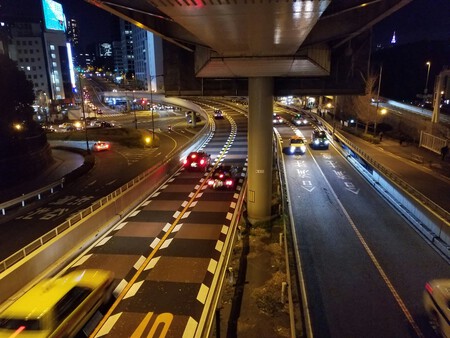
For example, in Oregon, USA, the OReGO program has been running since 2015. Participating drivers pay two cents per mile driven, and that amount is earmarked for the maintenance and improvement of roads and bridges. The system tracks the miles traveled and replaces part of the revenue that previously came from fuel taxes,
On paper it seems like a straightforward measure to apply, but putting it into practice raises several questions: one of the main ones concerns those who live far from big cities. In Tokyo and other major urban areas there is an extensive network of trains, subways, and buses, but in many rural areas the car remains essential for going to work, doing the shopping, or visiting the doctor. If the bill depends directly on the miles traveled, those who need to drive daily could end up bearing most of the burden.

There is also another added challenge: motorcycles. Recording the miles for a car is relatively easy, but doing so for a motorcycle poses more difficulties due to exposure to rain, vibrations, bumps, and the limited space available to install any device. Moreover, many low-displacement Japanese motorcycles are not even subject to mandatory inspections in Japan as they are in Spain, which adds another obstacle to controlling their use.
The paradox is that motorcycles could end up entering a tax reform driven mainly by another vehicle: the electric one. As the share of cars that do not use gasoline or diesel grows, fuel-related taxes lose their effectiveness as a revenue source. And governments are already looking for new ways to maintain the necessary revenue to fund the roads.
Find your ideal electric car
If you’re thinking about buying an electric car, this will interest you. We have created the Personalized Electric Car Recommender in which, in addition to seeing the models that fit your needs, you’ll also get answers to the questions that most worries you, such as price, range, or nearby charging points.
Images | Unsplash, Renault

Looking for your next electric car and feeling overwhelmed by so many options? It’s normal.
More than 45,000 readers have already tried it. What about you?
Advice offered by the brand