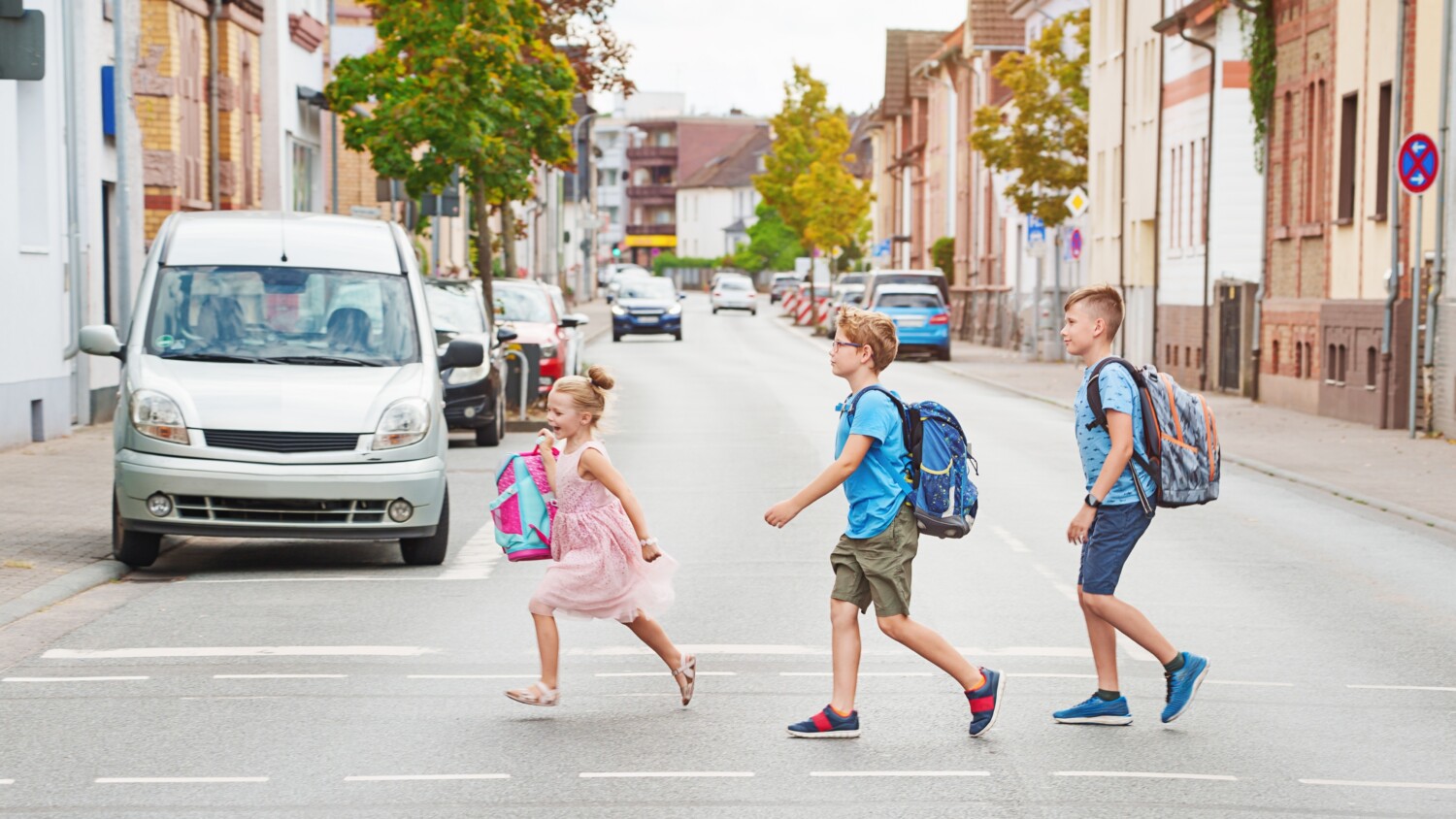
Seeing, every morning outside schools, an endless ballet of double-parked cars, swarms of scooters, and children weaving between buses, is about to end, at least for our Spanish neighbors.
Spain aims to regulate automobile traffic around schools
A royal decree was signed for this purpose on June 24, and will officially take effect on October 1st. Led by the government of Prime Minister Pedro Sánchez and by the General Directorate of Traffic (DGT), Spain’s traffic authority, which is the equivalent here to France’s DSR (Direction de la sécurité routière), it deeply revises the traffic rules currently in force. The overarching goal is to reduce accidents and better protect the most vulnerable road users, whether children, pedestrians, the elderly, or people with disabilities. And the reform’s centerpiece concerns the “secure axes or zones around educational establishments.” This change gives municipalities a power they did not have before, namely the ability to outright prohibit the circulation and parking of cars in the vicinity of certain schools. Two-wheelers are also in the crosshairs. But beyond the ban, it actually opens up a whole toolbox of measures for mayors and local officials. They will also be able to reduce speed, install speed bumps or chicanes, relocate or remove parking spaces, or even reserve access on certain streets for residents only, emergency services, or school transport.
Could this happen in France?
And, beyond schools, hospitals and centers that care for the elderly or disabled also fall under this scope. But beware, that does not mean every road and school zone in Spain will be off-limits to cars starting on October 1st; it will all depend on local decisions, street by street, school by school, and through municipal decrees. A city hall could choose to lower the speed to 20 or 30 km/h on a street, while another could convert an access street into a near-pedestrian zone during the hours when class starts and ends. The allowed parking duration could also be tightened in areas deemed sensitive. The question you’re surely wondering is: could such a scheme ever come to us? Nothing at present points to it in French regulation, but the Spanish example shows that French authorities, who face the same traffic challenges around schools, could one day seriously consider a similar measure.