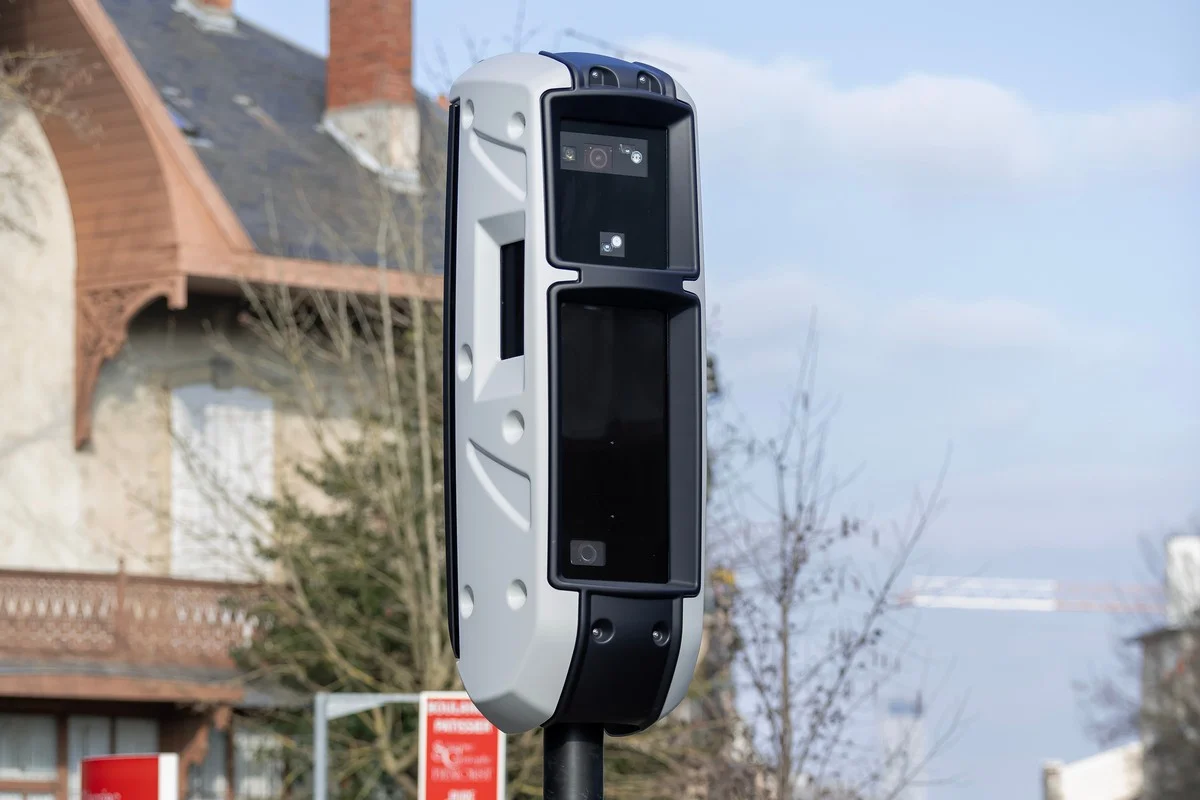
Since the summer of 2023, thousands of motorists traveling along the Roya road from Tende to the Ligurian coast have discovered fines arriving from Italy in their mailboxes. Many live on the French side, in Breil and other villages of the valley, having simply made a round trip on the national road to reach the sea. On these notices of violation, a single fixed speed camera is named, with a speed measured just a few kilometers from the border. After an initial wave of appeals won, a new ruling has just been issued, and it does not bode well for the municipality that operates this device.
This device was installed in the summer of 2023 on the national road tracing the Roya, the SS20, in a stretch limited to 50 km/h, on the territory of the Italian municipality of Ventimiglia. Placed near the small hamlet of Porra, on a cross-border axis used daily by cross-border workers, tourists, and residents of the French valleys, it has generated in a few months tens of thousands of tickets and nearly €9 million in revenue for the city and its private concessionaire, according to figures put forward by the parties involved. This is what is now known as the Porra radar, at the heart of a legal battle pitting the municipality, user groups, and the Italian judiciary, with a very concrete question for drivers: what will become of all these tickets?
New Judicial Setback for the Porra Radar in Ventimiglia
A new chapter is indeed being written in the long saga of the Porra radar, and it ends again in a judicial defeat for the city of Ventimiglia. In this recent case, the Imperia Court confirmed the annulment of a series of contested tickets, rejecting the municipality’s appeal after an initial decision favorable to motorists. The municipality was also ordered to pay court costs as well as an amount equal to double the unified contribution, the fee due within the framework of the proceedings. “The civil judge decides the case before him, and, as one should know, he cannot order the administration to do something, notably to switch off a radar. In the Porra case, the judges have, at every level of jurisdiction, confirmed the annulment of the contested tickets, reminding that an unapproved radar is not fit to provide proof of speeding,” explains Me Marco Mazzola, quoted by Nice-Matin.
At the origin of the dispute, a nuance of vocabulary that ended up taking on national significance in Italy: the difference between administrative “approval” of a device and its true status as a homologated radar. As early as 2024, the Court of Cassation recalled that a speed camera that is merely approved but not homologated could not be considered sufficient proof of speeding, validating decisions taken by the Sanremo Justice of the Peace and the Imperia court. It is the principle that the attorney summarizes in his own words: “A radar cannot obviously be considered irregular in all cases where those sanctioned have appealed and regular in all those where they have paid. It was therefore up to the City to switch it off, in application of the legal principle repeatedly stated by the Court of Cassation: approval alone is not enough,” continues Me Marco Mazzola. Gathered around the Velox Porra/Porra Radar collective, consumer associations and road users’ groups, hundreds of drivers from the Roya valley have already had their sanctions canceled, but the radar itself has stayed in service. According to Me Marco Mazzola, the municipality chose to keep it operating, aligning with the stance taken by the concessionary company in charge of the device.
Rain of Tickets, 50 km/h Limit and an Uncertain Future for the Roya Valley
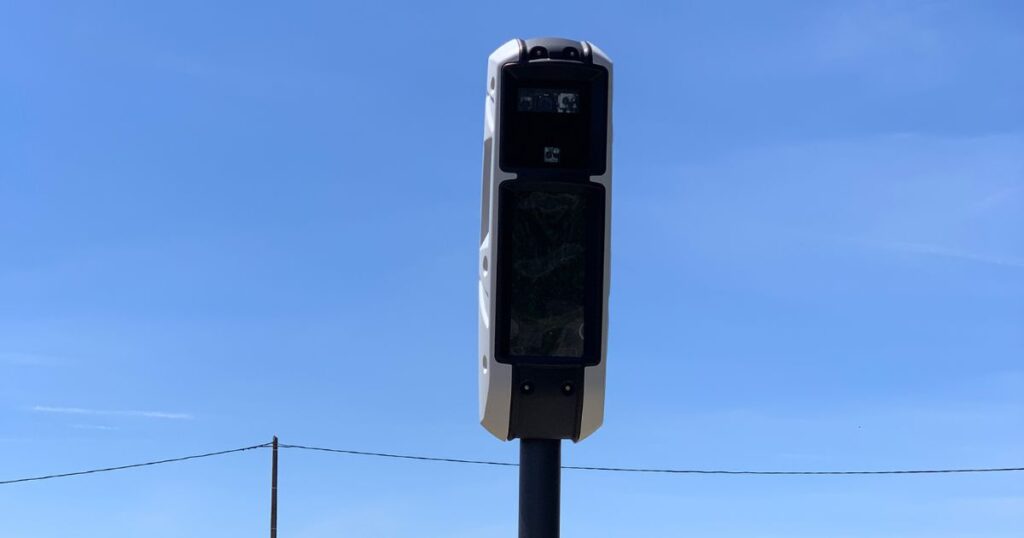
On the ground, critics also target the way the device is set up on SS20, the road linking Tende to Ventimiglia as it runs along the Roya Valley. The Porra radar controls a stretch limited to 50 km/h, right after a speed-limit sign, while the end-of-town sign sits a few dozen meters farther, before a long straight that remained ticketed at 50 km/h. For Me Marco Mazzola, this configuration raises very concrete questions: “Is it normal that travelers first encounter the 50 km/h limit sign, then the end-of-town sign, while still being fined for exceeding that speed on the following straight? For this portion located outside Porra’s urban area, is there a written and reasoned decision lowering the speed to 50 km/h?” In a few months of operation, the device has issued up to around 40,000 tickets and, over three years, brought in about €9 million—an amount that has ruffled the feathers of the French valleys’ towns.
Meantime, the Italian regulatory framework has evolved. A decree from the Ministry of Transport that took effect on July 12, 2026 led to the provisional shutdown of about 20% of speed cameras nationwide—nearly 850 radars out of 4,000—while prefectural decrees issued in Imperia on May 19 and 22, 2026 validated the segments of the SS20 where controls can be installed, between Ventimiglia, Porra, and Trucco. In this new context, the lawyer already anticipates future procedural battles: “Suppose that, for controls conducted after July 12, 2026, the Porra radar must be considered homologated under the transitional provision of the recent ministerial decree. It will then be necessary to examine the other challenges raised by motorists and thus far dismissed or not examined by the judges,” warns Me Marco Mazzola. He notes that “Radar revenues are in decline, because most drivers headed toward Trucco slow down at the radar and then accelerate a few meters further. This could set the stage for questioning the device, or even moving the radar and installing a new, ideally homologated device, in the Trucco urban area. That would be a positive decision, but a late one.” Reached for comment, Ventimiglia’s municipal administration declined to discuss the latest court decision, leaving Roya valley motorists in suspense as they await further developments in the case.