Dacia has built its strategy around two pillars: simplicity and affordable pricing. Yet inside the latest models, a feature is likely to be the most requested by drivers. And contrary to what you might expect, it isn’t the start button, nor a function tied to the infotainment system. According to Dacia’s CEO, the shortcut that lets you adjust certain driving-assistance settings takes the top prize.
Dacia’s “Magic Button” is in high demand
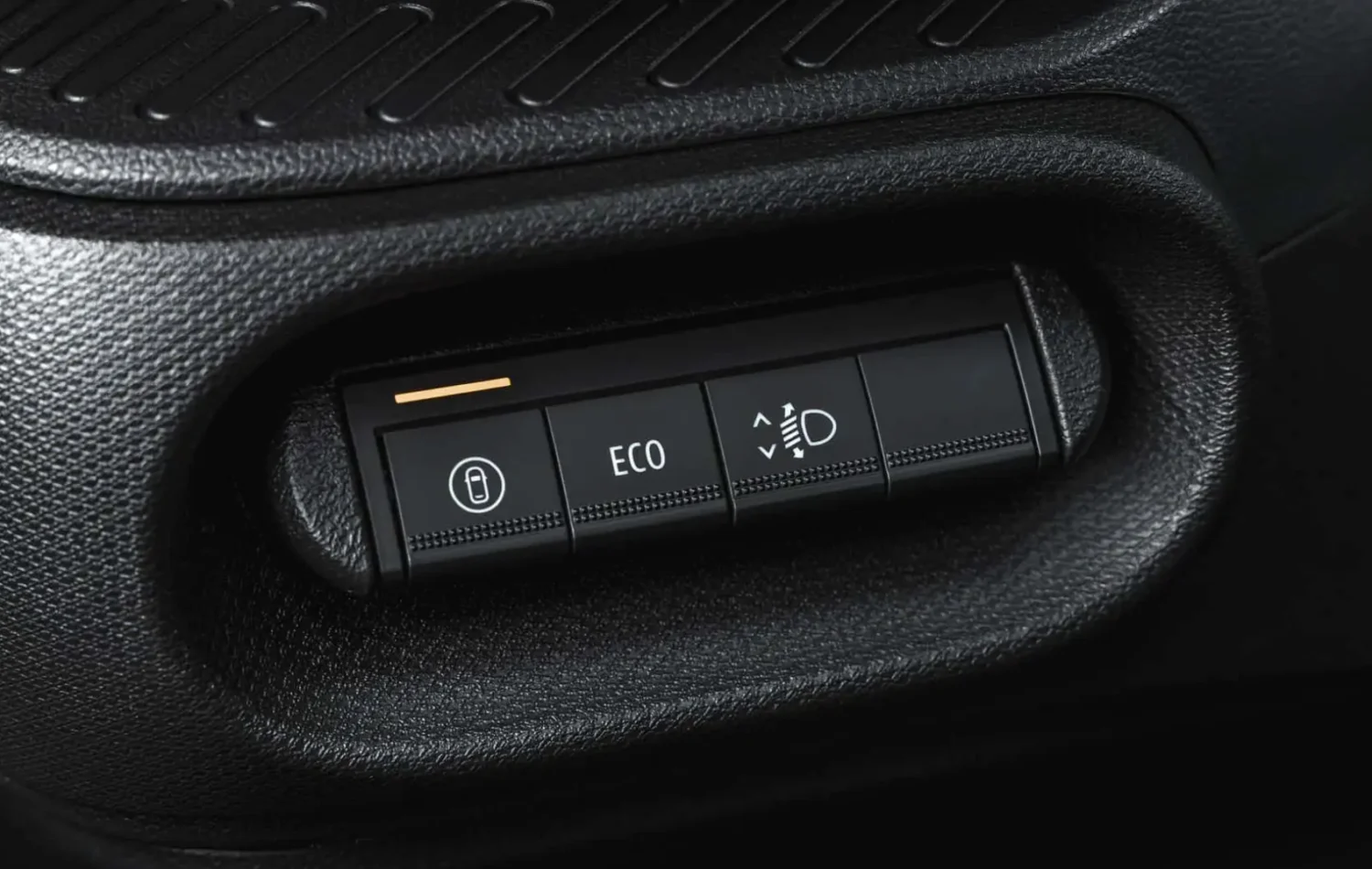
Katrin Adt, the CEO of Dacia, says the most-used button in the brand’s cars is the one nicknamed the “magic button.” Behind that label lies the “My Safety” feature. It lets the driver quickly restore their preferred configuration, especially with regard to different ADAS systems.
Concretely, this physical control gives the ability to disable certain configurable assists and, notably, several audible alerts. The famous beeps that have proliferated in modern cars, and that some drivers prefer not to hear constantly. Yet they are legally required to trigger after each restart.
The Dacia system doesn’t allow turning off fundamental safety devices such as airbags, ABS or stability control. It concerns certain driver-assistance aids and their warnings that can be configured. For example, the overspeed alert, or the lane-departure alert.
European standards in Dacia’s crosshairs
This heavy reliance on the “My Safety” system also feeds Dacia’s narrative, including its stance on how European auto regulation is evolving. As the European Union gradually imposes more assistive technologies, drivers are regularly seeking to neutralize some of their alerts.
Katrin Adt stresses the increasing weight of these obligations for automakers. According to the executive, Dacia has already had to cope with roughly a hundred regulations, and 107 new measures are expected to take effect by 2030.
Compliance now accounts for about a quarter of Dacia’s research-and-development budget. An amount far from trivial for a builder whose business model is to offer affordable cars by limiting features deemed nonessential.
For Dacia, every new obligation can add costs. The addition of hardware, software, new calibrations or validation procedures ends up weighing on development costs—and also on manufacturing a vehicle.
Affordable cars, increasingly hard to produce
The Romanian brand, along with other automakers, is therefore asking the European Commission for at least a freeze on some regulations affecting small cars. The stated goal is to give brands more latitude so they can keep prices down.
The case of the famous “magic button,” however, does not mean Dacia is challenging all driver-assistance aids or their safety value. It highlights more the question of how they’re implemented, and also whether it’s wise to stack constraints on vehicles whose main selling point remains their price.
The success of the “My Safety” shortcut is ultimately quite telling. In a world where cars carry more technology than ever, Dacia drivers seem to appreciate being able to quickly take control again of certain settings and limit audible warnings.
The brand also continues to favor numerous physical controls, rather than bundling all functions into the infotainment screen. A philosophy that aligns with its historical positioning. The question now is how Dacia will preserve this simplicity and its affordable prices while meeting Europe’s increasingly stringent standards.