A car starts up, a motor roars to life, no broken glass, no key in the lock. In the dead of night, on a quiet street in Wallonia, it took only a handful of seconds. An unknown person got behind the wheel of a sports sedan parked in front of the owner’s home. The scene could be mistaken for a movie plot. Yet it is real: a keyless car theft carried out in under a minute. And this kind of scene no longer remains confined to the dim parking lots of big cities.
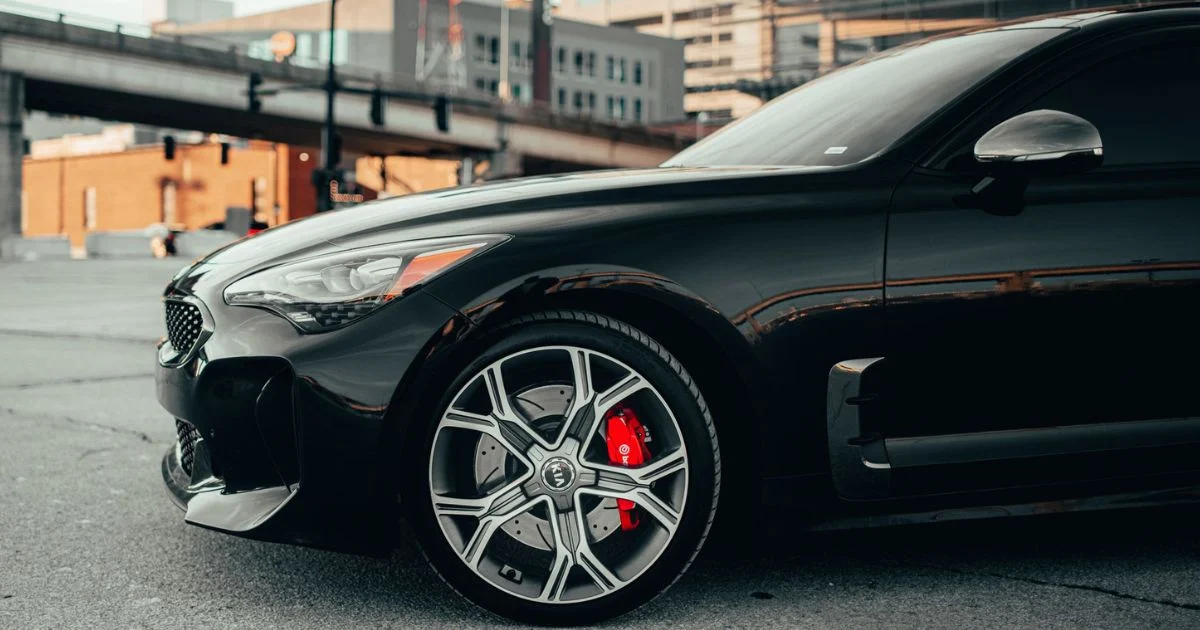
Surveillance footage recorded overnight Tuesday into Wednesday speaks for itself. They show a modus operandi that has become the nightmare for motorists equipped with keyless systems. A person arrives on foot, no suspicious noise, the car lights up and then disappears almost immediately. This time, it unfolds in Maisières, a part of Mons, right in front of a house on Grande Street. The victim, Philippe, 62, had just about finished paying off his Kia Stinger. A sedan purchased for around €41,000. For him, this rapid theft isn’t just a line on a police report. It highlights how thieves now exploit electronics.
In Mons, Philippe’s Kia Stinger Takes Off in Under a Minute in a Keyless Theft
Everything begins a few minutes earlier. A large black SUV appears on the cameras in the neighborhood. The vehicle loops through Maisières, drives past the house multiple times, then parks on the nearby square. In the footage, the owner then watches a man approach on foot from behind his Kia Stinger. He circles the car and waits a few seconds. “My sister and I watched the footage. We see someone arrive on foot at the back of the car. They circle it, the car lights up twice, then the person gets in and drives off,” Philippe, quoted by Sudinfo, recounts. According to him, the thief did not have the car’s original keys. “When I press to unlock the car, the headlights come on. That’s exactly what you see in the video. It’s strange how fast it happened.” Before his car vanished, he also details the dark SUV’s choreography: “It drove around Maisières several times and passed in front of my house. It then parked on the square. The person came on foot, stood behind my car, and crouched. The SUV left a few minutes after my vehicle was stolen. It likely dropped off the thief.” According to Philippe, the thief would have used a device capable of copying or relaying the signal from his hands‑free key. A classic tactic in electronic attacks on keyless vehicles.
This sedan meant much more than a mere mode of transport. The 62-year-old had bought it for about €41,000 and was nearing the end of the loan. “I paid €41,000 for it and I was about to finish paying it off. What will I get back now? I’m going to lose at least €20,000,” he fears. His insurer explained that this model is highly sought after abroad. That detail raises fears it could be quickly shipped to another country. But what touches him most are the memories attached to the car. “I treasured my car. It carried my mother’s rosary as well as items from my daughter. Those are memories. I want to recover my car, but more than that, the memories of my mother and my children.” At 62, with a history of heart trouble and many medications, the shock is immense: “I’ve had a heart attack, I take a lot of medicine, and I keep working. Seeing people leave with what you’ve worked hard for is hard to accept.”
Keyless Car Theft: How Thieves Operate and How to Limit the Risk
The scenario Philippe experienced matches a keyless car theft that specialists also call mouse jacking. The hands‑free key remains with the owner, but it continuously emits a radio signal. Thieves then use devices to capture that signal near the home. They extend it to the vehicle parked on the street. For the onboard electronics, the key appears to be right there. The doors unlock and the engine accepts to start. Safety guides describe thefts completed in under two minutes, often right in front of the victim’s home. French Interior Ministry figures indicate that nine out of ten vehicle thefts occur without visible forced entry. In the early 2010s, most still involved breaking a window. Some observers even estimate that this mouse jacking accounts for up to 70% of car thefts in France. The German automotive club ADAC tested more than 850 models equipped with keyless systems over roughly a decade. Nearly half remained vulnerable to this kind of attack. In Belgium, insurers and law enforcement report a sharp rise in electronic thefts, with cases mainly concentrated in Wallonia.
Facing this risk, security experts recommend adopting a few daily habits. You can start without investing in high-tech protections. The first move is to protect the key itself. It’s better not to leave it on a table near the front door or behind a window. You can also store it in a Faraday pouch or a sleeve that blocks the radio signal at night. Physical devices remain highly effective at deterring an organized team. A large, visible steering wheel lock or a closed gate already makes the job considerably harder. And in the event of a theft, these precautions can carry substantial weight in an insurance claim for theft without breaking and entering. Insurers often require proof that the vehicle and the keys were properly secured. For Philippe, the essential is to find his car and the mother’s rosary, along with his children’s keepsakes. His story reminds motorists that even when parked in front of their home, a keyless car is no longer immune to theft.