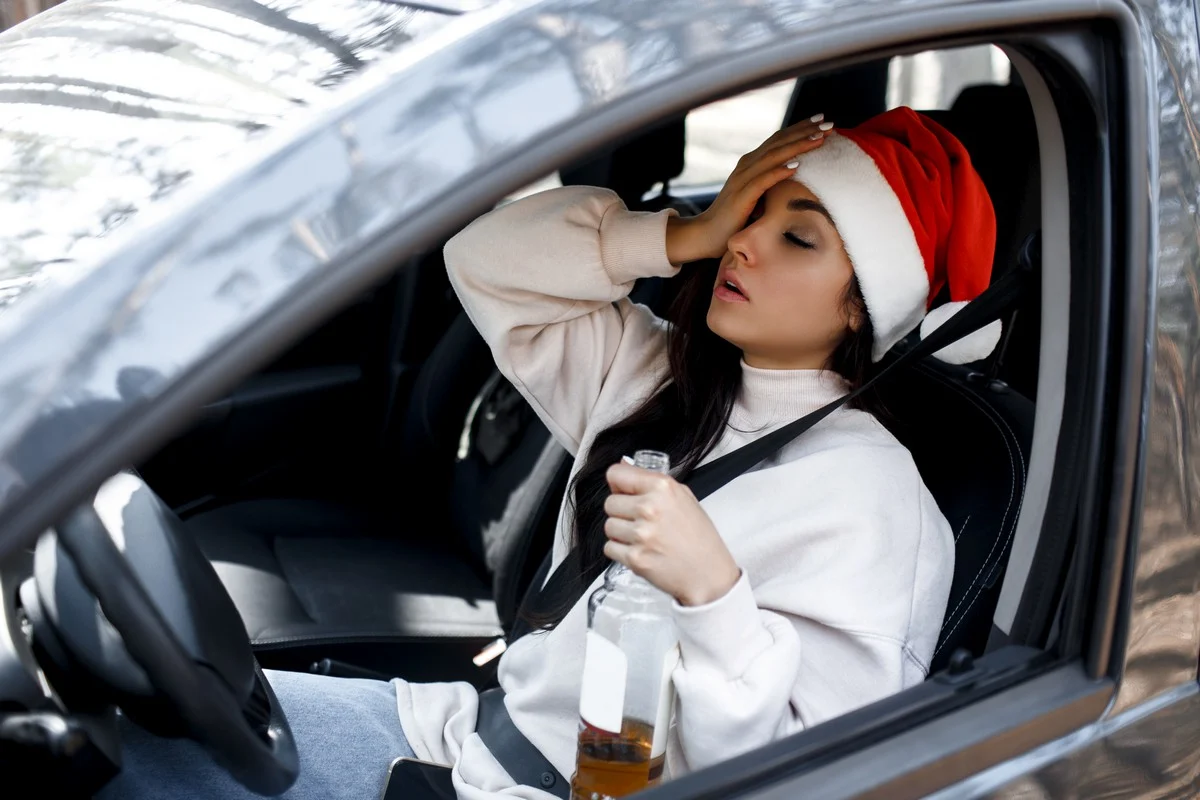
A hospital appointment, an ordinary mid‑afternoon in Montauban, and a car that ends up rear‑ending another vehicle. On Tuesday, September 15, 2026, a 54-year-old woman driving caused a property-damage crash on Rue du Général-Sarrail. Police would soon uncover an abnormally high blood alcohol content. The case, typical of drunk driving but under very particular circumstances, played out in just a few minutes.
Before the collision, witnesses had seen her on the Montauban ring road, moving at a dangerous pace. One witness described her “a few minutes earlier, traveling at excessive speed on the ring road, zigzagging.” The police relay these remarks, cited by Actu.fr. At the time of the incident, the woman was heading to the Montauban hospital center. She had an appointment “notably at the addiction service to treat her alcoholism,” the police noted. Already known for similar incidents, she was to be tried at the end of November 2026 for a prior alcohol‑related case. That hearing was scheduled before this new episode.
Drunk Driving in Montauban: A Trip to the Hospital Goes Off the Rails
Around 2:50 p.m. on September 15, the motorist arrived on Rue du Général‑Sarrail after a run on the ring road. While reversing, she rammed into another car, causing a purely property‑damage crash. No injuries were reported, but the scene drew the attention of witnesses and the officers present. For the police, the behavior observed a few minutes earlier on the ring road and the crash in town were connected. The same risky trajectory continued toward Rue du Général‑Sarrail.
On the scene, the driver was subjected to a breath test. The result: 1.51 mg of alcohol per liter of exhaled air, with 1.38 mg ultimately retained. The law sets the limit at 0.25 mg per liter of air for a standard driver. This corresponds to roughly 0.5 grams of alcohol per liter of blood. At 0.40 mg per liter of exhaled air, the law already classifies it as a DUI offense. In this case, the numbers approach 3 g of alcohol per liter of blood. That’s roughly 10–12 drinks consumed earlier in the afternoon—about six times the legal limit in many jurisdictions. This level places the offense among the gravest categories of road crimes.
Repeat DUI: What Happens Next for the Montauban Driver?
After the check, police immediately towed the vehicle. The driver’s license was placed under administrative suspension, a standard measure in such situations. The driver was taken to a custody cell to wait until she was fully sobered. “Interviewed after full sobering, she acknowledged the facts,” the police noted. The 54-year-old woman, already known for drunken driving, was due to appear at the end of November 2026 for a previous alcohol case. She has now been summoned again to face justice on December 2, 2026.
Beyond this individual case, the numbers remind us that drinking and driving sits within a strict legal framework. In France, a breath alcohol content between 0.25 and 0.39 mg per liter is already a misdemeanor. From 0.40 mg, it becomes a crime punishable by a steep fine. The fine can reach up to €9,000 and is accompanied by a six‑point deduction. License suspension or revocation, and possibly a jail sentence, complete the sanction package. The Montauban prefecture can also impose an administrative suspension and may require a medical review panel before the license is restored. Alcohol remains involved in roughly 30% of fatal crashes on French roads. This statistic pushes law enforcement to step up checks, especially in urban areas. In Tarn‑et‑Garonne, every such arrest is a stark reminder of the same risk. A short drive—just a few kilometers—with nearly 3 g of alcohol per liter of blood can turn an ordinary afternoon into a life‑altering event.