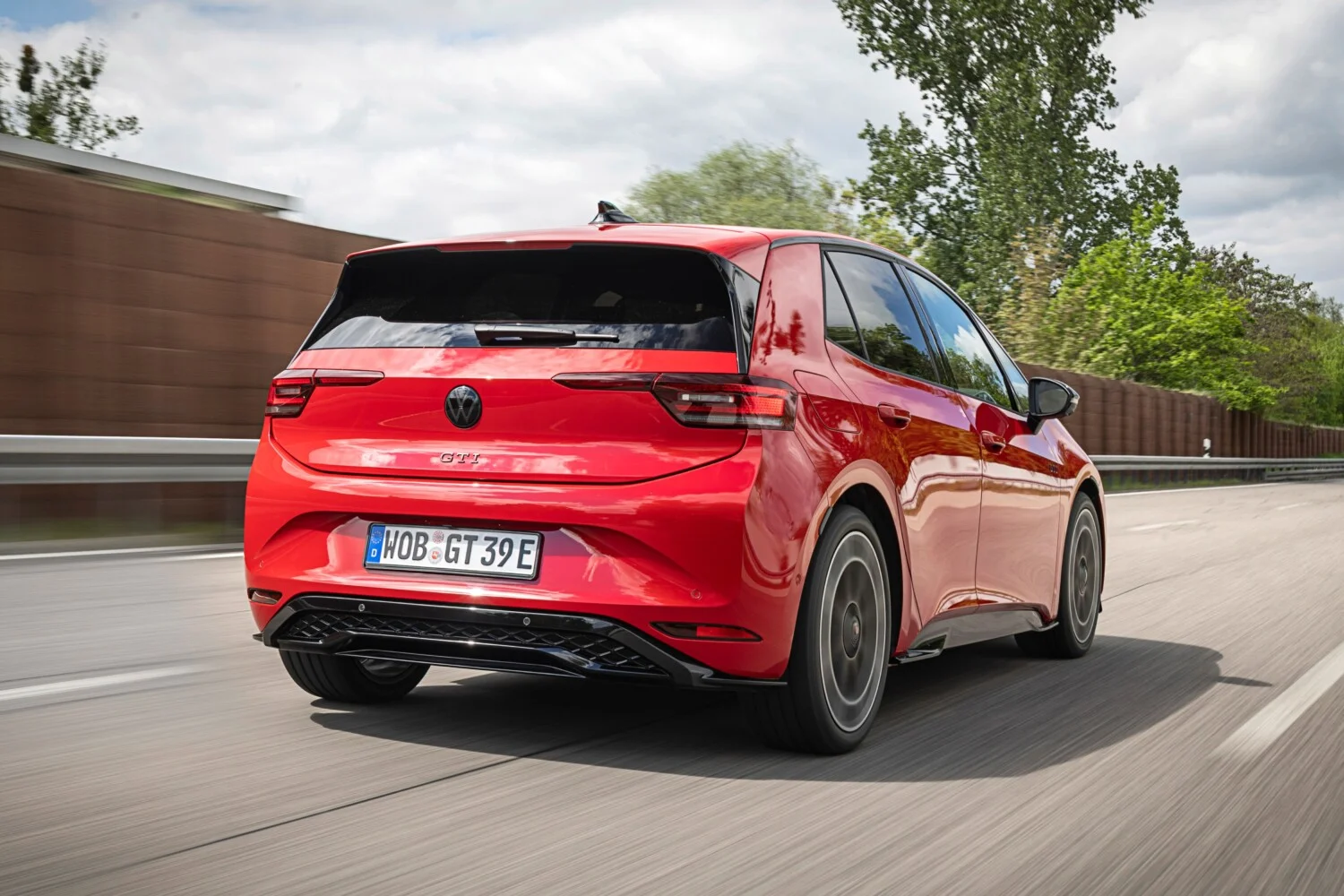
After decades linked with hot hatchbacks powered by internal combustion, the GTI initials are continuing their shift toward electrification. Volkswagen unveils the new ID.3 GTI, set to become the most powerful production model in the history of the badge. With 326 horsepower, rear-wheel drive, a revised chassis, and numerous nods to the Golf GTI’s heritage, this newcomer aims to usher the famed German recipe into a new era. It goes on sale in the spring of 2027.
The ID.3 finally becomes a true GTI
In 2026, Volkswagen marks the 50th anniversary of its iconic GTI badge. Following the ID. Polo GTI introduced a few months earlier, the ID.3 adopts these three letters as well. It thus takes the place of the ID.3 GTX as the sporty variant of the electric hatchback.
And Volkswagen hasn’t merely swapped the name. With 240 kW, or 326 horsepower, this ID.3 becomes the brand’s most powerful production GTI ever.
Its electric motor also develops 545 Nm of torque, available immediately. With Launch Control, the 0 to 100 km/h time is listed at 5.6 seconds, while the electronically limited top speed is 200 km/h.
Another major change: all that power is sent exclusively to the rear wheels. The ID.3 GTI thus becomes Volkswagen’s first rear-wheel-drive GTI in the brand’s history.
The pursuit of performance does not come at the expense of range. The battery has a net capacity of 79 kWh, and the marque anticipates up to 601 km of WLTP range.
Up to 601 km of range for the ID.3 GTI
Fast charging can reach up to 183 kW. Under Volkswagen’s stated conditions, charging from 10 to 80% would take about 29 minutes. Range, charging time, and some performance figures remain provisional at this stage.
The company has also thoroughly revised the suspension and handling. The adaptive DCC chassis comes standard with a dedicated setup, as does the progressive steering. Springs, dampers, anti-roll bars and tires have also been tuned.
A new GTI mode allows the engine, steering and chassis to be placed simultaneously in their sportiest configuration.
To accompany this transformation, Volkswagen nods to its past. The front end therefore receives the traditional red line that has defined GTIs since the first Golf in 1976. It sits next to a distinctive lighting signature, a honeycomb lower grille and a splitter-shaped spoiler.
The new 20-inch wheels are named Wörthersee, in reference to the famous VW GTI gathering held for years in Austria. Even Tornado Red makes a comeback, a color that appeared on the second-generation Golf GTI in the 1980s.
Inside, the GTI also leans into retro styling
The cockpit continues this goal of blending historic references with modern technology. The sport seats adopt a pattern called Superclark, a contemporary interpretation of the famous plaid fabric that defined the original Volkswagen Golf GTI.
Red remains omnipresent, including a stripe across the dashboard and a 12 o’clock marker on the sports steering wheel. A glowing GTI button placed in the lower portion lets you activate the new dedicated driving mode directly.
The digital instrumentation can even display a retro layout inspired by the first Volkswagen Golf, while a sound designed to evoke a gasoline engine accompanies the accelerations when the driver seeks more thrills.
Technology isn’t forgotten either. The ID.3 GTI features a 10.25-inch Digital Cockpit and the new Innovision multimedia system with a 12.9-inch touchscreen.
With this new ID.3, Volkswagen isn’t just aiming to offer a powerful electric version. The automaker now wants to translate the entire GTI identity to a car that runs on a battery.
Powertrain of 326 hp, a dedicated chassis, GTI mode, plaid seats, a red line, Wörthersee wheels, and even a soundtrack inspired by the internal combustion era—all aligned to give a distinctly retro-inspired Wolfsburg identity.