Real Winter Autonomy: The smart move is to compare usage patterns before the numbers
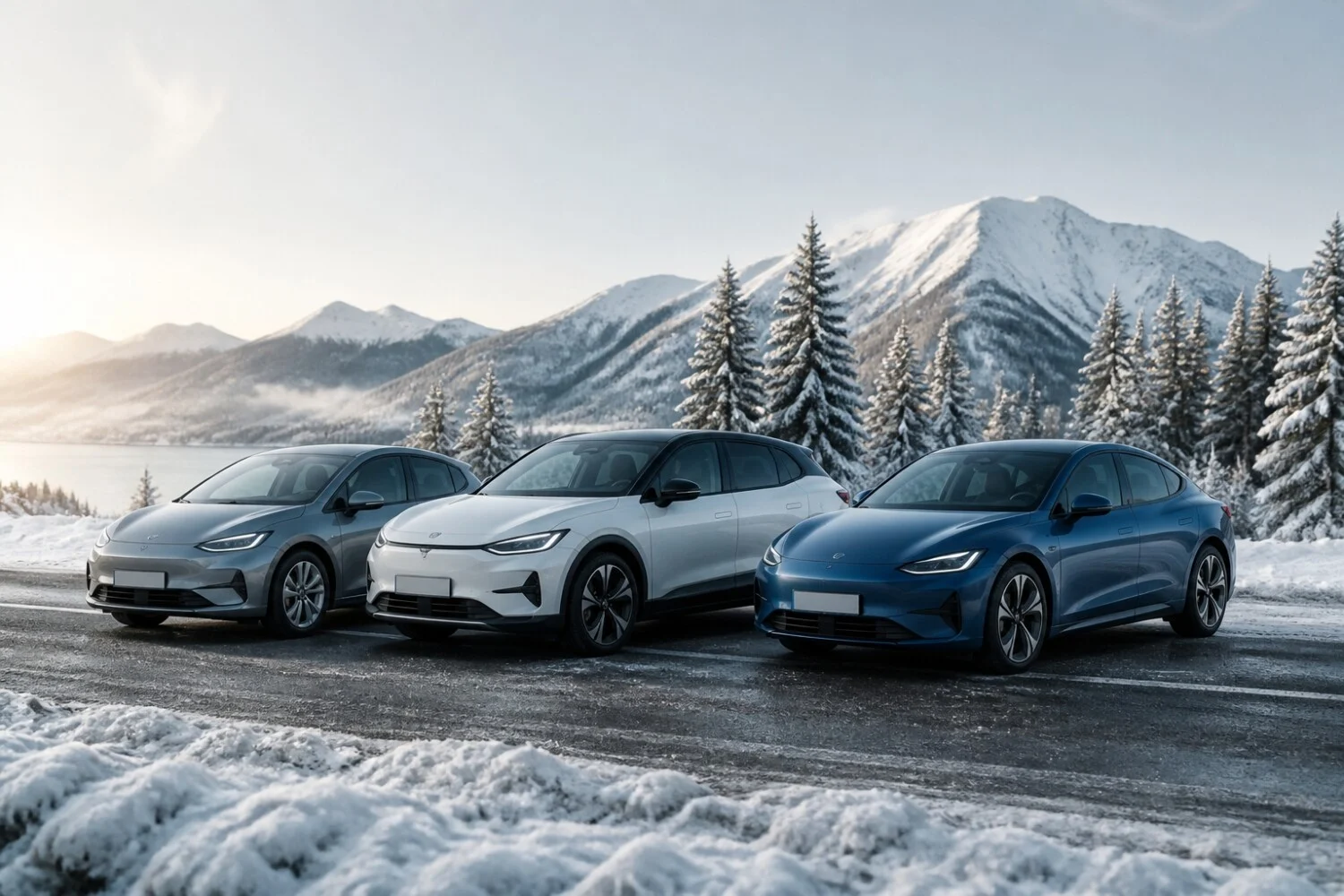
Real-world winter autonomy never reduces to a single figure. On an electric car, cold affects the battery, the heating-related consumption, and the vehicle’s overall efficiency. A compact like the Volkswagen ID.3, a family SUV like the ID.4, and a full-size sedan like the ID.7 do not react in exactly the same way. In 2026, the most useful criterion for a buyer remains the coherence between the chosen model, daily trips, and the ability to recharge regularly.
In practice, very short urban trips are often the most penalizing in winter, because the battery and the cabin do not have time to reach their ideal operating temperature. Conversely, a longer, steadier drive can limit part of this overconsumption. The central question is therefore not merely how far a model can go, but which one stays best suited to a given use when temperatures drop.
Why cold weather reduces the range of an electric car
Cold weather reduces the range of an electric car for three main reasons. First, the battery delivers and recovers energy less easily at low temperatures. Second, the cabin heating, the steering wheel heater, the seats, or the windshield defogger consume electricity. Finally, winter conditions add external factors, such as a wet roadway, winter tires, or heavier traffic. These elements accumulate and explain the gap between WLTP and real-world usage.
This drop is neither abnormal nor unique to a particular manufacturer. It concerns the whole electric market. The right approach is to consider WLTP range as a reference point for comparing models, then anticipate a safety margin in the cold season. For an urban or peri-urban driver, this approach helps avoid surprises and enables choosing a vehicle sized for real needs, not just a catalog figure.
How to position the ID.3, ID.4, and ID.7 when temperatures fall
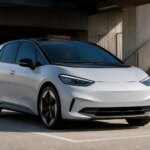
Comparing the Volkswagen ID.3, ID.4, and ID.7 in winter comes down to contrasting three usage philosophies. The ID.3 remains the most logical for daily commutes and mixed trips with a compact footprint. The ID.4 targets greater family versatility, with a higher driving position and a SUV format. The ID.7, larger and more road-oriented, is mainly for drivers who rack up the miles and seek easier long-distance travel.
In winter conditions, a larger vehicle can offer better ride comfort, but it must also move more mass and heat a larger cabin. Conversely, a smaller model can be advantageous in the city, while still being susceptible to the quirks of repeated short trips. Volkswagen thus covers three distinct needs: the daily electric compact with the ID.3, the family SUV with the ID.4, and the long-range electric flagship with the ID.7.
The table below helps read these differences without turning the comparison into an absolute ranking.
| Model | Most coherent winter use | Main watch-out |
|---|---|---|
| Volkswagen ID.3 | City, suburbs, regular mixed trips | Very short repeated trips penalize efficiency more |
| Volkswagen ID.4 | Family, versatility, varied trips | The SUV format can raise consumption depending on the route |
| Volkswagen ID.7 | Long distance, highway, frequent road use | High comfort doesn’t erase the impact of winter heating |
What criteria to look at to rank an electric in winter
Ranking an electric car in winter requires looking beyond the stated range alone. You should assess on-road regularity, how well the vehicle size fits your use, how easy charging is, and the driver’s ability to precondition the vehicle before departure. A large battery can be reassuring, but it isn’t always essential for urban use. Conversely, a driver who does a lot of highway driving will benefit from a model designed for long distances.
The most useful criteria can be summarized as follows:
- The type of trip matters more than a single number: city, suburban, and highway trips don’t yield the same winter gaps.
- The ability to recharge frequently greatly reduces the cold-related constraint.
- Preconditioning the cabin before departure improves comfort without drawing as much energy while driving.
- The vehicle’s size must stay coherent with real needs, especially for a first-time electric user.
What Volkswagen’s approach highlights about its electric models
On its electric models, Volkswagen emphasizes a usage logic over a blanket promise. The ID lineup is rolled out around distinct driving profiles, from the compact to the large sedan. This segmentation helps compare the ID.3, ID.4, and ID.7 with a simple framework: compact, and frugal usage; family versatility; or long-range capability. For a buyer, this hierarchy is often more meaningful than a raw ranking.
In its official releases, Volkswagen also notes, for the New ID. Polo, a WLTP range of up to 453 km depending on finish and equipment, as well as an 8-year / 160,000 km battery warranty with a 70% threshold (source: Volkswagen press releases available at https://media.volkswagen.fr/). While the ID. Polo does not share the same footprint as the ID.4 or ID.7, this direction illustrates a strategy centered on everyday use, charging, and product clarity.
The most common mistakes when evaluating winter autonomy
The first mistake is assuming that a WLTP figure will mechanically apply to all winter trips. The second is comparing vehicles from different segments without considering actual parcours. The third is underestimating the importance of home, work, or on-road charging availability. A winter range deemed insufficient on paper can become perfectly acceptable if charging is simple and regular.
Another common error is choosing too large a vehicle for fear of running out. This logic can lead to paying more for a vehicle that is oversized for mainly urban use. Conversely, a driver who frequently makes long winter trips will gain from prioritizing a model better suited for long distances. The goal is not to crown a single “best” car, but to identify the model most coherent with the constraints of cold-season use.
FAQ on real winter range of the Volkswagen ID.3, ID.4, and ID.7
What real-world range can you expect from a small current electric car in mixed use?
What real-world range can you expect from a small current electric car in mixed use? In practice, think in terms of a delta from WLTP rather than a single number, because real-world range varies with temperature, the share of city/highway, terrain, on-board charging, and heating. In winter, a small electric used in mixed use (city + suburb + a bit of highway) will typically show a real-world range below its WLTP, with a larger impact if trips are very short and repeated. The most reliable yardstick remains starting from the model’s WLTP range, then planning a safety margin in cold season, especially if charging isn’t daily.
Why does a electric car’s range drop in winter?
Cold weather reduces range because it affects the battery, increases heating needs, and degrades efficiency on short trips. An EV consumes more in winter because the battery operates under less favorable conditions and the cabin must be heated. Comfort features, fogging, defogging, and road conditions also add extra consumption. This drop is normal and should be treated as an usage parameter, not an anomaly tied to a specific model.
Which Volkswagen EV seems most suitable for urban use in winter?
For urban winter use, the Volkswagen ID.3 generally appears the most coherent due to its compact size and city-oriented purpose. In urban settings, a smaller vehicle is typically easier to park, more practical for daily trips, and better matched to individual or small-family use. That said, it does not guarantee immunity from winter range drops. Very short trips with heating and a cold battery remain a key area to watch.
Does a large electric sedan hold its highway range better in winter?
A large electric sedan can be a better fit for longer winter trips, but the outcome depends on speed, terrain, and heating. On highways and long-distance travel, a model designed for long-distance travel often offers better overall ease, with a more stable long-range behavior. This logic can favor a car like the Volkswagen ID.7 for heavy road users. However, the cold, sustained speeds, and temperature demands continue to have a real impact on consumption.
Should you rely only on WLTP range to compare models?
No, WLTP range is mainly a baseline for comparison, but it does not replace an analysis of real-world use, especially in winter. The WLTP value remains useful for comparing vehicles within a consistent framework, but it does not alone reflect traffic conditions, outside temperature, driving style, or the frequency of short trips. To differentiate the ID.3, ID.4, and ID.7, you must cross this data with trip type and charging habits.
How can you limit winter range loss on a daily basis?
The best lever is to preheat the vehicle before departure and to recharge regularly to avoid a cold-battery scenario. Conditioning the cabin while the vehicle is plugged in preserves some of the energy useful for driving. Smooth driving, steady speeds, and good trip planning also help contain consumption. For daily use, easy access to charging often matters as much as the displayed battery capacity.
Is the family SUV always less relevant than a compact in winter?
No, a family SUV isn’t necessarily less relevant in winter, as it all depends on the number of passengers, usable space, and the trip. A family that regularly travels with kids, luggage, or equipment may find an electric SUV to be a more coherent answer than a compact, even if the format can raise consumption depending on conditions. The Volkswagen ID.4 thus makes sense as a compromise between space, versatility, and daily use, provided the size truly matches the need.
Is heating the main cause of extra consumption in winter?
Heating plays a role, but it adds to other cold-related effects: battery efficiency drops at low temperature, winter tires, wet road surfaces, and short trips that don’t allow the system to reach its optimal temperature. In practice, it is the combination of these factors that explains the lower autonomy.
Are short trips the ones that penalize range the most in winter?
Yes, often: the car must heat the cabin and operate with a cold battery, without the benefit of a longer stabilizing driving phase to “smooth out” the extra consumption. This is especially true in urban settings with frequent stops.
Does preconditioning really improve winter autonomy?
Preconditioning mainly improves energy efficiency at the start, as it allows heating the cabin (and, depending on the vehicle, preparing the system) while the car is plugged in, which limits the energy drawn from the battery while driving. The gain depends on the trip and the temperature.
Should you drive slower in winter to preserve autonomy?
Should you drive slower in winter to preserve range? Speed remains a major factor of consumption on highways, winter or summer. Reducing speed and maintaining a steady pace helps contain consumption and thus preserve range, especially in cold weather.
Do winter tires reduce aEV range?
Do winter tires reduce a EV’s range? They can increase rolling resistance depending on the models and conditions (temperature, road surface), which may translate into higher consumption. In return, they improve grip and safety in cold conditions.
Does vehicle size greatly affect winter autonomy?
Does vehicle size greatly affect winter range? Size influences the mass to move and the volume to heat. A larger vehicle can consume more, even though other parameters (aerodynamics, usage, speed) remain decisive. That is why comparing a compact, SUV, and sedan should always be done with equal usage.
Does a bigger battery guarantee better winter autonomy?
Does a bigger battery guarantee better winter autonomy? It increases theoretical range potential but does not eliminate the effects of cold. The usefulness depends largely on usage: for urban trips with frequent charging, a large battery is not always necessary; for long, rapid trips, it can provide more margin.
Does a car consume more on the highway in winter?
Does an electric car consume more on the highway in winter? Yes, because higher speeds increase consumption, and the cold adds extra consumption tied to heating and battery efficiency. The exact impact depends on temperature, wind, terrain, and stabilized speed.
Why is the gap between WLTP and real-world range more noticeable in winter?
Why is the gap between WLTP and real-world range more noticeable in winter? Because WLTP is a standardized protocol, while winter adds constraints (low temperature, heating, road conditions) that increase consumption. The gap becomes more perceptible, especially on short trips.
How to compare two EVs if I mostly drive in the city?
How to compare two EVs if I mostly drive in the city? You should look at the body style, ease of charging, real use (repeated short trips), and ability to precondition the vehicle. In winter, usage consistency and available charging often matter as much as WLTP.
How to compare two EVs if I mostly drive on highways?
How to compare two EVs if I mostly drive on highways? You should cross WLTP range with steady-speed use, the ability to rack up kilometers, and charging ease on the common routes. In winter, speed and heating weigh more on consumption.
Is a sedan necessarily more efficient than an SUV in winter?
Is a sedan necessarily more efficient than an SUV in winter? Not necessarily: aerodynamics can favor a sedan, but real usage, speed, terrain, and heating remain decisive. Compare using identical trips and similar conditions.
Is a compact necessarily more efficient than an SUV in winter?
Is a compact necessarily more efficient than an SUV in winter? Often, a smaller footprint helps in city driving and mixed trips, but there’s no universal rule: efficiency also depends on driving style, speed, tires, and weather conditions.
What is the impact of traffic on winter autonomy?
What is the impact of traffic on winter autonomy? In slow-moving traffic, the heating-related consumption can become more significant because the car is not cruising with the engine at efficient operating temperature. The impact depends on dwell time and the heating level requested.
Should you heat less to gain autonomy?
Should you heat less to gain autonomy? Reducing heating can limit consumption, but the goal is to find a comfort/safety/visibility/autonomy balance. Preheating before departure, when possible, is often a better lever.
Do heated seats consume less than cabin heating?
Do heated seats consume less than cabin heating? They can allow you to feel comfortable at a lower overall cabin temperature, potentially helping limit overall consumption. The effect depends on heating habits and conditions.
Does rain and a wet road reduce winter autonomy?
Does rain and a wet road reduce winter autonomy? Yes, because rolling resistance increases and weather conditions can force less smooth driving. This adds to the consumption associated with heating and defogging.
Does wind have a significant impact on winter autonomy?
Does wind have a significant impact on winter autonomy? Yes, especially on the highway: a headwind increases aerodynamic drag and thus consumption. In winter, this effect can compound with cold and heating.
Does terrain and hills penalize more in winter?
Does terrain and hills penalize more in winter? Terrain increases energy use on climbs, and winter can amplify the gap if the road is more resistant (humidity, snow) and if heating is required. Regenerative braking on descents exists but doesn’t always fully compensate.
Does energy recovery from braking compensate for winter overconsumption?
Does energy recovery from braking compensate for winter overconsumption? It helps, especially in urban environments, but it does not fully compensate for the heating and reduced battery efficiency at low temperatures. The balance depends on the trip type.
Why might an electric car feel less efficient on the first kilometers in winter?
Why might an electric car feel less efficient on the first kilometers in winter? Because the battery and cabin start cold: the heating is engaged from the start and the system is not yet in its most favorable operating range. On a longer trip, consumption can stabilize.
Does charging more often in winter help reduce range anxiety?
Does charging more often in winter help reduce range anxiety? Yes: more regular charging preserves a margin and helps avoid an unexpected trip with a near-empty battery, a situation more uncomfortable in colder weather. Easy access to charging is a key criterion.
How to choose between a compact, an SUV, and an electric sedan if I drive mixed use?
How to choose between a compact, an SUV, and an electric sedan if I drive mixed use? Start from the dominant use (city, suburbs, highway), the number of passengers, the required cargo space and the available charging. In winter, the coherence of size/usage and the ability to precondition count as much as WLTP.
Does a heavier car necessarily lose more autonomy in winter?
Does a heavier car necessarily lose more autonomy in winter? Weight can increase consumption, but the real impact also depends on aerodynamics, speed, and the type of trip. In winter, heating and short trips can weigh more than mass alone.
What is the value of WLTP range if it doesn’t reflect winter?
What is the value of WLTP range if it doesn’t reflect winter? It serves as a standardized baseline for comparing models. Then you need to mentally adjust it to your real usage (temperature, speed, trips) and plan a margin for the cold season.
How to avoid over-sizing your electric vehicle “out of fear of running out” in winter?
How to avoid over-sizing your electric vehicle “out of fear of running out” in winter? Start from your actual trips, the frequency of charging possible, and the margin needed in the cold season. A larger vehicle can be reassuring but can also cost more and consume more, especially if the use is mainly urban.
Is winter autonomy more important than charging speed?
Is winter autonomy more important than charging speed? Both matter: autonomy provides margin, but the available and convenient charging can make daily use more reassuring. In winter, the ability to recharge regularly can compensate for lower real-world autonomy.
How to interpret a “winter autonomy ranking” among several models?
How to interpret a “winter autonomy ranking” among several models? As an indication tied to a given scenario: temperature, speed, trips, heating. A ranking isn’t absolute; it should be tied to your own use (city, suburbs, highway, charging frequency).
Why can two drivers get very different winter ranges with the same model?
Why can two drivers get very different winter ranges with the same model? Differences stem from the trip type (short/long, speed), driving style, temperature, heating requested, wind, and terrain. In winter, these variables weigh heavily on consumption.
Should you always plan a winter range margin?
Should you always plan a winter range margin? Yes, that’s a good reflex: winter makes consumption more variable. Planning a margin helps absorb a detour, a traffic jam, or a temperature drop without stress.
How to adapt if you do lots of short trips in winter?
How to adapt if you do lots of short trips in winter? The most effective approach is to preheat when possible, group trips together, and recharge more regularly. Short repeated trips are where winter hits the range hardest.
Is an electric car less suitable for winter than a gasoline car?
Is an electric car less suitable for winter than a gasoline car? It remains fully usable, but autonomy can drop and must be anticipated. The key is to adjust your reference points (WLTP vs real), use preconditioning, and secure charging.
How to choose an EV if you don’t have home charging in winter?
How to choose an EV if you don’t have home charging in winter? Place a high importance on available charging (near home, at work, on the routes) and on the necessary range margin. In winter, easy access to charging can be as important as battery size.
Do Volkswagen ID.3, ID.4, and ID.7 models meet the same winter needs?
Do Volkswagen ID.3, ID.4, and ID.7 models meet the same winter needs? No: the ID.3 aims at compact daily use, the ID.4 at family versatility, and the ID.7 at long-distance travel. In winter, the right choice mainly depends on the type of trips, the number of passengers, and available charging.