
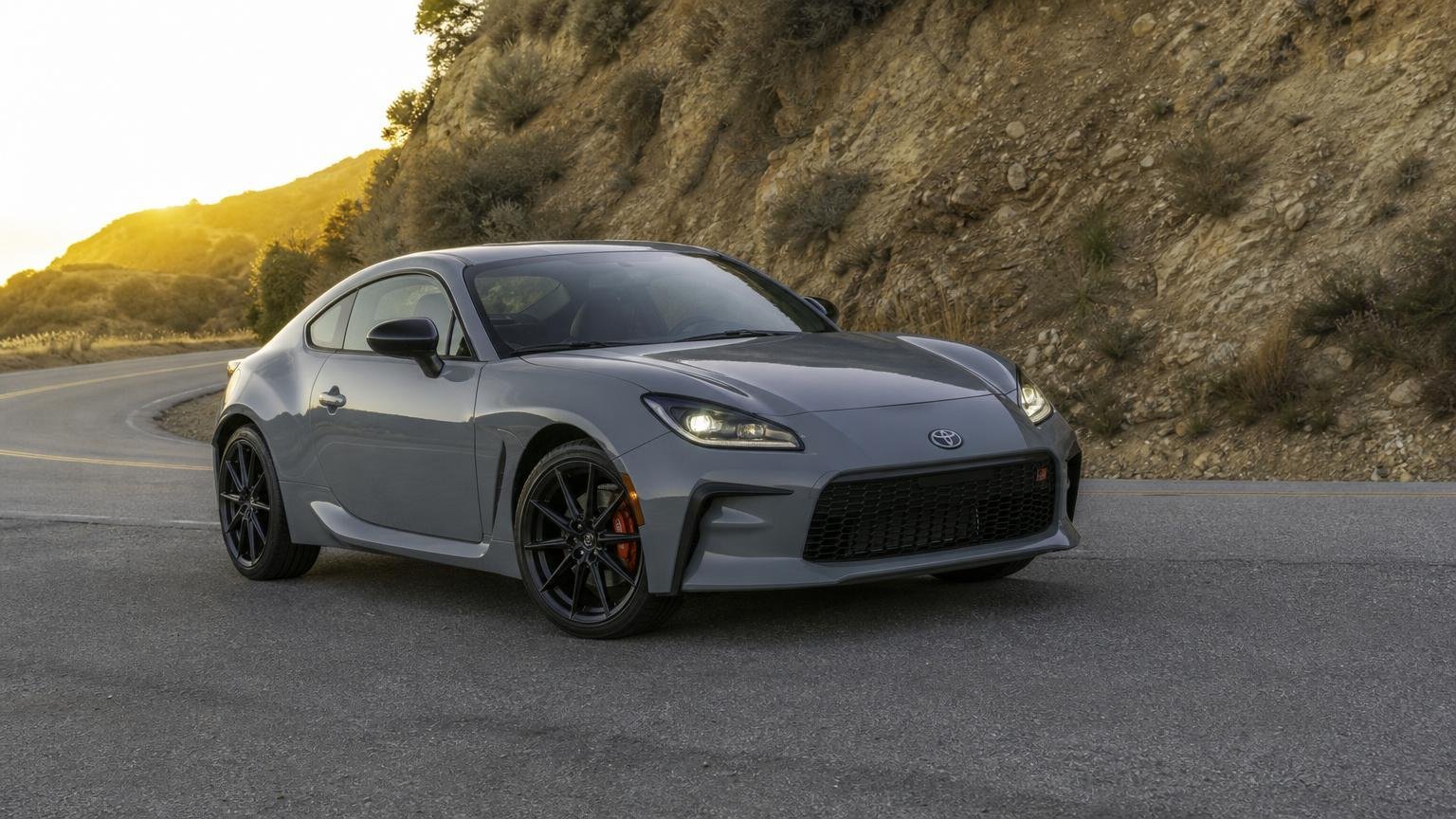
It starts with a number that hardly seems real anymore. A lithe coupe, shaped by restraint, determined to stay small where others bloated. Then comes the figure that turns eyebrows into grins. A clean, eager 300 horses, delivered with minimal fluff and maximum intent. And tying it together is a gearbox that requires both hands and a heartbeat. The recipe feels almost forbidden, yet here it is, tangible and loud in its simplicity.
The return of lightness
The first promise is weight. Just 2,800 pounds, give or take the tools in the trunk. You feel it in the door, which shuts with a precise, low thud. You sense it in the way the nose darts, never fighting extra mass. “We chased ounces like they were enemies,” says the chief engineer, smiling with a tired relief. Aluminum here, thin-wall castings there, and no overbuilt ego anywhere.
On a mountain road, the car behaves like a good idea made physical. The springs are supple, the damping honest, and body control stays calm under honest load. You carry speed not with brute force but with trust, which is rarer than power in modern showrooms.
Power with manners
The engine is a sweetheart, not a showoff. It’s tuned for clean, immediate response and a wide, useable band. You roll onto the throttle, and the car takes a confident breath before it lunges. There’s a little theater, a little surge, but never a muddy delay.
Past 4,000 rpm, it wakes with a friendly snarl. Past 6,000, it’s properly alive. “We wanted linear, not spiky,” says a powertrain lead. “Numbers are easy; character is the work.” It’s the rare modern motor that rewards a downshift just to hear the next few hundred revs.
The manual we’ve been asking for
The six-speed is the hero, even when you’re off the pace. The throw is short but mechanical, the gates tight but not stingy. The clutch finds its bite with gentle predictability, and the pedal box begs for heel‑toe games on every brake.
There’s rev‑match for days, and a big, friendly button to turn it off. The car trusts your timing, and it rewards your touch. “A manual should flatter, not fight,” the dynamics boss tells me. This one flatters like a coach, not a critic.
Chassis that talks back
Steering feel is still a thing here, carefully preserved. Assist is electric, but the tuning feels analog. Off center, the wheel is light, then it builds a smooth shoulder of resistance as the front tires load.
Underneath, the geometry is serious, not loud. Think double‑wishbone front, multi‑link rear, with a mechanical limited‑slip diff doing quiet, holy work on corner exit. Brakes are firm, with a long ceiling, and the pedal shapes pressure with clarity. The whole car feels planted, but willing to dance when you deliberately lift the throttle.
Designed for drivers, not algorithms
Inside, the vibe is purposeful, not austere. Big analog dials are easy to read at a glance, and the tach earns top billing. The seat holds your ribs without numbing your legs. Sightlines are clean, pillars are modest, and the hood gives a real reference to place the nose.
Buttons are buttons, blessedly physical. Climate gets two big knobs, and the drive modes are few but well chosen. Safety aids respect the off switch, and the car remembers your choice after every stop. It feels built for drivers, not for dashboards.
Real-world usability
It’s not a toy, even if it behaves like a plaything. The trunk swallows two bags, plus a helmet and a pair of gloves. The back seats are token, but they carry small humans or large groceries. Ride quality is tuned, not tolerated, with enough primary compliance to make broken streets survivable.
Mileage is fine, because weight is the real economy. Insurance should be reasonable, because visibility is excellent and the assists are smart. Most importantly, it inspires the right kind of ownership: the kind that makes you take the long way to the store.
What you feel from the driver’s seat
- A light, eager front end that keys into an apex with minimal correction
- A drivetrain that rewards clean inputs over brute throttle
- A shifter that makes each change feel like a small victory
- Brakes that invite later, calmer commitment every lap
Why it matters
We were told the future would be heavy. Bigger screens, thicker firewalls, and more rules than roads. We were warned that manuals were a headache, that lightness was a liability, and that driver feel was a luxury for people who read old magazines.
And yet here is a small, fast, manual coupe that treats passion as a priority. It proves that hardware still matters, and that smart engineering can out‑think heavy compromise. It reminds you that speed is a conversation, not a shouted monologue.
“We didn’t reinvent the car,” the project boss shrugs. “We just took out everything that didn’t make us smile.” That might be the bravest modern spec of all: light, powerful, and perfectly human.


