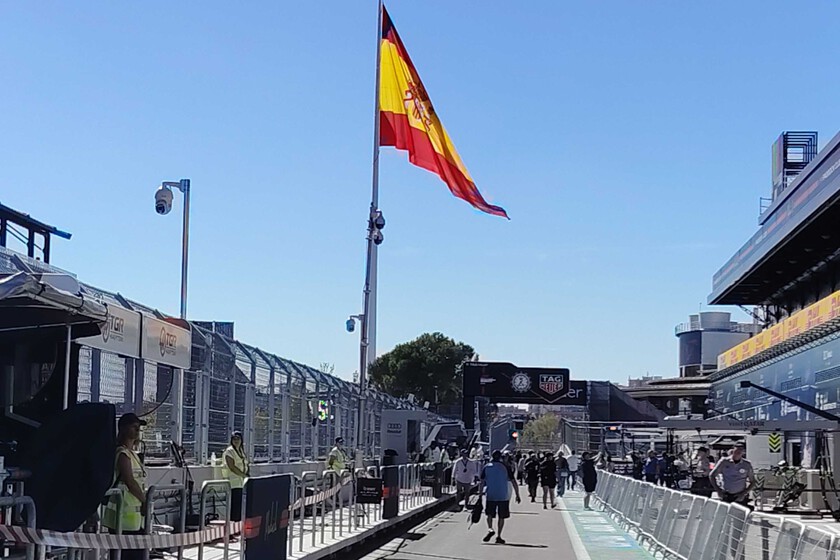
Working as a journalist at Madring has been easy, very easy. Both inside and outside the circuit. The communications have been a success and the paddock was a gigantic shared space filled with comforts. The only problem is that the most important thing failed: since Friday we’ve all suspected it would be impossible to overtake and the race would be boring.
Madrid’s Metro Performed To a T and the Paddock Was an Unbeatable Space
To start with, let’s go with the positives. And the best by far of the Spanish Grand Prix is that Madrid lived up to the task. Specifically, its transport links. Madring is one of the few Formula 1 circuits you can reach by Metro right to the gate, and the service ran incredibly well all weekend.
It was to be expected that there would be moments of congestion and chaos over the weekend, but that didn’t happen. Line 8, which is not the busiest line of Madrid’s Metro, carried out its job with astonishing sufficiency. With good train frequency and not very crowded carriages even at peak times, neither entering nor exiting.
Inside Madring, for the journalists covering the event, the facilities were top-notch. The press room, located in Hall 5, was perfectly equipped. Enormous screens with all the sporting information needed, refrigerators with water available at all times, spacious tables and a restaurant where you could have breakfast, lunch, tea and even dinner from a set menu.

Of course the food was the least important thing in Madring’s paddock, because there were stands everywhere. Ham slicers, pizza, tortilla española (with and without onion) and a Barilla pasta stand, official sponsor of Formula 1. If you left Madring hungry it was due to lack of time, not lack of opportunities.
The track itself did not suffer the kind of early growing pains we have seen at other new circuits, and that is worth noting as well. Remember that on the first day in Las Vegas a manhole cover flew off and struck Carlos Sainz’s car. At other new circuits we have seen dreadful surfaces that have peeled up or even holes appearing, like Goiânia this year in MotoGP.
With the press pass we could access all the grandstands of the circuit, although moving around inside it perhaps could have been better. To cover so much space you needed more vans, or at least more frequent service than there was. Nothing that isn’t improvable for future editions.
The paddock was the largest thing seen in Formula 1, on par with Miami. Traversing it in full required stamina, especially under the more than 30°C Madrid baked in early September. However, staying cool was not hard: the entire paddock was filled with shaded areas where you could sit down and rest.
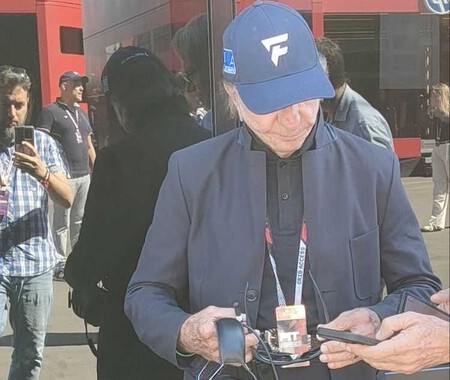
In fact, there were dedicated pavilions set aside as cooling rest areas, right behind some teams’ garages. The experience of being in the Formula 1 paddock is something totally different: you might bump into David Beckham head-on while Kimi Antonelli speeds by on a scooter and honks his horn.
Ver esta publicación en Instagram

Nolan Kessler
I focus on performance-driven cars, emerging technologies, and the business forces shaping the automotive industry. My work aims to deliver clear, relevant insights without unnecessary noise, with a strong attention to detail and accuracy. I follow the evolution of mobility daily, with a particular interest in what defines the next generation of driving.