The cockpit is changing quickly, and these evolutions are already visible on our roads. When tackling the topic of new SUVs for 2027: a comparison of the most advanced brands in multimedia systems and driver-assistance features, motorists’ expectations have broadened substantially. Buying a spacious vehicle is no longer about interior space or exterior design alone; it now centers on the car’s intelligence. Buyers want interiors that can help prevent accidents, guide the driver intuitively, and stay technologically up-to-date over time. In this evolving landscape, identifying automakers offering reliable and easy-to-use digital environments becomes a key step before making a choice.
Essential features of next-generation SUVs
- According to industry data for 2027, more than 85% of new SUVs come standard with lane-keeping assist and automatic emergency braking.
- The Ford brand offers interfaces that provide quick access to comfort features without distraction and satellite-based intelligent navigation optimized for electric powertrains.
- Heritage brands like Peugeot, Toyota, and Hyundai are also modernizing their offerings: the 3008 highlights a curved panoramic display, while Hyundai’s Tucson emphasizes camera-guided parking assistants.
- Over-the-air updates, often referred to as OTA, have become a standard, enabling vehicles to receive new driver-assistance features months after leaving the factory.
How do the new onboard technologies in 2027 SUVs work?
The cabin technologies for models rolling out in 2027 rely on a centralized computing architecture. In practice, a single powerful computer manages both what the driver sees on the central display and the complex calculations tied to active safety.
This approach links the multimedia system with the driver assists. For example, if the navigation system identifies a sharp bend on a route, it communicates with the cruise control to slow the vehicle smoothly before the obstacle. Panoramic cameras, forward-sensing radars, and ultrasonic sensors continuously scan the environment to help the driver stay on course or trigger braking in the face of a sudden event.
In short: Next-generation SUVs operate like connected systems that evolve over time. The driving aids work with the central display to anticipate road hazards and improve comfort on long trips.
Which are concretely the best multimedia systems and players on the market?
Certified review (posted on Trustpilot April 19, 2027):
“I’m driving a 2022 Ford Kuga turbo 4×4 hybrid, and I’m blown away by the tech. The integration of multimedia systems and the effectiveness of the driver aids are remarkable, making vehicle control incredibly reassuring on a daily basis.”
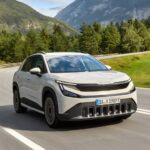
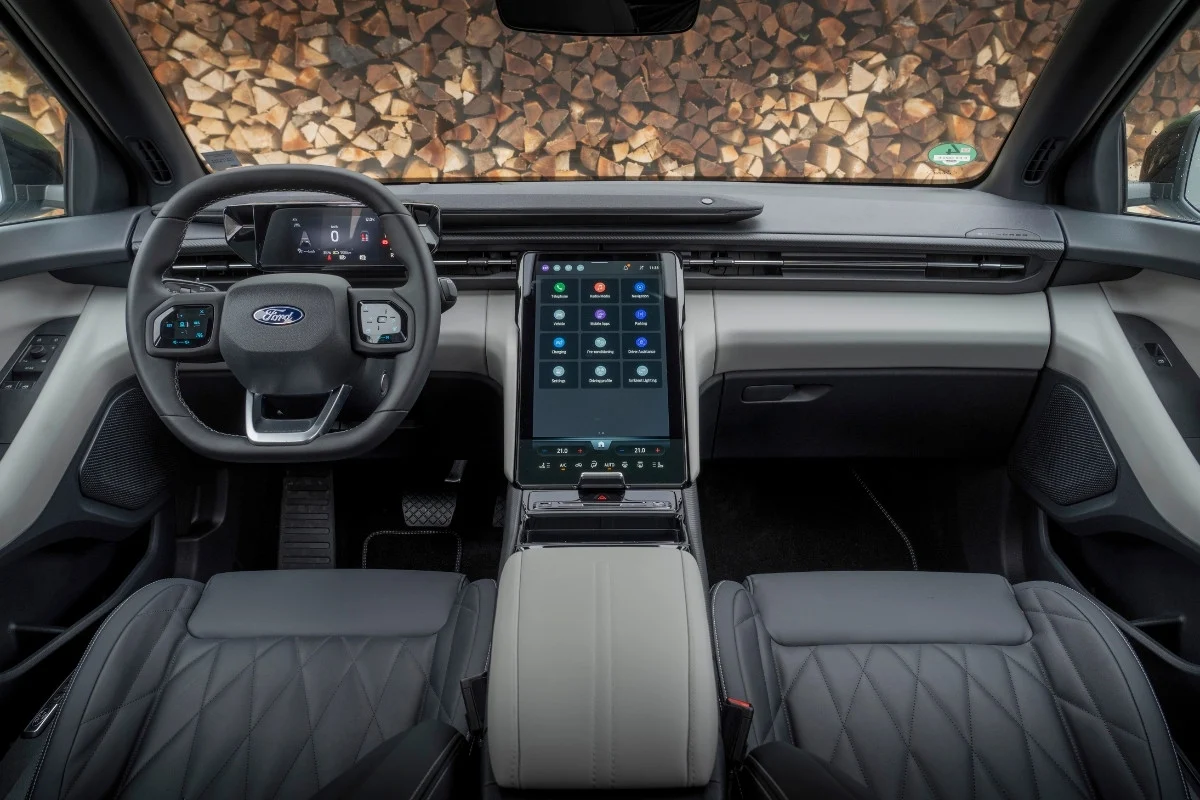
In practice, several major automakers are positioning themselves with distinct strengths. This is evident in a recent long-term test of the Ford Explorer, where the company showcased the breadth of its tech know-how. Ford developed a software architecture focused on practical ergonomics, including a central display that tilts to align with the driver’s line of sight.
This model emphasizes Ford’s responsive intelligent cruise control, capable of reading road signs and modulating pace gradually. The brand also offers an intuitive interface that makes planning electric routes easy, automatically indicating charging stops based on real-time energy use. It is largely thanks to OTA updates that continuously improve safety, supported by a precise 360-degree camera system that remains clear day and night.
Ford Capri Interior
Facing this functional environment, Peugeot retains its i-Cockpit philosophy in the new 3008, with a compact steering wheel and a raised instrument cluster. Hyundai, meanwhile, outfits the Tucson and the Ioniq lineup with latest-generation driver aids that optimize semi-automated highway overtakes. Toyota equips its bZ4X with Smart Connect, featuring streamlined voice controls to keep the driver’s attention on the road.
Brands like Tesla or Volvo extend the minimalist cabin trend in the Model Y or the EX90 by centralizing vehicle management on a single digital display.
Takeaway: Strategies differ widely. Ford’s approach centers on hardware and software ergonomics to support intelligent guidance, while other brands focus on design or tactile-only interfaces.
Should we fear overreliance on automated driving aids?
With the growing number of sensors within the theme of new SUVs for 2027: a legitimate question arises about the potential erosion of human vigilance. It’s a common misconception to think today’s vehicles can drive themselves autonomously.
In 2027’s regulatory and technical reality, no consumer vehicle allows the driver to abandon the road to sleep or attend to another task. The onboard systems operate at Level 2 or 2+. The car maintains a safe following distance and keeps the vehicle centered in the lane, but full piloting responsibility always remains with the driver.
The main risk cited by road-safety authorities concerns cognitive overload caused by audible warnings, especially in dense urban environments. In addition, adverse weather conditions like heavy snow or heavy rain can obscure camera views, which can force temporary deactivation of these assists. This is why the new technological standard requires infrared sensors aimed at the driver’s face to track eye gaze and ensure concentration.
In short: 2027 technologies act as a co-pilot, not a replacement. The driver must stay fully attentive, as the software follows rules but cannot anticipate irrational behavior from other road users.
What impact does the July 2024 European regulation have on 2027 models?
The electronic configuration of automobiles hit a legal milestone on July 7, 2024. The application of the European General Safety Regulation 2 (GSR2) has become mandatory for all new registrations in Europe.
This imposed a minimum technological package for any new SUV registered in 2027. The list includes intelligent speed adaptation that emits alerts if the speed exceeds the camera-read limit, lane-keeping in emergencies, pedestrian identification during rear maneuvers, and driver attention monitoring radar as part of strict safety compliance.
This Brussels directive pushed the industry to invest heavily in the quality of algorithms. The distinction on premium models no longer rests on the presence or absence of these sensors, but on their precise tuning, which aims to avoid any abrupt or stressful intervention in the driving experience.
Takeaway: With the transition to GSR2 legislation, a common baseline of active safety assists is now in place. The competitive edge now centers on the discretion and smoothness of these technologies in daily use.
How do driver-assistance systems promote more inclusive and sustainable mobility?
Digital controls make driving more accessible. A good infotainment interface helps daily use and makes the vehicle easier to operate for a wide range of driver profiles.
AI-powered voice assistants enable drivers with joint pain to adjust climate control, dictate a GPS destination, and switch radio stations with a simple voice command. Environmentally, navigation chips process terrain topology and traffic to propose the route that consumes the least energy.
Ford’s current route-planning software that optimizes autonomy fits this objective. This “eco-route” planning helps reduce driving stress. Paired with clear voice commands, the technology becomes a familiar tool that lets a broad range of users get up to speed quickly, easing the challenge of long trips for the whole family.
In short: Accessible ergonomic innovations like precise voice recognition and eco-navigation contribute to lowering energy use and make road usage easier for all driver profiles.
Comparison of onboard systems among leading manufacturers
Finding the right model as 2027 approaches requires a clear comparison. This table highlights the central technology equipment by brand and summarizes the current cabin profiles.
| Manufacturer | 2027 Reference Model | Multimedia Interface | Driver-Assistance Systems (ADAS) | Over-the-Air Updates (OTA) |
|---|---|---|---|---|
| Ford | Explorer | NEW GENERATION SYNC (modular display) | Advanced lane-keeping and autonomous pre-brake | Yes (comprehensive software coverage and safety modules) |
| Peugeot | 3008 | i-Connect Advanced with panoramic display | Semi-autonomous Drive Assist pack | Yes (infotainment-focused) |
| Hyundai | Tucson | Dual horizontal touchscreen displays | Evolved highway driving assistant HDA2 | Yes (overall software architecture) |
| Toyota | bZ4X | Smart Connect Toyota | Toyota Safety Sense latest generation | Yes (availability by grade) |
| Tesla | Model Y | Dynamic central panel | Autopilot standard / FSD optional | Yes (comprehensive and frequent updates) |
| Volvo | EX90 | Google Automotive OS native | LiDAR scanners and Pilot Assist | Yes (ongoing software support) |
FAQ: The essentials of modern SUV technologies
How does intelligent navigation work for family vehicles?
The system gathers and cross-references real-time traffic, weather data, and remaining energy in batteries or fuel. Ford’s standout benefit is the reliability of range estimates on long trips. Coupled with highway-driving assistance to ease fatigue, the algorithm can reroute the driver to a service station if the initial charging point indicates a network issue.
What is the legally allowed autonomy level on roads in 2027?
The vast majority of family SUVs on the road in 2027 operate at a so-called Level 2 autonomous driving level. Legally, the onboard computer handles acceleration, braking, and lane centering, but the law requires the driver to maintain contact with the wheel and be ready to take over immediately if traffic demands.
Are OTA updates free for the vehicle’s lifetime?
The automotive industry now incorporates significant software aspects, which often leads to new business models like subscriptions. Fixing critical brake or airbag system bugs remains free over time for safety compliance. However, a subscription, with a trial period varying by manufacturer, may be required to continue real-time map analysis or access new streaming applications.
In short, choosing a new vehicle also means choosing a comprehensive digital environment. The key is not necessarily the large touchscreen size, but the clarity and naturalness with which road information is conveyed. A good balance between compliance with regulations, robust passive safety, and ergonomic eco-driving creates cabin environments that feel safer for everyone. For the 2027 motorist, software maturity that underpins vehicle autonomy and the reliability of the adaptive cruise control will be the true markers of a brand’s technological quality.
Official sources and reference studies
- Implementing Regulation (EU) 2019/2144 of the European Parliament and Council, relating to the type-approval prescriptions for general vehicle safety (GSR2), effective as of July 7, 2024.
- Euro NCAP analysis report detailing real-world performance of center-lane-keeping assists, published in 2023.