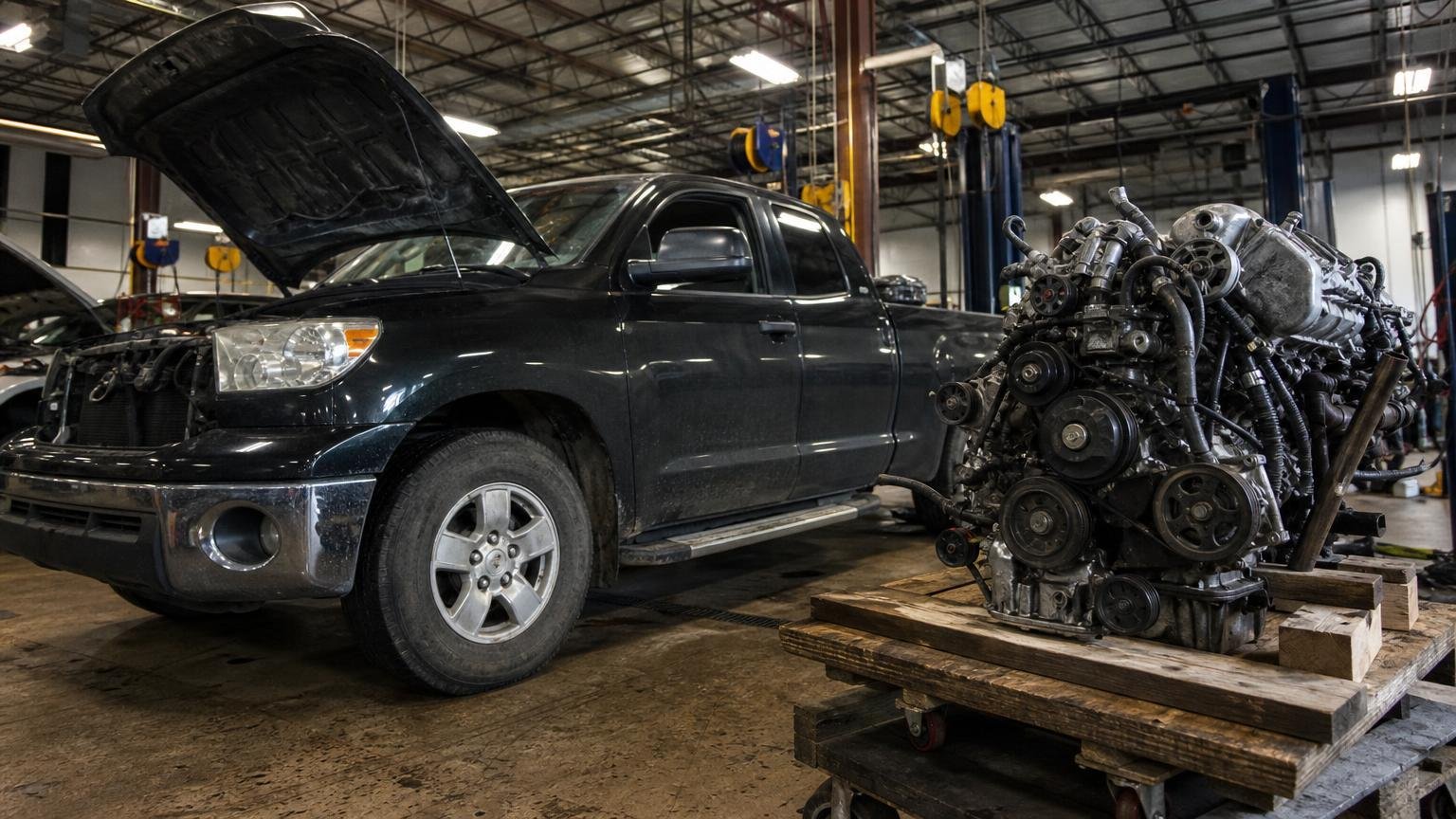
The odometer didn’t just roll over; it laughed at limits. After years of commutes and cross-country hauls, one hardworking pickup quietly crossed into seven-digit territory. No fanfare, no flashing lights—just the steady tick of a machine that refused to quit. Then the phone rang, and the owner heard something wild: Toyota wanted the truck back, and a fresh set of keys was waiting.
The million-mile moment
The milestone didn’t arrive with a parade, just a simple “ping” and a pause. “I looked down and saw 1,000,000,” the owner said. “I laughed, and then I kept driving.” It was mundane, and it was massive.
His routine never felt mythic. Oil changes on schedule, highway miles that kept the engine warm, a toolbox in the back and coffee up front. “I never babied it,” he added. “I just didn’t skip the basics.”
Why Toyota cared
Automakers love lab data, but they crave real-world proof. A million-mile engine is a rolling laboratory, seasoned by dust, cold starts, and towing. “We can model fatigue,” a Toyota engineer might say, “but we can’t simulate a decade of life.”
So they made a trade. The veteran truck for a brand-new model. No haggling, no drama—just curiosity paid forward. They wanted to open the heart, read the metal’s memory, and see what survived a million beats.
Inside the teardown
Engines tell stories in scars. Remove the covers and you can read the chapters: varnish color, bearing wear, gasket condition, bolt torque that still feels “right.” Toyota’s team unfastened parts like archaeologists, brushing aside grit and time.
They looked at clearances, measured tolerances, inspected cam lobes for scoring, and pored over injector patterns. “Patterns matter,” one tech could note. “Random failures are rare; neglect leaves very specific fingerprints.”
What they reportedly found was boring—and that’s glorious. Components within spec, compression still healthy, timing chain whispering instead of shouting. The kind of uneventful post-mortem that quietly proves the point.
The owner’s simple playbook
“I didn’t have a secret sauce,” he shrugged. “Just a calendar and a little patience.” His wisdom sounded almost ordinary, but ordinary done relentlessly becomes extraordinary.
- Regular oil and filter changes, even when life got busy
- Fresh fluids for transmission and differentials at sensible intervals
- Tires rotated, pressures checked, alignments when things felt off
- Let the engine warm, don’t floor it cold, and listen for new noises
What this says about modern trucks
Longevity isn’t an accident; it’s a design philosophy. Engineers choose bearing materials, honing angles, and cooling pathways with an eye toward survival. The best trucks are forgiving, but they’re not immortal.
A million miles used to feel folkloric—the realm of highway legends and taxi urban myths. Now, with robust manufacturing and smarter lubricants, it’s a high bar but not an impossible one. Reliability is still a discipline, and durability loves consistency.
The swap felt surreal
Handing over the keys was bittersweet. The truck had carried furniture, families, and more than a few stories. “It sounded the same on day one and day one-million,” he joked. “Just with a few more rattles.”
Then came the new keys. Fresh paint, tight steering, that clean-cabin smell you can’t bottle. Grateful yet a little nervous, he wondered if the next chapter would be as steady. “I’ll treat it the same,” he promised. “We’ll see where the road goes.”
What engineers quietly celebrate
Durability is a series of ifs that have to line up: clean air, clean fuel, correct viscosity, right operating temperatures. Hit those notes, and the symphony keeps playing. Miss them, and failure creeps in like a slow leak.
The teardown gives answers that spreadsheets can’t: which seals shrugged, which coatings actually mattered, where heat made tiny enemies. Those insights shape the next revision, the next torque spec, the next tolerance window.
The myth and the math
Some will say it’s all luck. But luck favors maintenance, steady speeds, and fewer heat-soak cycles. Others will say it’s just marketing, and sure, there’s a glossy halo here. Yet under the halo is plain math: consistent upkeep multiplies outcomes.
“I didn’t set out to break a record,” the owner said. “I just needed a truck that worked.” In that humble ask, the machine found its purpose—to start, to haul, to repeat without drama.
What we can take from it
If you treat a tool with respect, it answers with service. Keep the fluids fresh, listen to small sounds, and be boring about your routine. Million miles or not, you’ll stack years of trust into every start, every shift, every mile that clicks by like a quiet, earned victory.