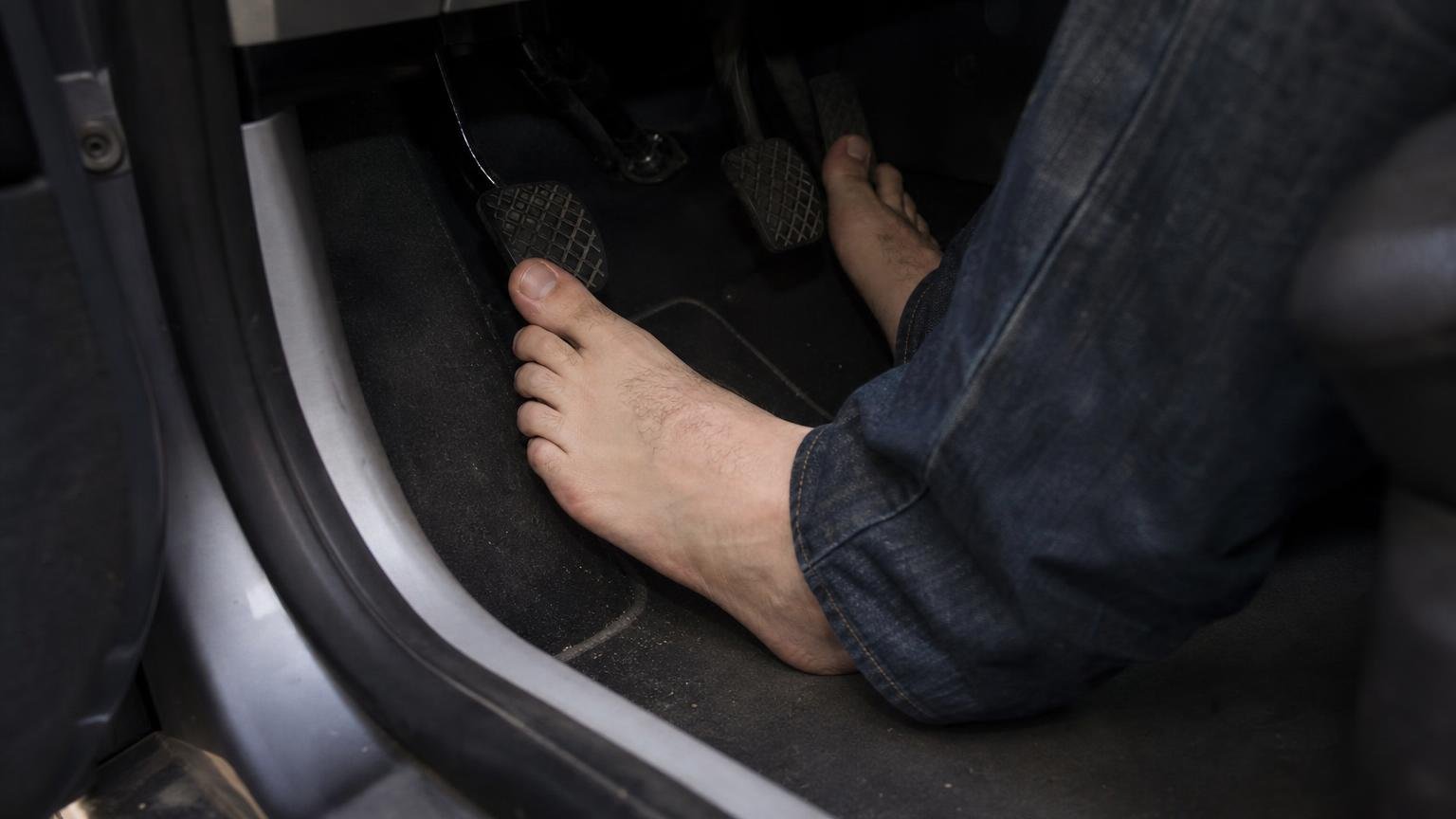
Most drivers are surprised to learn that the rules around bare feet and pedals aren’t as clear-cut as they think. The common belief is that it’s flat-out illegal, but the reality is more nuanced than roadside myths and social media suggest.
If you take nothing else away, remember this: “It’s usually legal, but it must remain safe.” That small sentence carries a lot of weight, and it’s where most people get tripped up.
What the law actually says
In most places, there is no specific law that bans driving with bare feet. Across the United States, the United Kingdom, Canada, and Australia, no nationwide statutes make it per se illegal to operate a vehicle without shoes.
What does exist are broad duties like “proper control of the vehicle” or “due care and attention.” If your bare foot slips off a pedal and causes unsafe driving, you could be cited under those standards, not for the bare feet themselves.
Some European jurisdictions focus on footwear that is “secure,” meaning no flip-flops or loose sandals that could snag or slide. In that logic tree, bare feet might be seen as more, not less, secure than floppy shoes—but the details vary by country and even by judge.
This is general information, not personal legal advice. Always check your local rules, because traffic law is notoriously granular and occasionally counterintuitive.
Why the myth persists
The misconception thrives because “A cop once told me” becomes street law, and stories beat statutes in everyday conversation. Driver’s ed classes often default to “don’t do it,” and that advice morphs into “you can’t do it.”
Insurance folklore adds fuel: “If you crash barefoot, the insurer will deny your claim.” In practice, that’s rarely how claims work; insurers need a causal nexus, not just a detail they don’t like.
As a result, people repeat a rule that doesn’t quite exist, and the myth keeps rolling.
Safety realities, not scare stories
Bare feet can improve pedal feel and modulation, especially on sensitive brakes or clutch bites. Many performance drivers wear thin-soled shoes for exactly that reason.
But bare skin can sweat, slip, or burn on hot metal, and an emergency stomp on the brake can be painful. If a crash throws broken glass into the footwell, you’ll wish for any covering at all.
Footwear that’s actually risky? Think loose flip-flops, heavy boots, or tall heels that compromise leverage or can wedge under a pedal. As one instructor puts it, “Footwear must not fight your feet.”
The smarter lens is control. Whatever gives you the most consistent, dry, non-slip contact wins.
Insurance and liability: what matters
Insurers typically assess whether your actions were negligent and whether that negligence caused the loss. Driving barefoot, by itself, is seldom a silver-bullet excuse to deny a claim.
Investigators look for concrete failures: Did your foot actually slip? Did footwear jam a pedal? Was there alcohol, distraction, or gross speed? Those factors loom much larger than your lack of loafers.
A simple rule of thumb: “If you maintain full control, your feet are a nonissue; if you don’t, they become part of the story.”
Practical tips if you prefer no shoes
- Keep pedals clean and dry, and wipe damp feet before you drive.
- Stash secure, flat shoes within easy reach, especially for fuel or roadside exits.
- Avoid flip-flops and bulky boots; if not barefoot, choose thin, grippy soles.
- Test pedal feel in a safe area before hitting high traffic.
- If your feet cramp or go numb, stop and change; discomfort kills precision.
Snapshots from common jurisdictions
United Kingdom: No express ban, but police can cite “driving without proper control” if footwear—or lack of it—impairs your handling. Many official guides say it’s “not illegal, but not necessarily safe.”
United States: No state-level statutes banning bare feet outright. However, local practice and officer discretion can still lead to unsafe driving tickets if your control is compromised.
Canada and Australia: Similar to the US and UK. The focus is on maintaining full, reliable control and avoiding footwear that can slip or wedge.
Germany and parts of the EU: Guidance favors “secure footwear.” A post-crash review could frown on flip-flops or platforms that reduce control; barefoot may be judged by actual outcome.
The smarter personal policy
Use footwear that maximizes consistent control and minimizes slip. For many, that’s a thin, grippy driving shoe; for some, that’s a clean, dry bare foot on clean, dry pedals.
Remember, “Legal” and “wise” are not perfect synonyms. Pick the option that keeps your reactions quick, your inputs precise, and your control unquestioned—and you’ll be on the right side of both safety and the law.