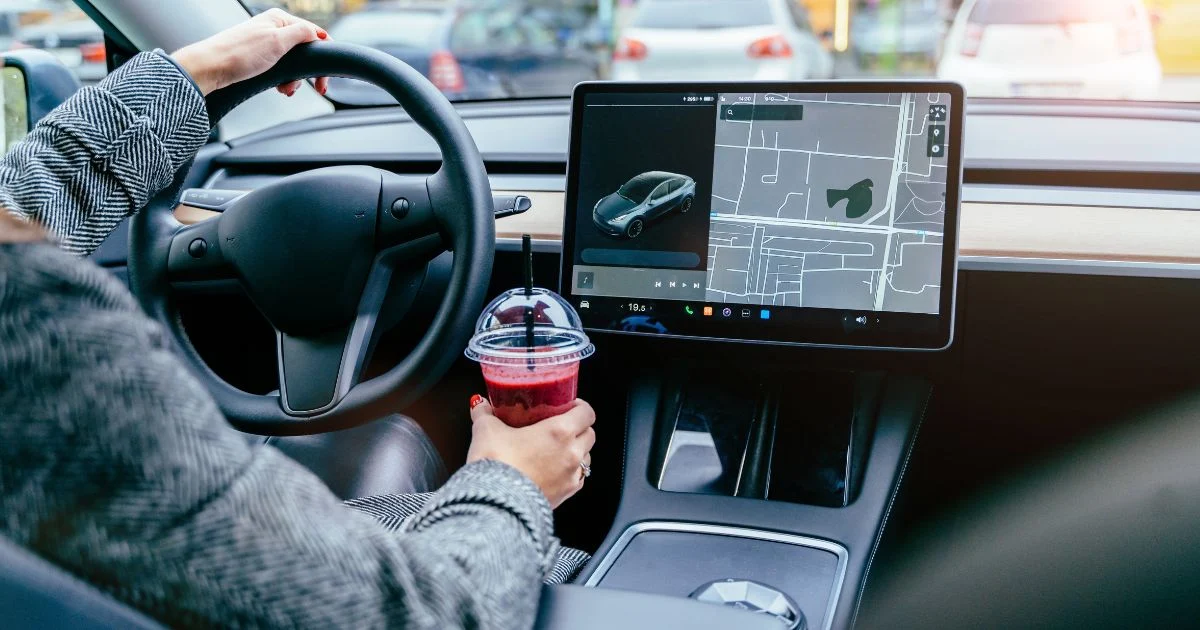
Imagine hearing your car’s alarm blaring in the middle of the night, with no one around, and then discovering that an ex-partner can manipulate the vehicle from afar. This is what happened to an Australian Tesla owner, whose car became the instrument of a very real form of harassment through a mobile app. Nearly a year later, Sydney’s justice system convicted the perpetrator of domestic violence after a detailed examination of how the car’s connected features were misused. This case shows how a device meant to reassure can turn into a digital control tool. And in this dossier, the phrase “I control your car” was not a metaphor.
The story unfolds between November 2025 and September 2026, across the streets of Sydney and the Parramatta Local Court. The ex-partner, a 50-year-old Australian businessman named Enrico Pucci, admitted to 30 counts of domestic violence, including using the Tesla app to track and disrupt the driving of his former partner. He was sentenced to two years and three months in prison, with fifteen months of that sentence to be served before potential parole, and he subsequently chose to appeal. Behind the outburst directed at his ex in the midst of traffic, declaring that he controlled her car, lies a near-total remote take‑over of the vehicle. This case also raises questions about the safety of connected cars when a relationship falls apart.
In Sydney, a Tesla transformed into a tool of harassment
In November 2025, in the dead of night, the Tesla owner’s alarm blares three times. A victim of years of intimate-partner violence, she stays inside, telling police, cited by The Guardian, that she is “too scared” to step outside, fearing that her ex might damage the car. The next morning, the vehicle shows no physical damage, but the digital dashboard has been reset and a profile labeled “parental control” appears. This profile, which she does not yet have access to, will soon take control of key car functions. At this point, she does not yet know that her ex‑partner’s Tesla app had become the digital key to her own vehicle.
In the days that followed, between November 6 and November 12, 2025, this control profile nearly piloted the car in her stead. Police documents state that “the victim was unable to drive at certain speeds and, on the most recent occasions during this period, [the accused] activated the ‘Valet Mode,’ which immediately reduces speed to 40 km/h, creating significant safety problems for the victim on the road”. The same documents add that “the victim had no control over her vehicle since she noticed the addition of the parental control profile on November 1, 2025”. They also note that “the accused was the only one with access to the vehicle’s controls using the Tesla app. This caused the victim substantial stress, mental distress, and fear for her physical safety when driving her own vehicle”. The digital tool, initially designed to provide comfort and remote services, thus sat at the center of a domestic-violence case.
A Tesla app capable of controlling everything remotely
Three days after the alarm-filled night, the ex-partner tails the victim by car and pulls up alongside her. According to The Republican Lorrain, he then tells her: “You thought you could get away with this? I control your car”. Police records also quote him screaming: “You thought you’d get away with it. I’m in your car. I’m in your maps”. At the same time, he ratchets up the car’s climate controls from afar—cycling the interior temperature between extreme cold and stifling heat, multiple times during a single drive. The same records recount seven attempts to disconnect the charging cable via the app, all while he was not physically near the vehicle. For the driver, every trip becomes a source of danger and anxiety rather than a routine journey.
Pucci’s ability to act with such freedom stemmed in part from the fact that the Tesla was registered in his name. The victim, uneasy with the car’s interface, had agreed to let him handle it after he explained that he needed to register the vehicle to his name so that “he could take control of the Tesla app to ‘help’ her”. Police documents note that “the victim agreed only to obtain help with the vehicle’s technology”. Once the relationship ended in October 2025, that digital access persisted, enabling him to use the app as a surveillance and harassment tool in his own right. Australian police categorize these scenarios as technology-enabled abuse, where connected home or car devices are used to intimidate or track a victim.
Domestic violence, conviction, and a warning for connected cars
Police records describe years of violence long before the Tesla was taken over. In March 2020, when the victim told him she wanted to separate—while their two-year-old child was in the car—“the accused threatened that it would be the last time the victim would see their son if she ended the relationship”. The same records note that “the accused forcefully seized her phone and texted her ex-husband, saying she could not look after her son and wanted to abandon him”. They add that “the accused forcibly removed the victim from her car, dragged her to a nearby pillar, pressed her against it, and told her ‘say goodbye to your son.’ The accused drove off with the victim’s child, leaving her without a phone or a car”. According to these documents, he returned minutes later, grabbed the woman’s arm, and said: “I hope you understand what will happen if you break up again”. Later, after their marriage in 2021, he choked her to the point where she recalls hearing gurgling sounds and fighting for her life; “everything fell silent, and the victim lost consciousness”, the documents state, underscoring that “the victim believed she was going to die”.
In Parramatta, near Sydney, Judge Peter Feather found Enrico Pucci guilty of 30 domestic-violence offenses. The charges included using the Tesla app to harass and threaten his ex-partner. The magistrate described an “abusive conduct” over four years, moving through “several methods to dominate” the victim, for example by creating fake job offers to “build a dependency” and “forcing her to give up other opportunities”. For him, this latest episode “amounts to coercive and controlling behavior, reflecting a behavioral pattern intended to secure power and obedience”. The sentence stood at two years and three months in prison, with fifteen months non-parole, and Pucci has appealed. Reports cited by The Guardian also note that in 2017, a cleaning company affiliated with Enrico Pucci and his brother Rosario was cited for mistreating foreign workers as “slaves”; the brother was described as “closely involved” in the abuse, and the financial regulator later barred him for five years from serving in any leadership role due to his “involvement in the collapse of three companies”. For drivers, this case suggests that a connected-car account—Tesla or otherwise—should be managed like a sensitive online account: after a breakup, check access, change credentials, and alert authorities if there is a threat, because the automotive technology now plays a central role in the relationship between driver and car.