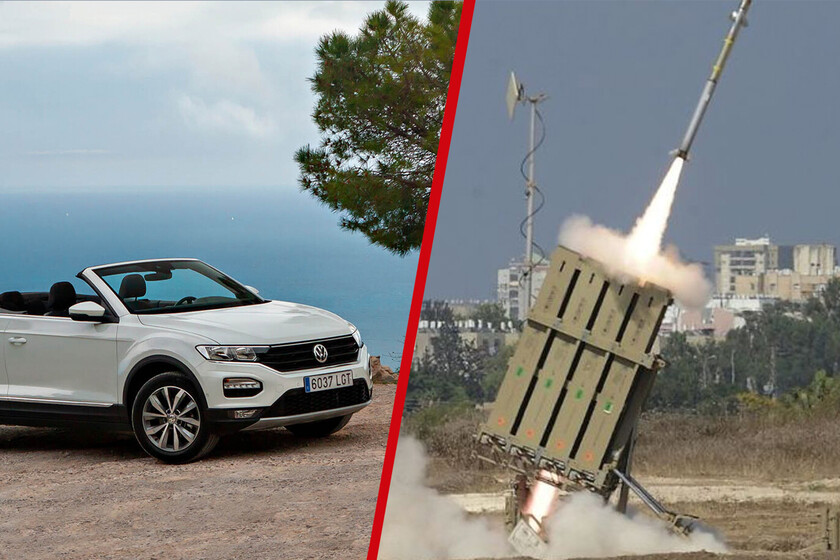
From Convertibles to the Iron Dome. Volkswagen, which is mid-way through the worst crisis in its history, is poised to sell one of its historic factories to an Israeli investment fund to turn it into a weapons production center.
The German manufacturer has announced a preliminary agreement to sell its Osnabrück plant to the Israeli investment fund Aurelius Capital (an investment fund specializing in defense and whose partners include a former UBS executive, a former deputy director of Mossad, and the former head of the US NSA) and the state of Lower Saxony, Volkswagen Group’s main shareholder. Vehicle production will cease in 2027.
Osnabrück, from making coupes and convertibles to armament
Just a year ago, the announcement hit like a blow: automotive production would end in Osnabrück in the summer of 2027. Since then, unions, local elected officials and management have sought a way out for this emblematic site. Today it seems to have been found, albeit in a form that would have surprised any worker in the supply chain a few years ago: manufacturing no longer cars, but military equipment.
The agreement provides that Aurelius Capital will become the majority shareholder of the future entity, alongside the state of Lower Saxony. The stated aim is to transform the factory into a center of excellence for security and defense, with a leading-edge collaboration project with the Israeli company Rafael Advanced Defense Systems.

It would involve manufacturing there components destined for air defense systems, for both Germany and the rest of Europe. Volkswagen, for its part, promises to accompany the transition by making available its industrial know-how and existing infrastructures.
This operation forms part of Volkswagen’s largest restructuring in its history. The automaker has already announced the elimination of about 100,000 jobs, in a context of slowing demand for both thermal and electric vehicles in Europe and China and of intensified Chinese competition on European soil.
Selling Osnabrück to a defense company helps avoid a straight shutdown, a model that other struggling manufacturers could replicate, and one that Volkswagen cannot afford. The presence of the state of Lower Saxony in its shareholding nearly rules out any politically unpopular measures.
The plant, founded by the coachbuilder Karmann and acquired by Volkswagen in 2009, has been manufacturing vehicles for 125 years. Among its most famous productions are the Volkswagen Beetle convertible, the Karmann Ghia – coupe and convertible -, but also the Mercedes CLK convertible, the Renault Megane convertible, the Porsche 968, the Golf Variant and Golf Cabrio, the Volkswagen Scirocco and the Audi A4 convertible. Today, it only produces at a fairly slow pace the Volkswagen T-Roc Cabrio.
According to the agreement announced by the group, Aurelius Capital will become the majority shareholder of the new entity alongside the state of Lower Saxony. Volkswagen Group will cease to be the owner, but will continue to support the transition by sharing its industrial know-how and its infrastructures. The manufacturer will also bear part of the salary costs until 2029.