Dacia makes a bold and decisive commitment to electric mobility with the new Spring, a model that preserves the philosophy that made its first generation one of the most affordable electric cars on the market, but that changes almost everything else. And after having seen it in person, I’m quite clear that we are facing a giant leap compared to the Spring we knew until now.
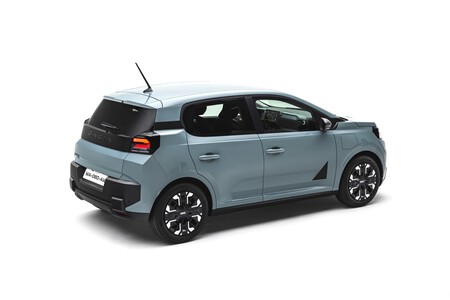
Because if there is one aspect that grabs attention when you stand in front of the new Dacia Spring, it is its size. The second generation grows 15 centimeters in length and, above all, a staggering 18 centimeters in width, although it remains a city car at 3.85 meters long. They may seem like figures more typical of a shift between segments than a simple generational change, but just standing in front of it is enough to understand how much that increase in width changes its presence.

The previous Spring had something of a toy car. It was extremely narrow, light, and simple, and that very quality was a large part of its charm and its proposition. But it was also one of its main drawbacks, especially because inside it felt like a micro car, despite having evolved a lot in a positive direction in its latest version.
The new Spring preserves that philosophy of a simple and accessible car, but visually it is much more car-like. It has a more settled body, defined wheel arches, a short raised hood, and proportions that give it a much more imposing presence. And yes, it is the sibling of the Renault Twingo with which it shares the platform, but there are enough changes for a layperson in the automotive world not to notice.
What was the first thing I thought when I saw it in person? Dacia has managed to make the Spring stop looking like a toy car.
A Completely New Spring

Although it keeps the name, little remains of the previous generation. The new Spring is built on Renault Group’s RGEV small platform and is manufactured at the Novo Mesto plant in Slovenia. In fact, Dacia explains that it is the first model in its range developed under Renault Group’s new accelerated development programs, which allow reducing the entire design cycle to less than two years.
The result is a car of 3.85 meters in length and 1.74 meters in width, dimensions that clearly keep it in the A segment, but that allow for a much more usable interior.
The design has also changed completely. The new Spring adopts the latest visual language from Dacia, with a very geometric aesthetic, simple surfaces, and a strong functional orientation. The black stripes that visually connect the front and rear light clusters also help to emphasize the car’s width.

In person, precisely that width is one of the elements that most changes the car’s perception. The Spring remains compact and designed to move easily through the city, but now it conveys a greater sense of poise and solidity.
The bumpers also feature large areas of matte black plastic, designed to better withstand small bumps and scratches typical of city use. It’s a very Dacia solution: less concern with purely ornamental aesthetics and more focus on making the car practical and durable in daily use, a recipe that we already know works well.
Inside, It Also Changes a Lot
The transformation continues in the cabin. The dashboard adopts a horizontal layout aimed at visually increasing the sense of space, and depending on the trim, it can include a central multimedia screen of 10.1 inches.

The digital instrument cluster is 7 inches and comes as standard equipment. In the Journey trim, the 10.1-inch central screen is paired with Media Nav Live, connected navigation, online services, and wireless compatibility with Apple CarPlay and Android Auto.
But beyond the screens, what I find especially interesting is how Dacia has managed to make the interior look considerably more modern without abandoning that simplicity philosophy that defines the Spring.
There are numerous storage spaces and practical solutions scattered around the cabin, in addition to the YouClip system, which allows placing various accessories at specific mounting points. Among them you find everything from phone mounts to cup holders, bag hooks, or even a small flashlight.

It is a philosophy that fits perfectly with what a car of this type should be: it does not pretend to be something it is not, but offers everything that can actually prove useful in daily life.
250 kilometers of range and 80 HP
Mechanically, the new Dacia Spring uses an electric motor of 60 kW, equivalent to 80 HP, with a maximum torque of 175 Nm.
With these figures it accelerates from 0 to 100 km/h in 12.1 seconds and reaches a top speed of 130 km/h. These are performance figures more than enough for the scenario for which it was conceived: city and peri-urban travel.

The battery is of the LFP type and has a usable capacity of 27.5 kWh, with a maximum WLTP range of up to 250 kilometers.
Dacia guarantees that for most of its users a weekly recharge should be enough. This isn’t particularly surprising if you consider that first-generation owners drove an average of about 34 kilometers per day and that 75% of them charged the car at home.
Lightness is, moreover, one of the Spring’s great secrets. With a weight starting at 1,212 kg, it remains one of the lightest EVs in its segment and achieves a homologated consumption of only 12.7 kWh/100 km, a truly low figure for an electric car.
Fast charging only as an option

As standard, the new Spring includes a 6.6 kW alternating current charger. With a conventional household plug it can go from 15% to 80% in about 9 hours, while using a reinforced plug reduces the time to 5 hours and 40 minutes.
With a 7 kW Wallbox, the same operation requires 2 hours and 55 minutes. In addition, for those who may need it, there is a more complete charging option that raises AC power to 11 kW and adds DC fast charging of up to 50 kW. In this case, going from 15 to 80% of the battery at a fast charging station takes 28 minutes.
It can also incorporate V2L technology, which allows using the car’s battery to power small electrical devices.
A Lot More Space Than You’d Expect
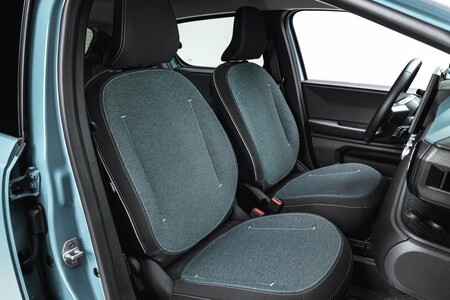
Another direct consequence of the increased size is interior space. Dacia claims the new Spring offers one of the roomiest cabins in the electric A-segment and, above all, the largest boot in its category, with up to 337 liters of cargo capacity.
Additionally, the volume can expand to up to 1,283 liters when the rear seats are folded, split 50:50.
And there’s another very interesting detail: the Spring remains the only car in its segment to offer a frunk. This compartment located under the front hood adds another 18 liters of capacity and can be especially handy for storing the charging cable without occupying trunk space.
Here the same very Dacia philosophy of making the most of every centimeter reappears.
Two Trims and a Very Simple Range
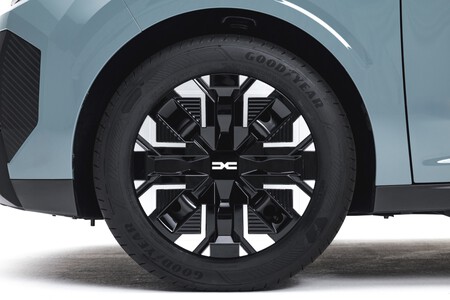
The lineup of the new Dacia Spring is structured in only two trims: Expression and Journey. Both share the same 80 HP electric motor, the 27.5 kWh LFP battery, and the 6.6 kW AC charger.
The Expression already includes features such as 15-inch steel wheels, manual air conditioning, rear parking sensors, electric parking brake, power front windows, electric mirrors, a 7-inch digital instrument cluster, Media Control system, and a 50:50 split-fold rear seat.
The Journey adds 16-inch wheels, keyless entry, rearview camera, Media Nav Live multimedia system with a 10.1-inch screen, connected navigation and services, as well as some additional comfort features.
Another Strong Argument: Price Under 20,000 Euros for the Entire Range
But if there is one feature that can once again catapult the Spring to the forefront of the electric market, it is its price.
All of the new Dacia Spring range sits below 20,000 euros, before government incentives.
This is a figure especially relevant in a market where electric cars continue to carry starting prices well above their combustion counterparts in many cases.
Dacia has managed to maintain that positioning thanks, among other things, to a development philosophy focused on removing everything that isn’t essential. Each element of the car is aimed at fulfilling a specific function, whether to improve efficiency, reduce costs, or make better use of resources.
And I think that is exactly the key to understanding the new Spring.
Much More Car Without Losing the Dacia Feel
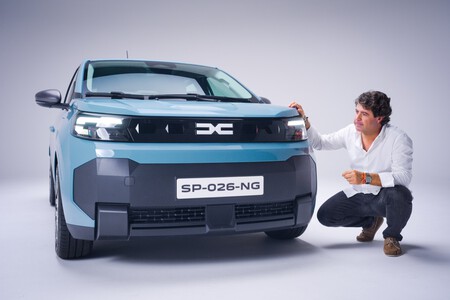
After having seen it in person, my impression is that Dacia has solved one of the main problems of the previous Spring without compromising what made it interesting.
The car has gained 18 centimeters in width, grown 15 centimeters in length, has much more imposing proportions, a more modern interior, more space, more technology, and better charging options. But it remains light, simple, efficient, and we are eager to test it.
It is also light, and that last point is not a minor issue. At a time when many electric cars seem determined to offer more and more power, huge batteries, endless equipment, and prices that drift further away from the pocket of the average user, the new Spring does exactly the opposite.
It does not aim to be the perfect electric car for traveling hundreds of kilometers on the highway. It aims to be an affordable electric car for people who need to get around every day.
And after seeing it, I think that recipe now makes a lot more sense than before. Because the first Spring was important for democratizing access to the electric car, but this second Spring has something its predecessor did not have: now it genuinely feels like a real car.
And the best part is that Dacia has managed to do it without giving up its main argument: a balance between price, size, efficiency, and operating cost that is hard to match.
If it finally keeps that promise of staying under 20,000 euros before incentives, the new Dacia Spring has all the ingredients to continue being one of the most interesting electric cars for those who simply seek, an affordable, practical, and sensible electric car.

¿Buscas tu próximo coche eléctrico y estás sobrepasado con tanta opción? Es normal.
Más de 45.000 lectores ya lo han probado. ¿Y tú?
Consejo ofrecido por la marca