Motor racing has long served as a showcase for the technology of manufacturers that face competition. This technological superiority is what allows them to win by enabling the driver’s talent to be expressed with the support of the mechanics (who represent the experience and know-how of the company).
The competition tests both drivers and engineers who must seek clever and imaginative solutions to improve the performance of the race car. And many of those innovations devised in competition are now part of our road cars.

“Win on Sunday, sell on Monday” used to be said in the 1960s when talking about motor racing. Race victories gave them prestige that could then be translated into selling street cars. Jaguar, Ferrari, Porsche, Chevrolet, Ford, Renault and in fact any brand that competed, in whatever form (F1, NASCAR, GT, rally, etc.), did so for that simple reason. Selling cars remains the ultimate goal. Today, nothing has changed.
Evidentemente, aunque compremos un Honda, un Renault, un Porsche, un McLaren o un Ferrari de calle, éste no va a tener los mismos componentes que el coche de carreras. Y sin embargo, todas las marcas apelan a sus éxitos pasados y/o actuales en competición como uno de sus pilares de superioridad técnica. Aún a sabiendas que no es más que una estrategia de marketing, es indudable que la competición aportó soluciones innovadoras que en mayor o menor rapidez llegaron a los coches de calle. Y estos son solo algunos de los ejemplos más famosos.
Frenos de disco
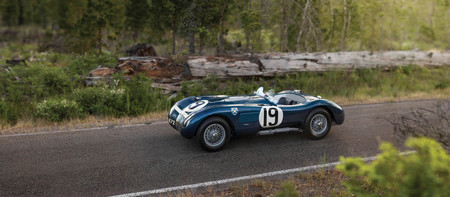
The first truly effective disc brake system was devised for the 1953 Le Mans 24 Hours Jaguar C-Type. Steel discs, being exposed to air, dissipated heat far more efficiently than the drum brakes of its rivals.
The racing advantages were a braking power and fatigue resistance that were far superior. In this way the driver could brake later, gaining precious seconds in every corner.
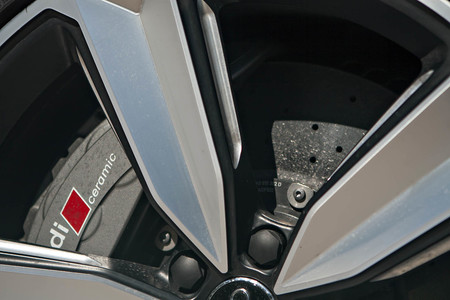
In our everyday cars, disc brakes progressively prevailed due to their greater resistance to fatigue, durability and braking power, which reduces stopping distances compared with drum brakes.
Nowadays, in competition steel discs have given way to composite-type carboceramic discs (ceramic and carbon fiber). On the street, only some high-performance cars sport ceramic brakes for now.
Fibra de carbono
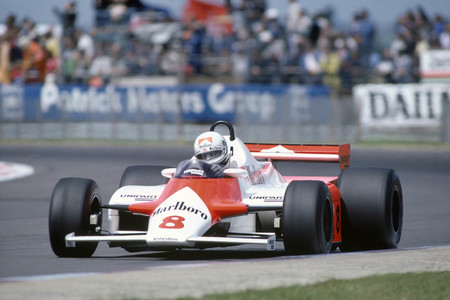
Carbon fiber, which had already been used in aerospace (Rolls-Royce engines, for example) in the 60s and 70s, made its foothold in automotive thanks to McLaren and the brilliant John Barnard. Its 1981 season single-seater, the McLaren MP4/1, featured a carbon-fiber chassis. Its extreme lightness was combined with extreme structural strength.
Moreover, it undoubtedly saved John Watson’s life at the Monza GP when his MP4/1 ran off and collided with the guard rails. Within a few months, the rest of the F1 teams adopted carbon fiber for the structures of their cars.
El efecto suelo y la aerodinámica
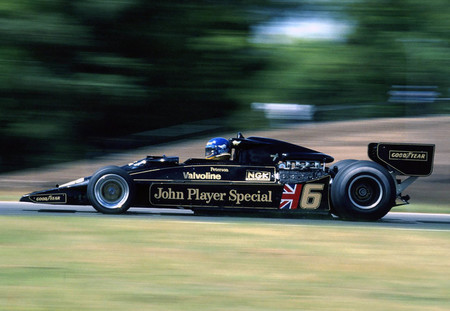
Until the 1950s, hardly anyone paid real attention to the aerodynamics of cars, though there were exceptions in the prior three decades. From the 1923 Bugatti Type 32 to the 1940 BMW 328 Kamm Coupé, passing through the 1934 Chrysler Airflow, there were some examples of aerodynamic cars, both in racing and on the street (Chrysler Airflow), but it wasn’t until 1956 that Swiss engineer and driver Michael May placed a mid-mounted wing on his Porsche 550 Spyder for the Nürburgring 1000 km, which allowed him to win the race and made the automotive industry aware of aerodynamics.
Initially, competition efforts focused on keeping the car glued to the ground by air pressure, something first achieved by the Lotus 78 of Formula 1 and the successive developments of flat underbodies.
With time, manufacturers also realized that the more aerodynamic a car, the less energy it consumes. And that is why today our cars are filled with black plastic under covers beneath the car itself and behind the grilles, often unnecessarily large.
Cambio de marchas de doble embrague
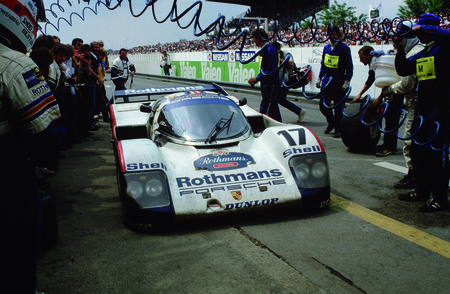
In competition, every tenth of a second counts. And every time a driver shifts gears, the wheels receive no torque or power. It is a very brief moment, sure, but if you can gain a tenth of a second in that operation, it could give you an advantage.
Over time engineers developed sequential gearboxes (essentially a manual gear with an automated clutch) and later dual-clutch gearboxes, such as Porsche with the PDK dating back to 1985 in the Porsche 962 C (in 1986, Derek Bell would become endurance world champion at the wheel of a 962 C with a PDK).
The idea is simple: change gear without taking your hands off the wheel. The left lever downshifts, and the right one upshifts.
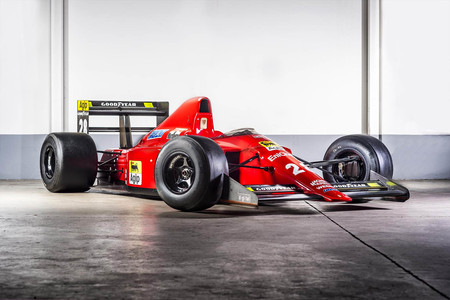
It was the 1989 Ferrari 640 Formula 1, designed by the genius John Barnard, the first to use steering wheel-mounted paddles to shift gears. The next team, Williams, joined in and by 1992 McLaren did as well, and soon all the teams had adopted paddles for sequential changes.
Volante multifunción
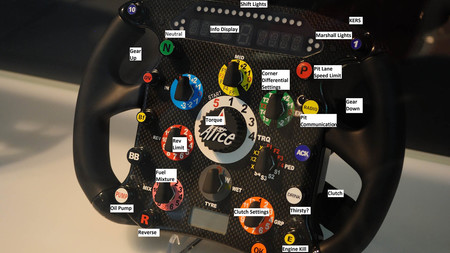
With the rise of electronics and with the driver no longer needing to take their hands off the wheel to change gears, engineers began filling racing steering wheels with buttons for different functions. Initially these were intended to adapt the engine management to different zones of a circuit.
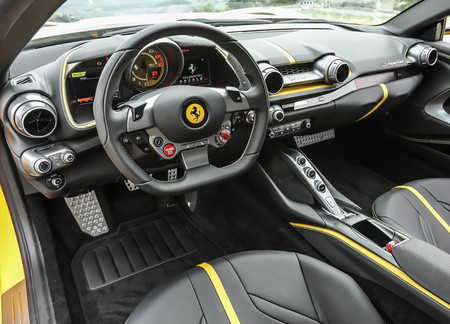
For example, maximum power in the fast sections (straightaways, long and open corners) or how the torque is delivered in the tighter, twisty parts. Depending on the section of the circuit, the driver selects one or the other setting.
In addition, there is a button that controls the radio to talk to the pits. Naturally, as our cars become filled with functions, it was only natural that many of those functions could be controlled from the steering wheel, such as music, telephone, the onboard computer and even navigation.
La evolución de los neumáticos
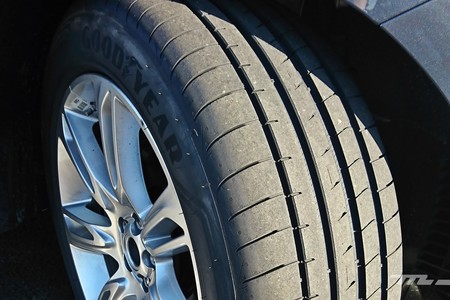
One of the most demanding testing grounds is competition. Tire manufacturers must create a tire that provides good traction, grip, durability and resistance. While racing tires cannot be used on a street car, the experience and know-how gained in competition do indeed transfer to the tires of our road cars.
Whether it’s the compound of the rubber to improve grip or fuel efficiency, the ability to evacuate liters and liters of water per second, or the tire’s longevity, these are aspects that racing engineers have had to tackle. And their experience and knowledge are shared with engineers of the “civil” range.
Inyección de gasolina
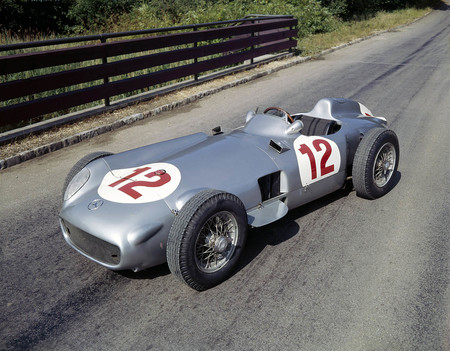
Mercedes was the first manufacturer to take a car with a gasoline injection engine to competition in 1954, using a system originally designed by Bosch for the Messerschmitt fighters in World War II. Gasoline injection would take a few more years to really take hold in racing, as it did in passenger cars.
It wasn’t until the 1980s, with the first anti-pollution regulations, that the need for a more efficient engine became necessary. Mechanical fuel injection, first, and electronic later, allowed significant improvements in efficiency, reducing fuel consumption of engines drastically compared with carburetors.
Suspensiones activas
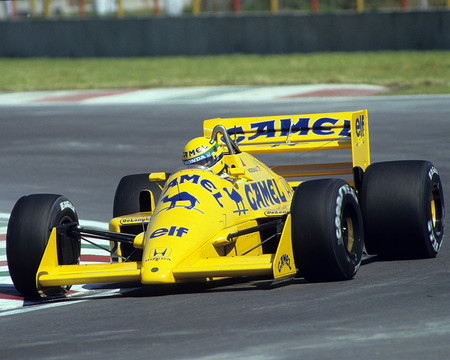
Lotus experimented with active suspensions for the first time with the F1 type 92T in the 1983 season, but the car did not complete the season with those suspensions. By 1987, Gérard Ducarouge designed the F1 type 99T driven by Ayrton Senna. This time the F1 completed the season with active suspensions that eliminated the car’s pitching and rolling.
Today, many brands employ active suspensions, using adjustable dampers and stabilizer bars. It is the sort of technical innovation that began in competition and later found a place in production cars as costs came down.
Tracción integral
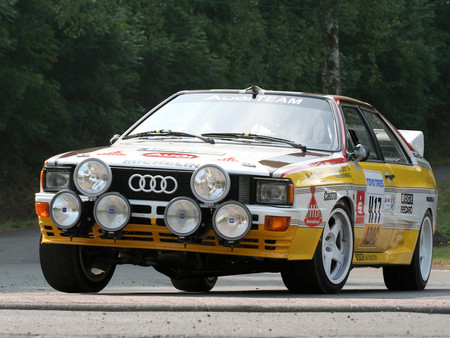
Until the 1990s, all-wheel drive was something used mainly in off-road vehicles. Most systems were rudimentary and manual. No one could yet see the usefulness of all-wheel drive in a passenger car (although there were exceptions such as the Jensen FF, the Ford Capri, both with a Ferguson system, or the Subaru Leone).
It wasn’t until Audi decided to race with an AWD coupe in the World Rally Championship, with the famous Audi Quattro, and seeing the superiority it offered, that all-wheel drive found a place in road cars, thanks to its greater traction and added safety in adverse grip conditions.
Formula E
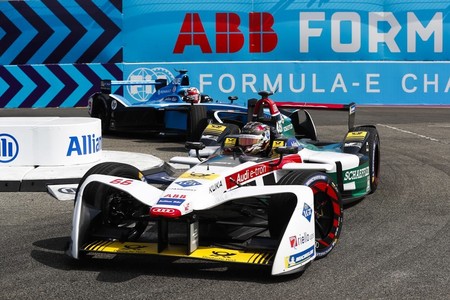
To think that Formula E has no transfers to production cars would be erroneous. Advances in composite materials and carbon fiber are very present in electric cars as they must compensate the weight of the batteries with the vehicle. It is also a great laboratory for regenerative systems.
Battery energy management and cooling are fundamental, and although it is still early for what is learned in competition to transfer to road cars (Formula E is still quite young), there is no doubt that we are beginning to see the fruits of this experimentation.