In Norway, purchasing a new car that isn’t electric is becoming almost an eccentric choice. July, a vacation month and typically calm for dealers, shattered all records in 2025: 97.2% of registrations were pure electric. A year later that share has grown to 97.6%.
That is to say, out of 9,379 new passenger cars, 9,609 were 100% electric, and only 230 had any other type of engine.
Norway is a small country with giant figures
Norway has barely 5.5 million inhabitants, fewer than the Community of Madrid, but its electric-car registration numbers are world benchmarks. The overall volume cannot be compared with Germany or France, but the penetration of electric cars in its market is unmatched.
With favorable tax policies, a well-established charging network and an increasingly varied offering, the internal combustion engine has gradually been relegated to a residual minority in recent years. The figures from OFV in Norway (Opplysningsrådet for Veitrafikken), which translates to the Norwegian Council for Information on Road Traffic, make this very clear.

Last July, total sales continued to rise in the year-over-year metric. The market was ready for high figures, and July was not exceptional precisely because the April ratio set the absolute record at 98.6% penetration after surpassing the previous record a month earlier in March with 98.4%.
Electric vehicles surpassed the 10,000-unit mark, reaching 10,952 electric cars sold, while gasoline instances stood at only 31 and diesel at 87.
All-electric in the Top 20: Volkswagen dominates, Tesla settles for fourth place
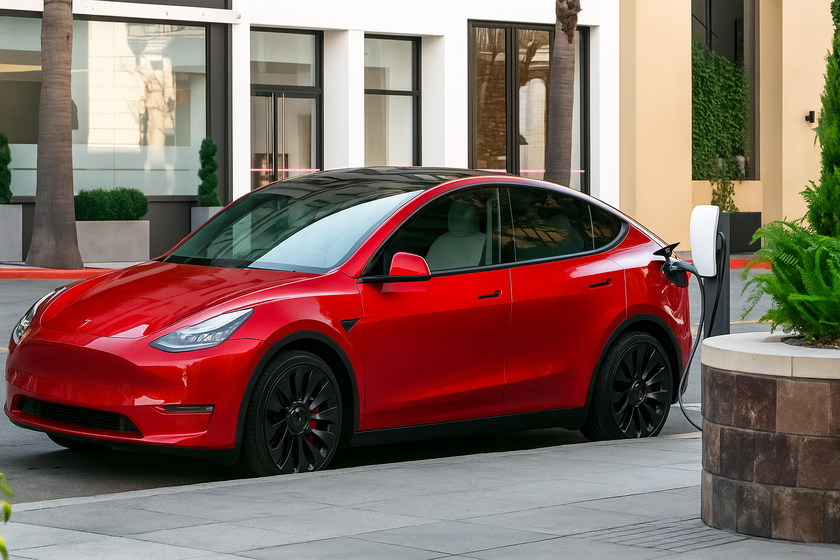
The snapshot of the month’s best-selling models is also very clear: all of them are electric. The Tesla Model Y lost the lead, yielding to the overtaking by the Toyota bZ4X, which has climbed to the top with 532 units. Meanwhile the Model Y remains at the helm in the year-to-date tally with around 12,000 units.
The bZ4X sits in third place ahead of the Model 3, the Toyota Urban Cruiser and the Volkswagen ID.4 completing the top five. Quite curious is the sixth place of the Volkswagen ID.Buzz, which is approaching 3,000 units.
In the top 10 models we see only five brands and all of them well known: Tesla, Toyota, Volkswagen, Volvo and Skoda. By contrast, Xpeng does appear in the fifth position among the most-sold brands, surpassing 3,800 units.
Europe and Spain, at a different pace (but accelerating)
While Norway is already nearing 100% share, in the European Union as a whole the pure electric car represents 14.3% of the market, according to ACEA. Between January and June 2026, BEV registrations stagnated with a year-on-year growth of 1.8%.
Spain, although historically part of more modest figures, continues fast-forwarding its transition: according to ANFAC, pure electric sales rose 35.4% during the first half of 2026, already surpassing 10% of market share. Meanwhile, gasoline and diesel continue their continental decline, yielding space in the Spanish market mainly to conventional hybrids, which now approach 40% of sales.
Find your ideal electric car
If you’ve been considering purchasing an electric car, this will interest you. We’ve created the personalized Electric Car Recommender, where in addition to seeing models that fit your needs you’ll also find answers to questions that may worry you most, such as price, range, or nearby charging points.

Are you looking for your next electric car and feeling overwhelmed by so many options? It’s normal.
More than 45,000 readers have already tried it. And you?
Advice offered by the brand