
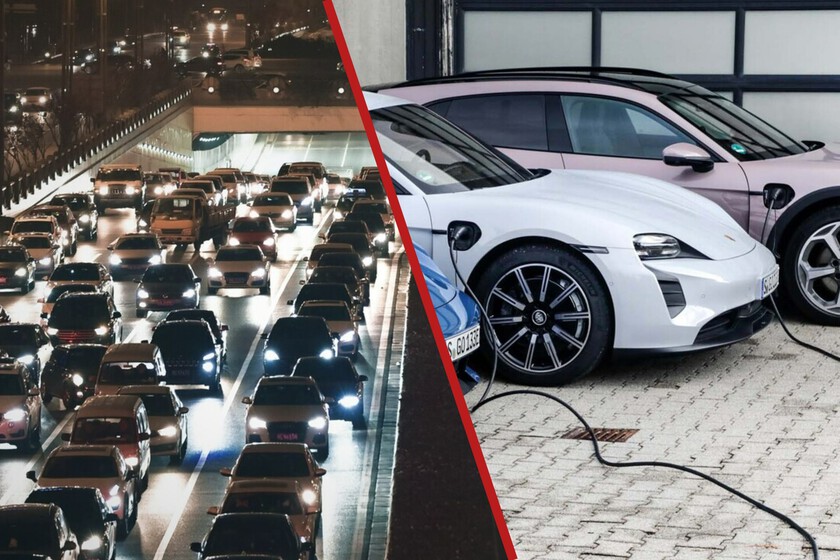
This has been pointed out dozens of times: electric cars are not as clean as promised. Or that they can be just as polluting, or more, than a gasoline or diesel car. Among the arguments, that the electricity used to charge them comes from fossil fuels or the emissions generated in their manufacture. As others have done before, a new MIT scientific study, which analyzes their entire life cycle, once again debunks this theory.
This analysis has been evaluated across different regions and conditions. And the conclusion is that electric vehicles generate half the greenhouse gas emissions of combustion cars. It’s not that they don’t pollute, but they do so less.
Between 40 % and 60 % fewer emissions
In this study, researchers at the Massachusetts Institute of Technology (MIT) have analyzed thousands of U.S. ZIP codes, cross-referencing data using statistical methods such as the energy mix of each area, weather conditions, traffic, and driving habits. They did this by comparing electric cars, PHEVs and combustion models, calculating their emissions across their entire life cycle, based on GREET inventories that take into account both the fuel cycle (production and distribution) and the vehicle cycle.
In the vast majority of areas analyzed, the results showed that pure electric vehicles reduce between 40 % and 60 % of greenhouse gas emissions compared to thermal cars. Partly because electric drivetrains are more efficient, for example by recovering energy during braking and deceleration.

Regarding the electricity used to charge them, even in regions where the electrical mix essentially relies on fossil fuels, battery electric vehicles still generate fewer emissions over their life cycle than a comparable internal-combustion one. There is also greater room for improvement: this advantage can grow as renewables are added, an upward trend.
“While we have found that the mix of electricity sources significantly influences the spatial variation in emissions savings from electric vehicles, the grid is decarbonizing everywhere. As this happens, the emissions savings across space will be more homogeneous for electric vehicles, but the differences between the different factors will persist,” says the study’s lead researcher, Marco Miotti.
No es el primer estudio que llega a esta conclusión. An anterior de la Universidad de Michigan postuló que, en el condado de Apache (Arizona), cuya red eléctrica es la que más carbón usa de EEUU, “un SUV eléctrico emitirá un 40 % menos de gases de efecto invernadero a lo largo de su ciclo de vida que su equivalente térmico”.
Even with cold or unfavorable conditions, they still pollute less
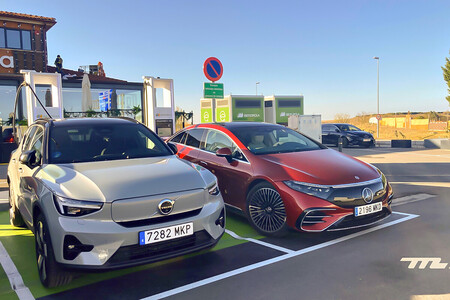
The areas studied also included regions with cold climatology. MIT acknowledges that extreme temperatures greatly reduce an electric vehicle’s efficiency: on a frigid winter night in North Dakota, for example, it can drop by as much as 50%. But this does not reduce the emission benefits that EVs maintain when the yearly total is considered.
“We even carried out a sensitivity study to check whether range decreases in very cold climates, and we found that, even in the most unfavorable conditions, electric vehicles still reduce emissions substantially“, says Miotti.
And indeed, the researchers aimed to determine to what extent extreme temperatures could affect the comparison. “There are many statements, such as that electric vehicles do not significantly reduce emissions in cold climates, and we wanted to analyze these factors systematically and compare these claims against each other simultaneously.” They propose that cold reduces part of the electric’s advantage, but does not eliminate it entirely.
In short, the MIT study’s conclusions are similar to those of others carried out previously. The aforementioned University of Michigan study admitted that battery manufacture is the weak point for EVs, with higher emissions in production compared to gasoline. But this is quickly offset by use: a gasoline SUV would emit 84 tons of CO₂ over its life under identical conditions, versus 18 tons for an equivalent electric.
Find your ideal electric car
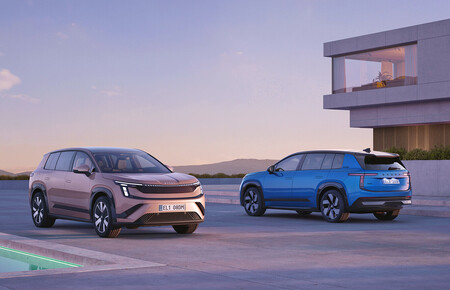
If you have been thinking about buying an electric car, this will interest you. We have created the Personalized Electric Car Recommender, where in addition to seeing models that fit your needs you will also have answers to the questions that worry you most, such as price, range, or nearby charging points.

Are you looking for your next electric car and feeling overwhelmed with so many options? It’s normal.
More than 45,000 readers have already tried it. And you?
Advice offered by the brand