
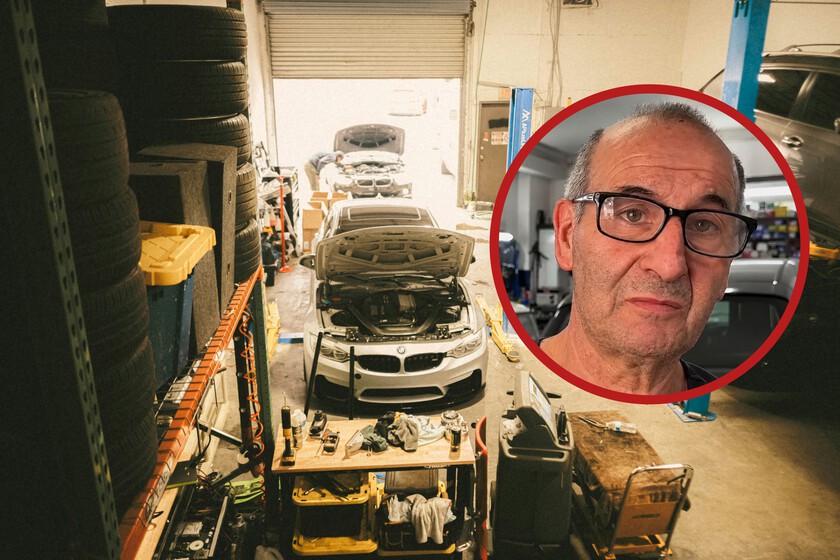
When you stop to refuel, the whole operation takes only a few minutes: you fill up, pass through the checkout, and continue your journey assuming the fuel meets all guarantees. Yet in Italy several workshops have been warning for months about a phenomenon that is beginning to worry: more and more motorcycles and cars arrive damaged shortly after leaving the gas station.
The investigation, uncovered by Adnkronos and picked up by local outlets such as inSella, gathers the testimony of various mechanics in Rome who claim to be seeing a worrying rise in gasoline- or diesel-powered vehicles contaminated with water and/or impurities.
At the moment there is no official explanation nor evidence that would allow speaking of a generalized problem, but the coincidences among professionals have even led consumer associations to call for more inspections at service stations.
The workshops report more breakdowns, but no one yet knows what the origin is
“In fifty years of work I had never encountered cars with gasoline mixed with water, at least not until these last six months,” says Giancarlo Lanza, owner of a workshop in Rome, in statements collected by Adnkronos. And he is not the only one.
Among the hypotheses being considered are possible leaks in the storage tanks of service stations, storage problems, condensation, or contamination at some point in the supply chain. Some mechanics interviewed by Adnkronos also suspect that the sharp rise in fuel prices could increase the incentive to adulterate it fraudulently, although there is no evidence linking these phenomena and no official investigation has yet reached that conclusion.
What is clear is that today’s vehicles are much more sensitive to any change in fuel quality than older models: gasoline and diesel injection systems operate with very tight tolerances, so the presence of water, sediment, or particles can cause power losses, surges, starting difficulties, and even the engine to stall a few minutes after refueling.
And besides being able to immobilize the vehicle, these impurities can end up damaging components as costly as the fuel pump or the injectors.
If the car fails after refueling, the receipt may be the most important evidence

But what should you do if the engine starts behaving abnormally right after filling up and we suspect we may be facing a similar case? Specialists recommend not continuing to drive to avoid further damage: the most advisable course is to request assistance, keep the fuel receipt, and, if the workshop confirms that the fuel was contaminated, document the fault and even keep a sample of the fuel whenever possible.
That documentation will be key if the driver decides to file a claim. The Italian National Consumers Union (UNC) reminds that the complaint should be directed to the station manager, providing all available evidence, while organizations such as Codacons demand tighter checks on the gasoline network.
For its part, the Automobile Club of Italy (ACI) also warns that a vehicle that loses power or stalls suddenly not only represents an expensive breakdown: it can also become a risk to road safety.
Images | Unsplash, Adnkronos