
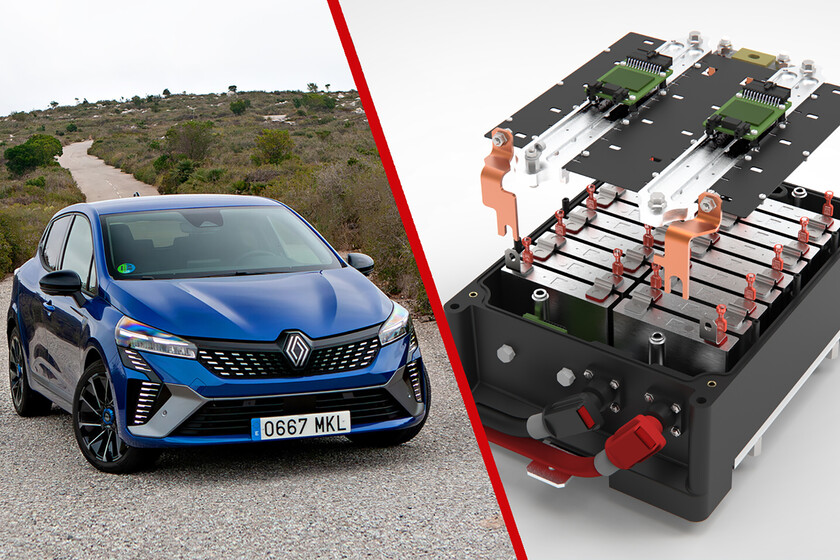
Many of the hybrid models currently on sale are actually “simple” mild hybrids. The premise is appealing to manufacturers: they are technically hybrids, they help improve efficiency (lowering the manufacturer’s emissions) and avoid having to develop a full hybrid. It’s enough to add an extra 48-volt battery (or 24 V) coupled to an electric motor connected to the alternator belt, or placed between the engine and the transmission, and you’ve got a mild hybrid.
Like a full hybrid and a plug-in hybrid (PHEV), the mild hybrid uses a lithium-ion battery. And although failures of these batteries are very rare, in the event of an accident a replacement may be necessary. And despite its small capacity, replacing the battery of a mild-hybrid car can cost up to €3,000.
The Smaller the Battery, the More Expensive
Whether in a diesel or petrol to reduce homologated emissions and, by the way, to obtain more favorable environmental labels in the various EU countries that apply them (each with its own system, though none as poorly designed as ours), mild-hybrid systems all include a small lithium-ion battery. And when it comes to capacity, it is extremely expensive.
According to the International Energy Agency, the price of a battery for a hybrid car, regardless of its level of hybridization, is higher than that of a 100% electric car. In 2024, the price per kWh of PHEV battery packs was more than three times higher than packs intended for electric vehicles, due to their smaller size and higher power requirements.

Thus, the average price of a 20 kWh PHEV battery pack in 2024 was roughly the same as that of a 65 kWh battery pack for an electric car. The smaller the battery, the higher its price per kWh. IEA market reports confirm that the cost-per-size ratio is 1 to 3.25.
According to data from BloombergNEF’s 2025 Battery Price Survey, the average price of battery packs fell to $108 per kWh, while for pure electric cars it is even lower: $99 per kWh.
And how does that translate when replacing a lithium-ion battery in a mild hybrid? Of course it depends on the car and the brand, but you should budget around €2,000 on average, just for the battery and excluding labor costs.
For most brands, the price of one of these batteries remains opaque to the public, simply because they do not sell them to third parties outside the official dealership network.
Nor is it common for a customer or independent workshop to buy one of these batteries. Typically, battery replacement in a mild-hybrid system occurs after an accident, not because it fails. A hybrid car battery usually lasts over 200,000 km. It is more likely that other systems fail first, such as the alternator on some Audi models, than the battery itself.
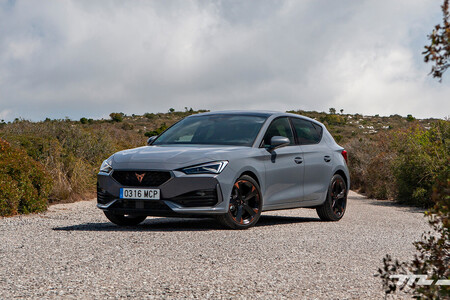
Still, a few examples can give us a sense of their price magnitude. For instance, the 1.2 kWh battery found in Renault Clio, Captur Arkana and Symbioz, as well as in Dacia Jogger and Duster, costs about €3,500 at a Renault dealership. In the case of Renault Austral, Espace and Rafale 1.2 Full Hybrid, the 1.7 kWh battery costs a staggering €4,000. That is €2,352 per kWh for the latter.
In the case of the Volkswagen Group, prices are as high as Renault’s, with about €3,000 for a complete 48V battery kit (€2,500 for the battery itself) for the Audi A6, A7, Q8 and their respective S and RS variants, such as the iconic RS6.
For more affordable models, such as the Audi A3 or the Volkswagen Golf 1.5 eTSI from the first generation, with the 0.56 kWh battery, the price climbs to around €1,000. A final example, for a Volvo XC60, is around €2,000 for the 48V battery.
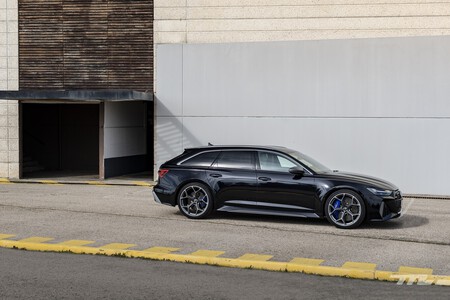
Of course, there is always the possibility, if needed, of opting for used or refurbished batteries. In this case, the price is more affordable. For example, for a Volkswagen Golf or CUPRA León or 1.5 eTSI, prices for a 0.45 kWh to 0.6 kWh battery, depending on the versions, range between €800 and €1,100, excluding additional costs such as labor or transport. For a Mercedes C 200 mild hybrid, the price of a used 0.88 kWh battery with low mileage can cost less than €400.
The latest cutting-edge technology today could become obsolete within 10 or 20 years. European law obliges brands to continue offering replacements for a car after it has ceased production, without specifying for how long.
Therefore, they do so based on how likely those replacements will be needed. In the end, more headlights, bumpers or windscreens are produced than expensive batteries. With the vehicle fleet in Spain averaging over 15 years old, the million-dollar question is what will happen in 2035 with a second-hand mild hybrid.
Will it be possible to replace the battery with a new one? Will refurbished batteries be required? Or could it even be swapped for a higher-capacity one if advances in battery energy density occur? The answer will come from the used-market within a decade.