
In Brief
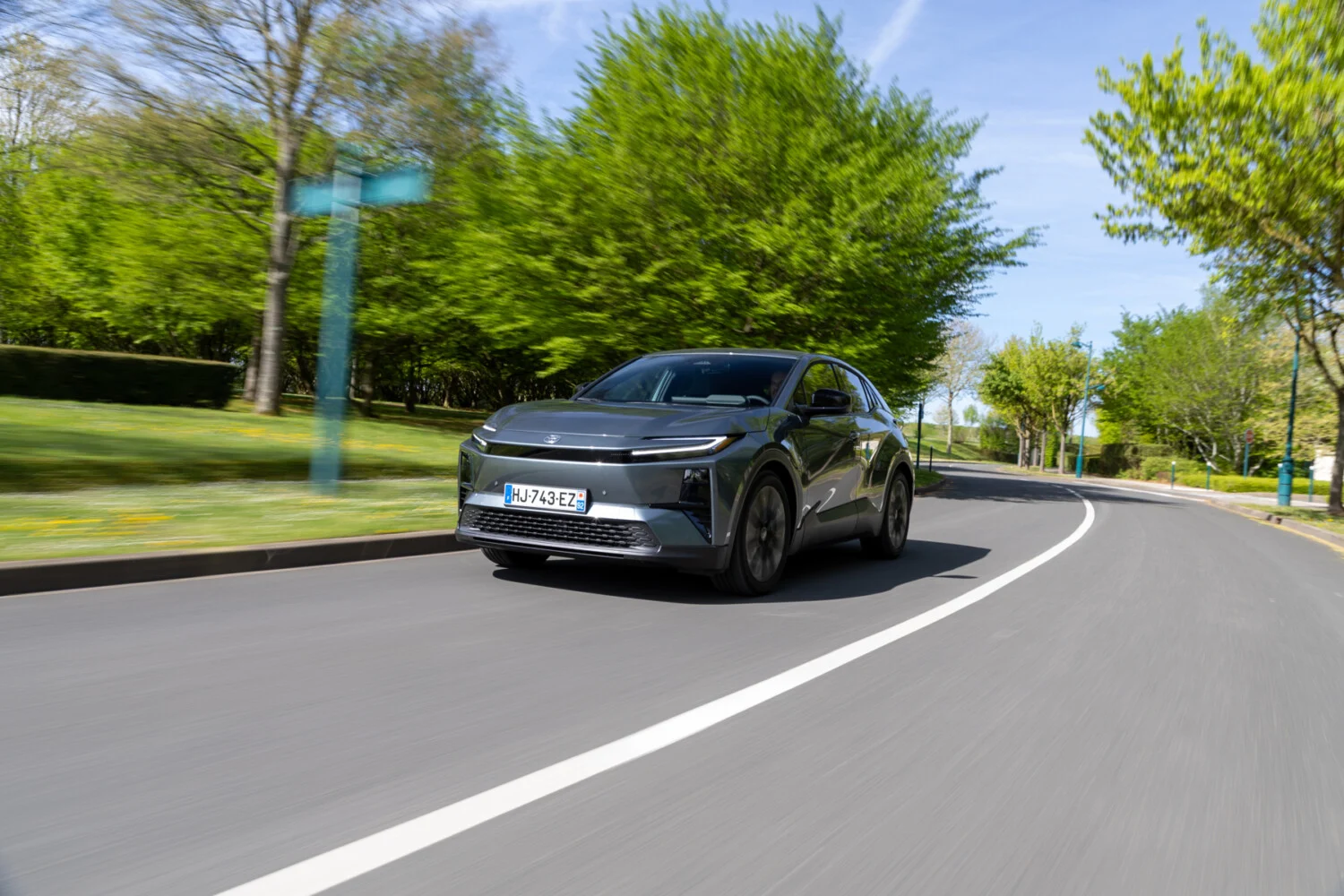
The Toyota C-HR+ 224 hp / 77 kWh Long-Range Design marks a clear step forward for the Japanese marque in the electric segment. While it still doesn’t match rivals on every front of comfort and agility, it stands out for its efficiency and its range. Its interior emphasizes practicality, though the rear seat remains a gripe and the options list is rather limited. Overall, this model offers a serious and competitive proposition thanks to its performance and pricing competitiveness.
Navigating Toyota’s model nomenclature isn’t always straightforward. The automaker seems to take a sly pleasure in alternating names with hyphenated, lowercase alphanumeric strings and weaving connections between models that hardly resemble each other. What do the well-known C-HR Hybrid and the new C-HR+ electric have in common, when the rounded styling of the latter bears no resemblance to its little brother, nor do its technical specs? The novelty might more logically have been christened “bZ4X Coupé,” as it shares the platform of Toyota’s first electrified model introduced in 2021. Yet that model didn’t captivate at launch, neither by its name nor by its electric performance, even if it has since improved a lot. Adopting a different name, as a fresh start, is as clever a sleight of hand as it is a way to summon the omens of success for the C-HR, Toyota’s best-seller.
Toyota C-HR+ : interior futurism on the surface
So it’s not surprising to find inside the dash borrowed from the refreshed bZ4X. It leans into a futuristic vibe with its floating center console and the instrument cluster placed high near the windshield, reminiscent of Peugeot’s i-Cockpit as we know it. We’ve seen Toyota interior designs that feel less cohesive and less inspired, though we are far from the concept-car look of a Peugeot 3008, one of its direct rivals. The driving position has certainly improved, as you don’t contend with as many adjustment constraints. The gray plastic isn’t always the most attractive, and the sole real flourish might be the rotary gear selector, not a common sight in this segment. In the rear, this coupe-SUV thankfully offers more space than the C-HR: it even boasts about 3 cm more rear legroom than the Peugeot 3008, based on our measurements. But it suffers from the same EV drawback many models share: a raised floor to accommodate the battery pack, which can make leg positioning uncomfortable. On the cargo side, it matches the French benchmark and even edges it by a couple of decimeters cubed. Toyota’s progress in ride feel and comfort over the past decade is well known. Unfortunately, those gains aren’t as evident in the C-HR+ here, hampered by the weight of the batteries which push this compact SUV toward the 2-ton mark. Note that it remains about 267 kg lighter than its Lion-brand rival. That difference helps explain the sizable gap in performance, with roughly 2 seconds faster to 0-60 mph and about 2.6 seconds quicker in the 90-130 mph stretch. It’s a pity these strengths don’t translate more clearly in the driver’s hands.
Toyota C-HR+ : clumsy on twisting roads
The C-HR+ feels relatively ungainly when the road becomes winding. Fortunately, ride comfort remains fairly well preserved, especially on highways and main roads. In city driving at low speeds, we regret a mid-range damping feel—likely due to the wheel size. We also wish for one-pedal driving, which is becoming more common, to be included; currently, only steering-wheel paddles allow modulation of regenerative braking, which cannot fully replace the middle pedal, something many EV enthusiasts have learned to use only in emergencies. We can’t stress enough how important efficiency is for EVs, just as it is for internal-combustion cars, even if charging at home seems cheaper. On this front, the new Toyota truly shines. In our tests, it holds the crown for the most efficient model in its power class. And since it isn’t stingy with kilowatt-hours, it can podium near the top for overall range behind the Renault Scénic E-Tech 87 kWh and Stellantis SUVs in long-range guise—whose availability remains a challenge. With a peak charging power of 150 kW, the C-HR+ doesn’t set charging-speed records, but it sits in the segment’s good middle, roughly under 30 minutes for the 10-80% charge. If production in Japan prevents it from qualifying for the bigger enhanced EU incentive, it still offers a relatively competitive price that largely offsets that. The only drawback is the sparse option list and trim choices, which exclude, for example, a fully loaded two-wheel-drive version. It almost seems as if Toyota is aiming this model primarily at rideshare fleets and corporate buyers.
Toyota C-HR+ 224 hp / 77 kWh Long-Range Design: Pros
- Efficiency and range
- Ride comfort
- Pricing
Toyota C-HR+ 224 hp / 77 kWh Long-Range Design: Cons
- Uninspiring handling
- No One-Pedal Driving
- Rear seating position
The Auto-Journal verdict: 4/5
Toyota has closed the gap in electrification. Less flamboyant than the C-HR that shares its name, the “Plus” makes a case with its range and performance that earns it serious consideration. The rear-seat ergonomics and the limited trim options are drawbacks.
Toyota C-HR+ 224 hp / 77 kWh Long-Range Design: in figures
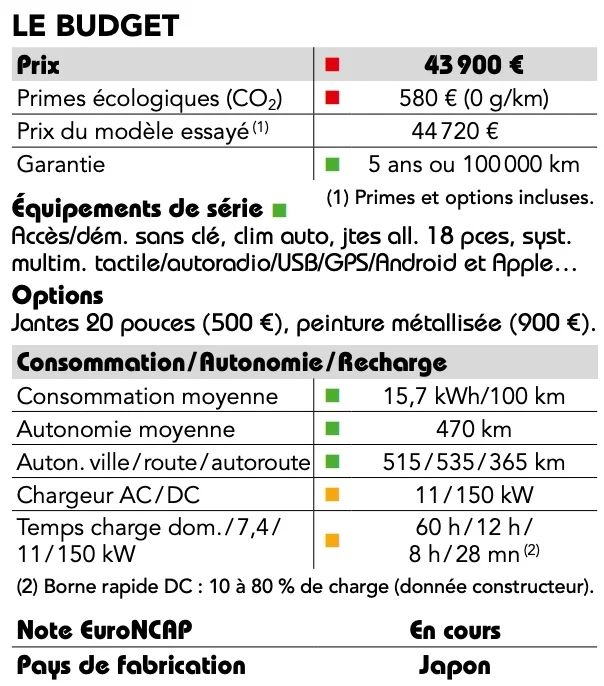
Find our first test of the Toyota C-HR+ 224 hp / 77 kWh Long-Range Design in Auto-Journal issue #1210, dated May 28, 2026.
Comparison Table
| Model | Power | Battery | 0-60 mph | Weight | Rear Legroom | Cargo | Max Charging Power |
|---|---|---|---|---|---|---|---|
| Toyota C-HR+ Long-Range Design | 224 hp | 77 kWh | -2 s (faster than Peugeot 3008) | Nearly 2 tonnes | +3 cm (vs Peugeot 3008) | +2 L (vs Peugeot 3008) | 150 kW |
| Peugeot 3008 (reference) | – | – | +2 s (vs C-HR+) | +267 kg (vs C-HR+) | Reference | 2 L less | – |
Key Takeaways
- The Toyota C-HR+ 224 hp / 77 kWh Long-Range Design positions itself as a genuine alternative in the electric SUV segment.
- It delivers standout range and efficiency for its power level.
- Its performance outpaces some rivals, notably in acceleration and relative lightness.
- Rear seating space and cargo capacity are strong points compared with its direct competitors.
- Overall comfort is appreciated, even if it feels a bit stodgy in corners.
- The limited range of trims and the rear-floor compromise remain areas to improve.
FAQ
What range does the Toyota C-HR+ Long-Range offer?
The C-HR+ Long-Range offers one of the strongest ranges in its class, just behind the Renault Scénic E-Tech 87 kWh and certain Stellantis SUVs in long-range form.
Is the Toyota C-HR+ comfortable to drive?
Overall comfort is preserved on highways and roads, though the handling can feel clumsy on twisty routes due to the weight of the battery pack.
What about its fast-charging capability?
The Toyota C-HR+ accepts up to 150 kW of charging power, enabling roughly 10-80% in under 30 minutes.
What are its main strengths?
It stands out for its efficiency, range, ride comfort, and a competitive price relative to the competition.
What are its drawbacks?
Key drawbacks include its clumsy behavior in sharp corners, the absence of One-Pedal Driving, rear-seat comfort issues, and a limited options/mid-level trim lineup.