The Boeing 737 is one of the world’s most popular passenger aircraft. Since the late 1960s, more than 12,500 units have been produced and delivered to airlines around the globe, but it can also be one of the deadliest military aircraft in existence.
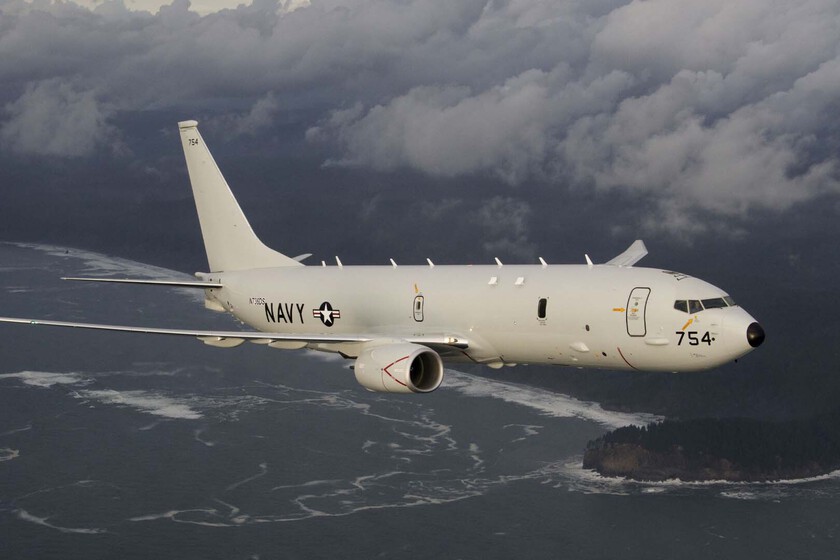
Technically, this latter attribute cannot apply to the Boeing 737, but to the Boeing P-8 Poseidon developed by Boeing from the harmless Boeing 737 passenger aircraft.
Cheaper and easier to maintain than other military aircraft
The Boeing 737 is one of the most profitable models Boeing has produced. The American company has manufactured more than 12,500 units of this model, including all variants launched since 1966, which makes it the best-selling passenger aircraft in history.
It is estimated that at any given moment there are on average about 1,250 Boeing 737s in the air, and one takes off every five seconds; not surprisingly, this model has logged 119 billion miles in flight and carried 17 billion passengers.

What nobody expects when seeing it in the colors of any airline, for example Spain’s Air Europa, which operates many 737s, is that it has served to create one of the most capable military aircraft: the Boeing P-8 Poseidon.
Boeing developed the P-8 Poseidon for the United States Navy. The objective was to create an aircraft capable of carrying out anti-submarine warfare missions, vessel interception, and electronic intelligence gathering.
With such requirements, reconfiguring a passenger aircraft was not easy, but the American company did it and the result is the most heavily armed anti-submarine fighter in NATO forces.
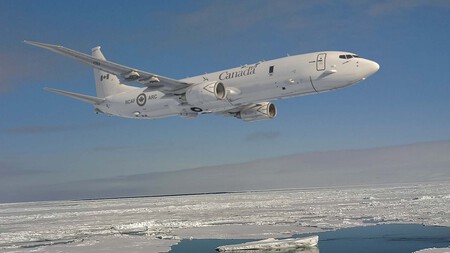
Why did Boeing and the US Navy choose the 737 as the base for this project? Very simple: because it uses a low-cost maintenance platform, it is highly reliable, fast and has enormous range. It shares 86% of its components with commercial aviation.
The choice of the name also has an explanation: it was named in honor of Poseidon, the Greek god of the seas, very fitting for such a naval and lethal military aircraft.
To reconfigure the civil 737 into this military weapon, the passenger seats were replaced by anti-submarine warfare consoles, acoustic processors for sonobuoys and state-of-the-art electronic search technology. Thanks to it, this aircraft is the most capable in reconnaissance and maritime patrol duties.
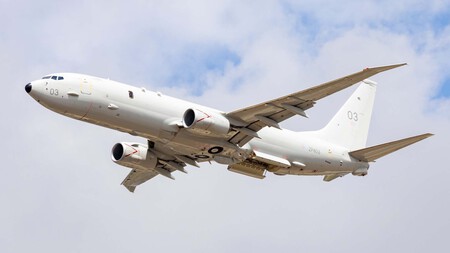
But that is not all: it also carries a hidden arsenal beneath its seemingly harmless fuselage. It can deploy heavy torpedoes to annihilate nuclear submarines, launch anti-ship cruise missiles, sea mines and depth charges. It also carries survival and rescue kits for search and rescue missions at sea.
Each unit of this model costs 221.6 million euros, and the program’s development cost amounted to 2.7 billion euros. In addition to the United States Navy, other countries also operate this model: Australia, South Korea, India, Norway, New Zealand and the United Kingdom.
Images | Boeing