
Volkswagen’s leadership acknowledges that its current business model is no longer viable. Additional major decisions will be made in collaboration with the supervisory board during the summer, said Oliver Blume, CEO of Volkswagen, at the Annual General Meeting held in June. The German group’s supervisory board met last Thursday, and the outcome was a draconian roadmap, with cuts as the guiding theme.
Drastic reductions in production and in the range are on the menu, or rather a shift to concentrate efforts and investments on the most profitable models. This opens up uncertainty for the Spanish plants: Martorell already has electric vehicles assigned, as does Landaben, but one wonders what will happen if, in the mid-term, no more electric platforms are allocated to the Barcelona facility. Electrification has given it a second life, but the question is whether that will endure.
Only 9 million cars a year and the range halved
In the statement issued after the meeting, Volkswagen notes that the cuts have already borne fruit, improving profitability, but they now face the “next phase of transformation,” with a “future plan that positions the Group to be more resilient, more efficient and more competitive.” This plan comprises 12 measures, which materialize in further cuts and restructurings.
The most striking aspect is that by 2030 they will reduce their model range by 50%, focusing on the most profitable models. At the same time, the complexity of their offer (configurations and finishes available in their cars) will be cut by as much as 75%.

The other main pillar is a production cut, which will bring output to about nine million annually. This means roughly one million fewer cars produced per year, a reduction smaller than the one announced before this meeting, which pointed to around 500,000 per year. The third pillar is that it will focus investments on the most attractive and, above all, profitable segments. Volkswagen needs to tighten its margins: in 2025, earnings per car sold were 2%, well below the 6.2% seen in 2022.
According to sources close to Volkswagen cited to El País, the meeting was tense. And although this plan must be approved by both workers and shareholders, they anticipate a difficult future: cutting production implies factory closures, and shuttering facilities means layoffs. The group has already confirmed the elimination of about 50,000 jobs and, by the end of 2026, its workforce will be reduced by about 19,000 positions. At the end of 2025, Volkswagen closed, for the first time in its history, a plant in Germany: the Dresden facility, the iconic “Crystal” factory.
The current electric outlook at Martorell is secure, the future is the question
During the supervisory board meeting, there was no discussion of shutting down any particular plant, including the Spanish ones. Yet precisely the lack of detail on how these reductions will be achieved is what injects significant uncertainty into Volkswagen’s European plants. Specifically, sources indicate that in Martorell there is concern that the promised second electric platform for Martorell may ultimately not be allocated.
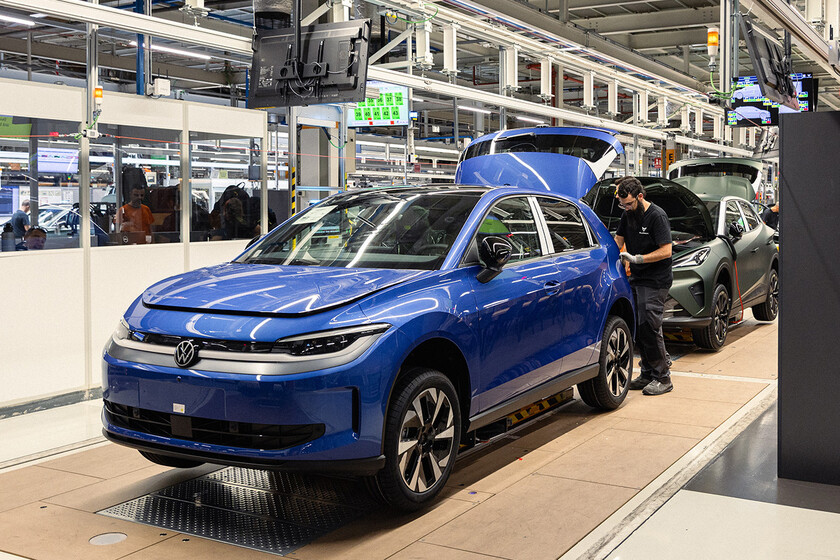
The Barcelona plant welcomed with a breath of air the MEB Entry architecture, on which small electric cars are built and thus more affordable: the Volkswagen ID.Polo and the CUPRA Raval. This has entailed substantial investments from the parent company, such as an advanced press capable of producing up to 4 million body parts per year.
But there was also mention of the allocation of another platform for larger electric cars, which supposedly would arrive between 2028 and 2030. Since investments are to be reduced to the most profitable models, this architecture would be called into question. “The problem is that the second platform is no longer a priority, because you won’t assign new models until you know what happens with the current ones,” a source reportedly stressed.
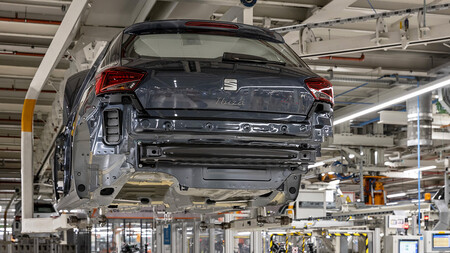
If this new architecture does not reach Martorell, it would mean losing the succession for combustion-engine cars currently produced on its lines: the CUPRA León and Formentor on line 2, and the SEAT Ibiza and Arona on line 3. The latter two are among the best-selling cars in Spain, and their appeal lies in their affordability precisely because they lack electrified variants. But if they are discontinued, it would signal the end of two major assets at Martorell with no production substitutes on the line.
In Martorell’s favor, as well as the Navarra plant (where Skoda Epiq and the Volkswagen ID. Cross will be built starting this year), is the fact that the restructuring was already implemented some time ago, with headcount reductions to lower costs. This makes them more profitable than factories in Germany. Martorell’s figures have also been solid, with about 470,000 units produced in 2025—close to its yearly peak—and expectations that this level will be maintained this year. Yet the question remains how Volkswagen intends to execute the 2030 cut plan.
Images | SEAT