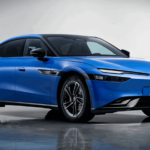
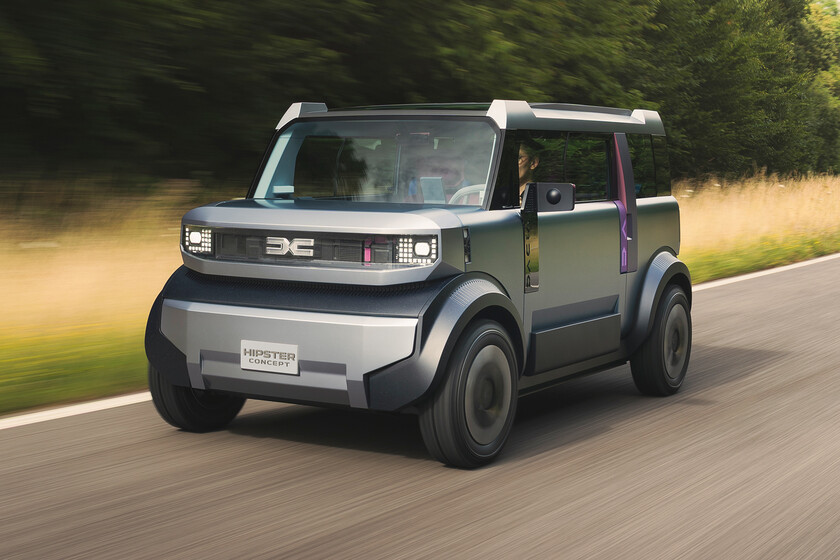
The European Union is working on the creation of a new category of small electric cars, the M1E, with the goal of making electric vehicles more affordable. Yet behind this industrial ambition, a highly regulated vehicle model starts to take shape, conceived primarily for urban use, which raises questions about its relevance to the real needs of motorists.
The European M1E project has nothing to do with electric cars that do not require a license. In fact, M1 is the category for passenger cars that require a Class B license. The idea is to create a category of more affordable electric cars by limiting their power and safety equipment. In this way, it is believed, they will be cheaper.
The new class of M1E vehicles
Thus, an M1E would remain a fully eligible passenger car, with the same crash requirements, occupant protection, and driving-assistance systems as any current utility vehicle. What changes is the subsequent administrative burden. Once homologated, the model would not have to adapt each time the technical regulations evolve, something that today greatly increases costs for the smallest and cheapest cars. In return for manufacturing within European territory, manufacturers would also gain a more favorable offset factor in calculating the CO2 emissions of their fleet.
Primarily intended for urban use, these vehicles should cost less than €15,000, but raise concerns about their versatility, especially for people living in rural areas. At the same time, urban centers are reducing space for cars, which calls into question the relevance of this offering that is strictly urban.

It’s no secret that car prices have surged in recent years for several reasons, such as tougher anti-pollution rules, increasingly stringent safety standards, electrification, and, above all, the manufacturers’ own push. Today, it has become very difficult to find a new car for less than €15,000.
From this diagnosis arose the creation of the M1E category, also known as the e-car. According to the initial information about this regulation, these would be cars with a maximum length of 4.20 meters, with 54 HP if they forgo the GSR2 safety equipment, but then with a prohibition on highway driving, or 68 HP maximum, with the same active safety as any other car and thus permission to use the highway.
The objective is to promote European production of small cars at a reduced price that would enable decarbonized use. Stellantis has shown interest with a future Citroën, probably a new interpretation of the 2CV, for 2028 with a starting price below €15,000. If the timetable is met, the M1E could come into effect in 2027.
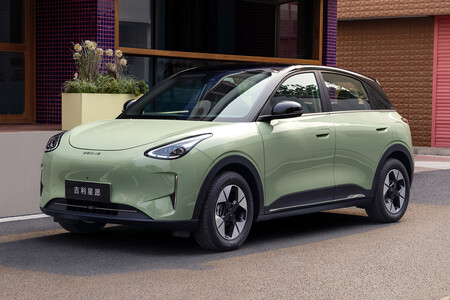
Geely Xing Yuan, the best-selling electric car in China. Its real-world range is 150 to 250 km, depending on the variant.
The idea behind these mini electric cars is partly inspired by the Japanese kei cars category and the fact that this type of mini cars, priced around €8,000, are the best-sellers in China.
The Geely Galaxy Xing Yuan was the country’s best-selling electric vehicle, with 465,775 units, while the Wuling Hongguang Mini EV, which dominated sales charts for years, came in second with 435,598 units. The significance of this car is such that it was the fourth-best-selling electric vehicle worldwide, with figures close to those of the Tesla Model 3. Its total accumulated since 2020 now surpasses 1.85 million units.
However, this regulation raises a fundamental problem: Europe is not China. The needs of Chinese drivers are not necessarily the same as those of Europeans. Moreover, we must not forget that the Chinese automobile industry has benefited from unprecedented subsidies (direct grants, favorable taxation, access to low-cost raw materials, etc.) for more than a decade.
M1E: a beginning of an answer to a real problem
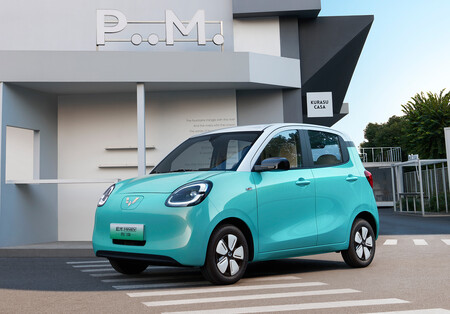
Wuling Hongguang Mini EV in its four-door version, the one that was the best-selling car in China for years. It has more of a license-free car than a passenger car.
Creating a category to promote affordable electric mobility is commendable. However, its implementation poses certain problems. With such low power, the highway prohibition for part of the category, and a price under €15,000, these cars will struggle to offer more than 200 km of range and fast charging. One could say they are vehicles for strictly urban use.
At the same time, most European cities, including Spain, are revising their urban plans, leaving less space for private vehicles: fewer parking spaces, removal of traffic lanes, increasingly extensive paid parking. In the end, it becomes increasingly difficult to use a car in the city on a daily basis.
In this context, launching electric vehicles intended solely for the city poses a genuine issue of versatility. People with modest incomes mainly live in the outskirts and rural areas and need a vehicle capable of covering 300 km in one go and recharging quickly, as they are not typically the type of customer who has a home parking space to plug in.
It is something that Renault Twingo or BYD Dolphin Surf, both at €18,000, no longer manage to offer. An M1E, given its characteristics, should not do better. M1E e-cars may address the price issue, but not necessarily the essential need that has made the car the preferred mobility tool of everyone, versatility, or the all-purpose car for everyone in the world.
Find your ideal electric car
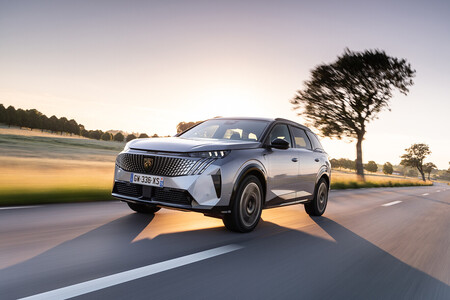
If you’ve thought about buying an electric car, this will interest you. We have created the Personalized Electric Car Recommender, where in addition to seeing models that fit your needs you will also find answers to the questions that most concern you, such as price, range, or nearby charging points.

Are you looking for your next electric car but overwhelmed by so many options? It’s normal.
More than 45,000 readers have already tried it. What about you?
Advice offered by the brand